
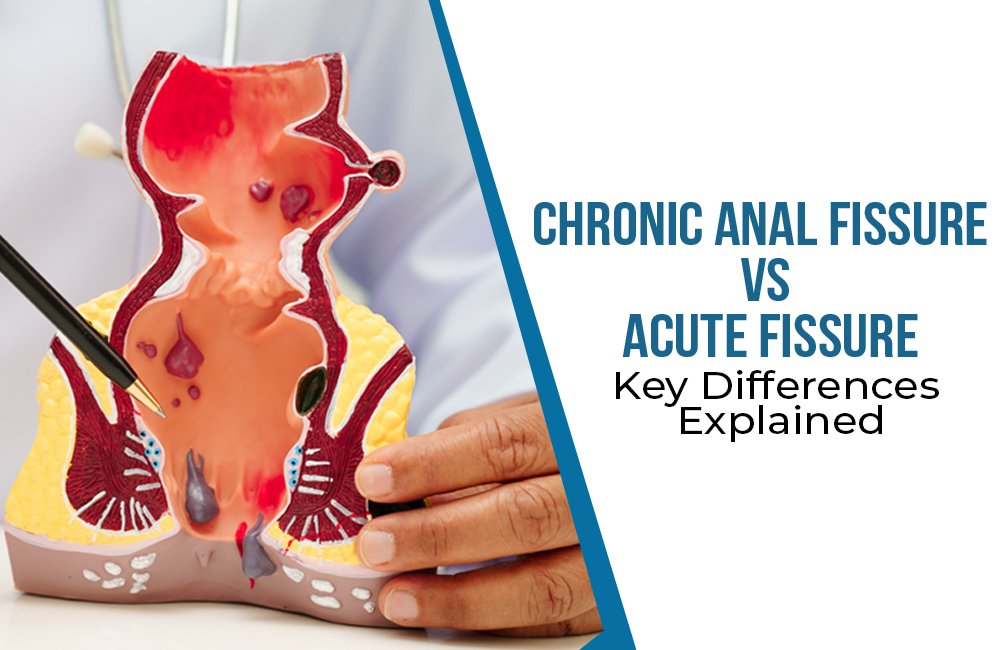
Anal fissures are small but painful tears in the lining of the anal canal that commonly cause sharp pain, burning sensations, and bleeding during bowel movements. Although these symptoms may appear mild at first, they can significantly affect daily comfort, bowel habits, and overall quality of life if left untreated.
At Hari Laser Clinics, we frequently see patients who delay care because early fissure symptoms seem temporary. However, anal fissures do not all behave the same way. Some heal quickly with simple treatment, while others persist, worsen over time, and require advanced medical intervention.
This difference lies in whether the fissure is acute or chronic.
While acute and chronic anal fissures may look similar in the beginning, they differ greatly in duration, healing potential, severity of symptoms, and treatment approach. Understanding these differences is crucial for early diagnosis, faster recovery, and preventing long-term complications such as persistent pain, recurrent bleeding, or the need for surgical treatment.
This guide explains the key differences between acute and chronic anal fissures to help patients recognise symptoms early and make informed decisions about timely care.
What Is an Anal Fissure?
An anal fissure is a small cut or tear in the thin, sensitive tissue lining the anus. Despite its small size, it can cause significant pain and discomfort, especially during bowel movements.
Anal fissures most commonly develop when the anal lining is stretched or injured. Common causes include:
- Passing hard or large stools
- Chronic constipation
- Repeated straining during bowel movements
- Reduced blood flow to the anal region
In the early stages, an anal fissure may heal on its own. However, when the underlying cause is not corrected, healing can be delayed, leading to persistent symptoms.
Based on how long the fissure lasts and how well it heals, anal fissures are broadly classified into acute fissures and chronic fissures.
What Is an Acute Anal Fissure?
An acute anal fissure is a recently developed tear that usually lasts less than six weeks. This is the earliest stage of the condition and is often easier to treat.
Key Features of Acute Anal Fissure
- Sudden, sharp pain during or immediately after bowel movements
- Bright red blood seen on toilet paper or the surface of stools
- Pain that gradually reduces between bowel movements
- No visible skin tags or deep ulceration around the fissure
At this stage, the fissure is typically superficial, and the surrounding anal muscles are not in constant spasm. With timely care, most acute anal fissures heal naturally through simple measures such as dietary changes, stool regulation, and prescribed medications.
Why Early Recognition Matters
Understanding whether a fissure is acute or progressing toward a chronic stage is essential. Early intervention leads to faster healing, reduces pain, and helps prevent long-term discomfort or complications that may require advanced treatment.
What Is a Chronic Anal Fissure?
An anal fissure is considered chronic when it fails to heal within 6–8 weeks or keeps reopening despite initial treatment. At this stage, the condition is no longer temporary and often requires targeted medical care.
Over time, repeated injury to the fissure leads to muscle tightening in the anal canal. This muscle spasm reduces blood flow to the area, making natural healing difficult and allowing symptoms to persist.
Key Features of Chronic Anal Fissure
- Persistent or recurring anal pain
- Burning or throbbing discomfort that may last for hours after bowel movements
- Ongoing itching or irritation around the anus
- Presence of a sentinel pile (small skin tag) near the fissure
- A visible deep fissure with thickened or hardened edges
Unlike acute fissures, chronic fissures rarely heal on their own without medical intervention.
Why Do Varicose Veins Come Back After Treatment?
| Feature | Acute Anal Fissure | Chronic Anal Fissure |
|---|---|---|
| Duration | Less than 6 weeks | More than 6–8 weeks |
| Pain Pattern | Sharp and short-lasting | Persistent and prolonged |
| Healing Ability | Heals naturally | Delayed or poor healing |
| Bleeding | Mild and occasional | Recurrent bleeding |
| Skin Tag | Absent | Often present |
| Treatment Approach | Conservative care | May require advanced or procedural treatment |
This comparison highlights why early diagnosis and timely care are crucial in preventing long-term disease.
Why Do Acute Anal Fissures Become Chronic?
Not every acute fissure progresses to a chronic one. However, the risk increases when contributing factors remain unaddressed, such as:
- Ongoing constipation or diarrhoea
- Repeated straining during bowel movements
- Ignoring early pain or bleeding symptoms
- Poor blood supply to the anal region
- Continuous muscle spasm preventing tissue healing
Each painful bowel movement can reopen the fissure, creating a cycle of pain, spasm, and delayed recovery.
Diagnosis of Anal Fissures
Diagnosing an anal fissure is usually straightforward and does not require complex investigations. In most patients, a careful clinical evaluation is sufficient to confirm the condition and determine its severity.
Doctors typically rely on:
Clinical History
A detailed discussion of symptoms helps identify the nature of the fissure. This includes:
- Pain during or after bowel movements
- Presence of bleeding and its pattern
- Duration of symptoms
- History of constipation, diarrhoea, or straining
The duration of symptoms is especially important, as it helps differentiate between acute and chronic anal fissures.
Physical Examination
A gentle visual inspection of the anal area often reveals the fissure. Acute fissures usually appear as fresh, shallow tears, while chronic fissures may show deeper cracks, thickened edges, or an associated skin tag.
When Are Further Tests Needed?
Advanced diagnostic tests are rarely required. However, additional evaluation may be recommended when:
- Symptoms are atypical or severe
- Pain or bleeding persists despite treatment
- There is suspicion of other anorectal conditions such as anal fistula, abscess, haemorrhoids, or inflammatory bowel disease
Early and accurate diagnosis ensures the right treatment is started promptly, reducing the risk of progression to a chronic fissure.
Treatment Options: Acute vs Chronic Anal Fissure
Treatment for anal fissures is guided by whether the fissure is acute or chronic, as the underlying healing mechanism differs in each stage.
Acute fissures are primarily caused by mechanical injury and heal with conservative care. Chronic fissures, on the other hand, involve persistent muscle spasm and reduced blood flow, requiring targeted intervention.
Treatment for Acute Anal Fissure
Acute anal fissures usually respond very well to non-surgical, conservative treatment focused on reducing strain and allowing natural healing of the tear.
Conservative Treatment Measures
- High-fibre diet and increased fluid intake to soften stools and prevent further injury
- Stool softeners to reduce straining during bowel movements
- Topical medications to relieve pain and promote healing
- Warm sitz baths to relax the anal muscles and improve local blood flow
- Lifestyle modifications, such as avoiding prolonged sitting, responding promptly to bowel urges, and maintaining regular bowel habits
Healing Outlook
With consistent treatment and bowel regulation, most acute anal fissures heal completely within 2 to 4 weeks. Early management significantly reduces the risk of the fissure becoming chronic.
Treatment for Chronic Anal Fissure
Chronic anal fissures require a more focused approach because healing is hindered by continuous internal anal sphincter spasm and poor blood supply.
Medical and Procedural Treatment Options
- Prescription topical muscle relaxants to reduce sphincter tightness
- Botulinum toxin (Botox) injections to temporarily relax the anal sphincter and improve blood flow
- Minimally invasive laser fissure treatment, which promotes healing with less pain and faster recovery
- Lateral internal sphincterotomy, reserved for resistant or severe cases where other treatments have failed
Treatment Goal
The primary goals of chronic fissure treatment are to:
- Relax the anal muscles
- Restore healthy blood circulation to the fissure
- Achieve permanent healing
Prevent recurrence and long-term complications
When Should You See a Doctor for an Anal Fissure?
While mild anal fissures may improve with basic care, persistent or worsening symptoms should never be ignored. Delaying medical attention can allow a simple fissure to progress into a chronic condition that is harder to treat.
You should consult a specialist if:
- Pain lasts for more than two weeks despite home care
- Bleeding continues or increases with bowel movements
- Symptoms improve temporarily but keep recurring
- Pain or discomfort interferes with daily activities, sitting, or bowel habits
Early medical evaluation helps confirm the diagnosis, identify the stage of the fissure, and start the right treatment before complications develop. In many cases, timely care can prevent the need for surgical intervention.
Can Chronic Anal Fissures Heal Without Surgery?
Yes, some chronic anal fissures can heal without surgery, especially when treatment begins early and muscle spasm is mild. Non-surgical options focus on relaxing the anal muscles, improving blood flow, and allowing the fissure to heal naturally.
These may include:
- Prescription topical medications
- Botox injections to reduce sphincter spasm
- Minimally invasive treatments such as laser fissure therapy
However, long-standing chronic fissures with significant muscle tightening and repeated reopening may not respond fully to conservative treatment alone. In such cases, minimally invasive or surgical procedures may be recommended to achieve complete and lasting healing.
A specialist evaluation helps determine the most appropriate treatment based on symptom duration, severity, and response to prior care.
Final Thoughts
Although acute and chronic anal fissures may begin with similar symptoms, they are not the same condition. Acute fissures are usually temporary and respond well to early, conservative treatment. Chronic fissures, on the other hand, involve deeper tissue damage and muscle spasm, often requiring specialised medical care.
Recognising the difference early and seeking timely treatment can lead to faster relief, fewer complications, and a better quality of life. At Hari Laser Clinics, a personalised approach ensures that each patient receives stage-appropriate care focused on long-term healing and comfort.