
Advanced Laser Pilonidal Sinus Care
Pilonidal Sinus Treatment in Bangalore
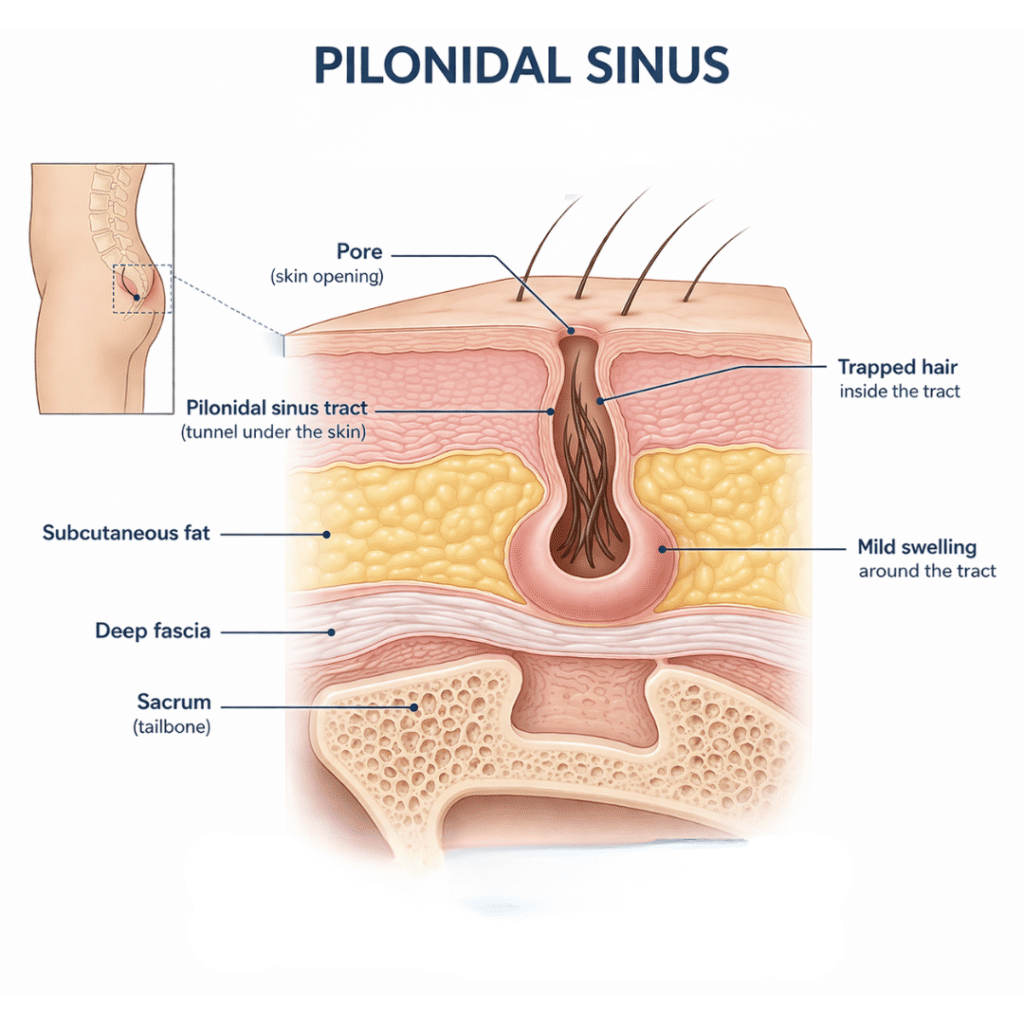
A pilonidal sinus is a small tunnel that develops beneath the skin near the tailbone. It can gradually become infected, causing persistent pain, swelling, pus discharge and recurrent abscesses. Once formed, it rarely heals permanently on its own — but advanced laser pilonidal sinus treatment in Bangalore offers a minimally invasive, daycare option with less pain and faster recovery.
Led by Dr. Varun Kumar J, a General, Laparoscopic and Laser Surgeon, our team carefully evaluates each patient to recommend the most appropriate treatment based on the size, severity and complexity of the sinus.
18+
Surgical Experience
Day-Care
Go Home Same Day
4.9★
Google Rating
30–60 Min
Laser Procedure Duration
Why Laser
Benefits of Laser Pilonidal Sinus Treatment
🩹
Minimally Invasive
Laser energy treats the sinus tract precisely, minimising trauma to the surrounding tissue.
🩸
Minimal Bleeding
The precise laser technique means the procedure typically involves very little blood loss.
✅
Smaller Wounds
Smaller surgical wounds mean less scarring and a lower risk of infection.
😌
Less Post-Op Pain
Reduced tissue trauma means noticeably less discomfort during recovery compared to conventional surgery.
🏥
Day Care
Most patients are discharged the same day, with no overnight hospital stay required.
🏆
Minimal Scarring
Laser treatment offers excellent cosmetic outcomes with minimal visible scarring.
Your Specialist
Meet the Specialist – Pilonidal Sinus Treatment Doctor in Bangalore

Dr. Varun Kumar J
General & Laser and Laparoscopic surgeon
- 🎓DNB – General Surgery
- 🎓FIAGES
- 🎓FMAS
18+
Yrs Overall
11
Yrs Specialist
99%
Patients Recommend
Dr. Varun Kumar J is a General, Laparoscopic and Laser Surgeon who completed his MBBS at Basaveshwara Medical College, Chitradurga, and his DNB in General Surgery at Narayana Hrudayalaya, Bangalore. He is a Fellow of the Indian Association of Gastrointestinal Endo Surgeons (FIAGES) and holds a certificate in Laser Varicose Veins Treatment. He is one of the earliest doctors in Bangalore to specialise in laser-based vein and proctology procedures, and has treated varicose veins, piles, fissure and fistula cases for patients across the city. He consults at Hari Laser Clinics along with several other reputed hospitals in Bangalore.
Understand The Condition
What Is a Pilonidal Sinus?
A pilonidal sinus is a narrow tunnel that forms beneath the skin near the tailbone, usually at the top of the cleft between the buttocks. “Pilonidal” means “nest of hair” — loose hair, dead skin cells and debris become trapped beneath the skin, causing irritation and infection that leads to a sinus tract which may repeatedly fill with pus.
Unlike a simple skin boil, a pilonidal sinus is a chronic condition that usually doesn’t resolve permanently with antibiotics alone. While medications may temporarily reduce infection, they can’t remove the underlying tract — definitive treatment often involves a minimally invasive procedure or surgery.
Acute Abscess vs. Chronic Pilonidal Sinus
ACUTE ABSCESS
- ●Onset: Sudden, severe pain near the tailbone
- ●Signs: Swelling and redness
- ●Discharge: Pus or blood-stained discharge
- ●Fever: May occur in some cases
- ●Treatment: Requires prompt drainage
CHRONIC SINUS
- ●Onset: Continuous or intermittent discharge
- ●Pattern: Recurrent swelling and flare-ups
- ●Discharge: Foul-smelling discharge
- ●Openings: One or more persistent openings
- ●Treatment: Rarely heals without surgery
Symptoms of a Pilonidal Sinus
- ⚠A small pit or opening near the tailbone
- ⚠Pain while sitting
- ⚠Swelling above the buttock cleft
- ⚠Redness around the affected area
- ⚠Tenderness to touch
- ⚠Pus or blood-stained discharge
- ⚠Foul-smelling drainage
- ⚠Recurrent boils near the tailbone
- ⚠Fever during active infection
- ⚠Difficulty walking or sitting comfortably
If these symptoms are ignored, the condition may progress to chronic or recurrent disease — early consultation helps prevent more extensive treatment later.
Root Causes
Common Causes of Pilonidal Sinus
Pilonidal sinus develops due to a combination of loose hair, friction, and prolonged pressure in the cleft between the buttocks — it is considered an acquired condition rather than a congenital one.
🦱
Loose Hair Penetration
Loose hair becomes embedded in the skin, triggering inflammation and sinus tract formation.
🪑
Friction & Pressure
Sitting, walking, cycling or tight clothing increases irritation in the buttock cleft.
⏳
Prolonged Sitting
Office workers, drivers and IT professionals face higher risk due to sustained pressure.
💦
Excessive Sweating
A warm, moist environment encourages bacterial growth and skin irritation.
🧼
Poor Local Hygiene
Inadequate cleaning allows hair, dirt and dead skin to accumulate.
⚡
Repeated Trauma
Constant pressure or minor trauma over the tailbone can contribute to sinus formation.
🧬
Family History
Coarse body hair, deep natal clefts or certain skin traits may run in families.
⚖️
Excess Body Weight
Being overweight increases pressure and friction in the affected area.
Stages of a Pilonidal Sinus
From a small painless pit to chronic, recurrent disease
Stage 1
A tiny dimple or pit forms near the tailbone, often with no symptoms
Monitor & Maintain Hygiene
Early Signs
Mild discomfort after sitting, occasional itching, slight tenderness
Early Evaluation
Stage 2
Localized redness, mild swelling, pain while sitting, warmth
Clinical Assessment
Vulnerable
Sinus tract vulnerable to bacterial contamination, not yet infected
Preventive Care
Stage 3
Pilonidal abscess forms with intense pain, swelling and pus collection
Prompt Drainage
Stage 4
Chronic or recurrent sinus with persistent discharge and multiple openings
Laser / Surgical Treatment
Complex
Multiple branching tracts, extensive infection, scar tissue from prior surgery
Advanced Surgical Planning
How Is a Pilonidal Sinus Diagnosed?
An accurate diagnosis is essential to determine the severity of the disease and select the most appropriate treatment approach.
- ✓Detailed medical history, including pain, discharge and previous drainage procedures
- ✓Thorough physical examination to identify sinus openings, hair and scar tissue
- ✓Ultrasound to identify fluid collections, abscesses or sinus tracts beneath the skin
- ✓MRI scan for recurrent, multiple-tract or complex cases to plan treatment accurately
This evaluation allows Dr. Varun Kumar J to determine whether the sinus is simple, recurrent, or complex, and recommend the most appropriate treatment.
Point By Point
Laser Surgery vs Conventional Surgery
How laser pilonidal sinus surgery compares with conventional excision, point by point.
- →Minimal surgical incision compared to conventional excision
- →Local/regional anaesthesia in most suitable cases
- →Daycare procedure with same-day discharge
- →Significantly less post-operative pain than open surgery
- →Faster return to walking and daily activities
- →Lower risk of infection with minimal tissue trauma
- →Better cosmetic outcome with minimal scarring
Caveat: Laser treatment suits most simple to moderately complex sinuses. Large, multiple-tract or heavily recurrent disease may need conventional excision or flap reconstruction — your surgeon will advise this after examination.
Laser Surgery vs Conventional Surgery — Feature Comparison
LASER PILONIDAL SURGERY
- ●Surgical Incision: Minimal
- ●Blood Loss: Minimal
- ●Pain After Surgery: Usually less
- ●Hospital Stay: Usually daycare
- ●Recovery Time: Faster
- ●Return to Work: Earlier
- ●Wound Care: Minimal
- ●Scarring: Minimal
CONVENTIONAL SURGERY
- ●Surgical Incision: Larger incision
- ●Blood Loss: Comparatively higher
- ●Pain After Surgery: Generally more
- ●Hospital Stay: May require admission
- ●Recovery Time: Longer
- ●Return to Work: Delayed
- ●Wound Care: More extensive
- ●Scarring: More noticeable
Laser treatment has become a preferred option for many suitable patients because it combines precision with faster healing and a better cosmetic outcome, though the final choice depends on the sinus’s complexity and your surgeon’s assessment.
Treatment Menu
Pilonidal Sinus Treatment Options at Hari Laser Clinics, Bangalore
Every sinus’s anatomy is different — Dr. Varun Kumar J selects the right approach after a detailed clinical evaluation.
1. Laser Pilonidal Sinus Surgery Gold Standard
How it works:
- Detailed clinical evaluation to identify sinus openings and assess disease extent
- Administration of appropriate anaesthesia for patient comfort
- Cleaning of the sinus tract — removal of hair, debris and unhealthy tissue
- Controlled laser energy destroys unhealthy tissue and seals the tract
- Short post-operative observation before same-day discharge
| Procedure Time | 30–60 minutes |
| Anaesthesia | Local / Regional |
| Hospital Stay | Day-care — same day discharge |
| Return to Work | 2–5 days |
| Success Rate | High in selected cases |
| Scars | Minimal |
2. EPSiT (Endoscopic Pilonidal Sinus Treatment)
A minimally invasive technique using a miniature camera to directly visualise the sinus tract, remove hair, debris and infected tissue, and treat the sinus internally with minimal skin damage — offering better visualisation, less tissue injury and good cosmetic results.
3. Incision & Drainage of Abscess
For an acute painful abscess, the surgeon makes a small incision to drain the pus and relieve pressure. This provides rapid relief but doesn’t remove the underlying tract, so further treatment is usually needed to prevent recurrence.
4. Conventional Surgical Excision
Recommended for large, multiple-tract or recurrent disease, this procedure removes the entire sinus tract and surrounding infected tissue. The wound may be left open, closed with sutures, or reconstructed depending on the case.
5. Flap Procedures (Karydakis / Limberg / Bascom)
For extensive or recurrent disease, reconstructive flap techniques flatten the natal cleft and reduce friction, helping lower the risk of future recurrence in selected patients.
6. Conservative Management
For early-stage, non-infected sinuses, conservative care — antibiotics, hair removal, hygiene and avoiding prolonged sitting — helps control symptoms while preparing for definitive treatment if needed.
What Happens During Laser Pilonidal Sinus Surgery? Step-by-Step
1
Consultation
Clinical evaluation to identify the sinus openings and assess the extent of the disease.
2
Preparation
Administration of appropriate anaesthesia to ensure comfort during the procedure.
3
Tract Cleaning
Hair, debris, pus and unhealthy tissue are removed from the sinus tract.
4
Laser Treatment
A specialised laser fibre delivers controlled energy into the tract.
5
Tissue Destruction
The laser destroys unhealthy tissue and helps collapse the sinus tract.
6
Sealing
The cavity is sealed, promoting healing from within.
7
Observation
A short observation period follows before discharge.
8
Same-Day Discharge
Most patients go home the same day with clear after-care instructions.
Cost of Pilonidal Sinus Treatment in Bangalore
The cost of pilonidal sinus treatment depends on the severity of the condition, whether the disease is recurrent, the type of procedure recommended, and the patient’s overall health. At Hari Laser Clinics, we keep pricing transparent, with no hidden charges.
The final cost is determined after a detailed clinical evaluation based on the complexity of the sinus and the treatment approach recommended by the surgeon.
₹50,000 – ₹80,000 (approx.)
Factors That Influence the Cost
📋
Simple vs Complex Sinus
Whether the sinus is straightforward or involves multiple tracts affects complexity.
🩺
Active Infection
Presence of an active abscess may require additional treatment steps.
🔬
Diagnostic Investigations
Ultrasound or MRI needed for recurrent or complex cases.
💊
Anaesthesia Type
Local, regional or general anaesthesia used during the procedure.
🔁
Recurrent Disease
Previous surgery or recurrence can influence treatment complexity.
🏥
Hospital Stay
Daycare procedure vs. a short admission, if required.
Does Health Insurance Cover Pilonidal Sinus Surgery?
Many health insurance policies cover pilonidal sinus surgery when it is considered medically necessary. Depending on your policy terms and eligibility, you may be able to avail cashless hospitalisation or reimbursement benefits. Our patient support team will assist you with insurance verification, documentation, and the cashless approval process wherever applicable.
Get an Accurate Cost Estimate
Since every patient’s condition is different, the exact cost can only be determined after a thorough clinical examination. Dr. Varun Kumar J will assess the severity of your pilonidal sinus, discuss the most appropriate treatment options, and provide a personalised estimate based on your specific needs.
The HLC Difference
Why Choose Hari Laser Clinics for Pilonidal Sinus Treatment?
🏥
Experienced Laser Surgeon
Treating pilonidal sinus, piles, fistula, fissure, hernia and other general surgical conditions.
👨⚕️
18+ Years Expert Care
Dedicated general, laparoscopic and laser surgeon.
✅
Advanced Laser Technology
Minimally invasive procedures with faster recovery than open surgery.
🚪
True Daycare Surgery
Most laser pilonidal sinus procedures are completed as daycare surgeries.
😌
Comprehensive Evaluation
Accurate diagnosis before recommending the most appropriate treatment.
✂️
Personalised Treatment Plans
Tailored to your sinus’s severity, recurrence history and overall health.
💰
Transparent Pricing
Discussed upfront, with no hidden costs.
Recovery After Pilonidal Sinus Surgery – What to Expect
🏁
Day 0
Procedure completed, short observation period, discharged same day.
🚶
Day 1–3
Mild discomfort, minimal bleeding; early walking encouraged.
💼
Day 2–5
Most patients return to desk-based work.
🩹
Weeks 2–4
Continued wound care and healing with proper hygiene.
✅
Full Healing
Complete healing over the following weeks — timing varies per individual.
Pre- and Post-Procedure Care Instructions
🛈 Before Your Procedure
- ℹShare your full medical history and current medications
- ℹInform the doctor about any previous drainage or sinus surgery
- ℹFollow any hair-removal or hygiene instructions given beforehand
- ℹArrange for someone to accompany you, if advised
- ℹBring any ultrasound or MRI reports for review
- ℹAsk any questions you have about the procedure
✓ After Your Procedure
- ✓Keep the wound clean and dry
- ✓Attend all follow-up appointments
- ✓Remove hair around the natal cleft if recommended
- ✓Avoid prolonged sitting during initial recovery
- ✓Wear loose-fitting clothing
- ✓Maintain a healthy body weight
- ✓Eat a balanced, high-protein diet to support healing
- ✓Stay well hydrated
Can Lifestyle Changes Help Prevent Recurrence?
🪒
Regular Hair Removal
Removing hair around the natal cleft reduces the risk of recurrence.
🧼
Good Hygiene
Keeping the area clean and dry helps prevent bacterial buildup.
🪑
Avoid Prolonged Sitting
Taking breaks from sitting reduces pressure and friction in the area.
👖
Loose Clothing
Loose-fitting clothes reduce friction around the tailbone.
⚖️
Maintain Healthy Weight
Managing body weight reduces pressure and friction in the cleft.
🥗
Balanced Diet
A high-protein, nutrient-rich diet supports healing and tissue repair.
📅
Regular Follow-Up
Attending follow-up visits helps catch early signs of recurrence.
Areas We Serve for Pilonidal Sinus Treatment in Bangalore
Hari Laser Clinics has multiple centres across Bangalore, making expert pilonidal sinus consultation and advanced laser treatment easily accessible to patients from different parts of the city, including:
JP Nagar 1st Phase
BTM Layout
Koramangala
Sarakki
Jayanagar 4th Block
Jayanagar 5th Block
Wherever you are in South Bangalore, our Jayanagar clinic is just a short drive away for consultation and treatment.
Get Expert Care for Pilonidal Sinus Treatment in Bangalore
Dr. Varun Kumar J brings 18 years of surgical experience and advanced expertise in laser proctology to every case at Hari Laser Clinics. Patients consistently rate the clinic 4.9 out of 5 stars on Google, citing effective, low-scarring treatment and honest, transparent pricing.
With laser pilonidal sinus treatment priced between ₹50,000–₹80,000 and flexible scheduling for working professionals, expert care in Bangalore doesn’t have to mean long hospital stays or high costs.
If you’re ready for lasting relief, book a consultation today.
Commonly Asked Questions
What is a pilonidal sinus?
A pilonidal sinus is a small tunnel or cavity beneath the skin near the tailbone that usually contains hair, debris and infected tissue.
Can a pilonidal sinus heal on its own?
No. While symptoms may temporarily improve, the underlying sinus tract usually remains and often becomes infected again.
What causes a pilonidal sinus?
The condition is commonly caused by loose hair penetrating the skin, combined with friction, prolonged sitting, excessive sweating, and bacterial infection.
Is laser surgery better than conventional surgery?
For suitable patients, laser surgery offers smaller wounds, less pain, faster recovery, and minimal scarring. However, the most appropriate treatment depends on the severity of the condition.
How long does laser pilonidal sinus surgery take?
The procedure usually takes between 30 and 60 minutes, depending on the complexity of the disease.
Will I need to stay in the hospital?
Most laser procedures are performed as daycare surgeries, allowing patients to return home on the same day.
How long is the recovery period?
Many patients undergoing laser surgery resume routine activities within 2 to 5 days, although complete healing varies between individuals.
Can pilonidal sinus come back after surgery?
Recurrence is possible with any treatment. Following post-operative instructions, maintaining hygiene, and regular hair removal can significantly reduce the risk.
Is pilonidal sinus surgery painful?
The surgery is performed under anaesthesia. Mild discomfort after surgery is expected and is usually well controlled with prescribed medications.
Who is more likely to develop a pilonidal sinus?
Young adults, individuals with thick body hair, those who sit for prolonged periods, overweight individuals, and people with a deep natal cleft have a higher risk.
Can antibiotics cure a pilonidal sinus?
Antibiotics help control infection but cannot remove the sinus tract. Definitive treatment usually requires a surgical procedure.
How can I prevent recurrence?
Maintaining good hygiene, removing excess hair, avoiding prolonged sitting, managing body weight, and attending regular follow-up appointments can help reduce recurrence.
When should I consult a specialist?
You should consult a surgeon if you experience pain, swelling, recurrent boils, discharge, or a persistent opening near the tailbone.