
Introduction
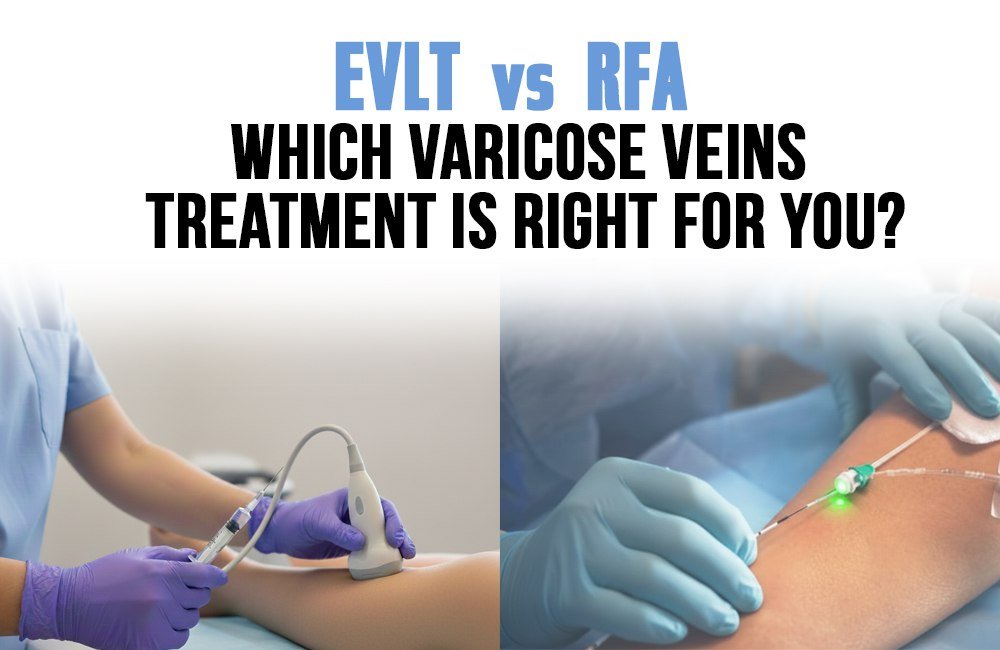
Varicose veins can cause heaviness, pain, swelling and visible bulging veins, affecting both comfort and confidence. Fortunately, modern technology has introduced minimally invasive treatments like EVLT (Endovenous Laser Treatment) and RFA (Radiofrequency Ablation). These procedures are far less painful, require no major cuts and offer quick recovery compared to traditional surgery.
In this blog, Dr. Varun Kumar J, Laser Specialist, explains EVLT vs RFA in a simple, patient-friendly way so you clearly understand how each works and which option may suit your condition best.
What Is EVLT? (Endovenous Laser Treatment)
EVLT is a minimally invasive laser procedure used to seal off damaged veins from the inside. The goal is to close the faulty vein so blood can flow naturally through healthier veins.
How EVLT Works
EVLT works by inserting a very thin laser fibre into the diseased vein. Once the fibre is in place, laser energy is delivered directly to the vein wall. This heat causes the vein to collapse and seal closed. Over the next few weeks, the body naturally absorbs the sealed vein and reroutes blood through healthy veins.
Why EVLT Is Effective
Laser energy is powerful and precise, making EVLT particularly effective for medium to large varicose veins. The laser creates a strong closure, which is why EVLT is widely trusted for long-term results.
What Patients Can Expect During the Procedure
The procedure is done under local anaesthesia, which numbs the area completely. Patients may feel a slight warm sensation or pressure as the laser is activated, but no sharp pain. The whole procedure usually takes 30 to 45 minutes.
Recovery After EVLT
EVLT allows patients to walk immediately after the procedure. Most people return to work within a day. Mild tightness or pulling along the treated vein is normal for a few days, and compression stockings are recommended for faster healing.
What Is RFA? (Radiofrequency Ablation)
RFA is another minimally invasive treatment that uses radiofrequency waves to close abnormal veins. It is known for its gentle, controlled heat and high patient comfort.
How RFA Works
In RFA, a thin catheter is inserted into the faulty vein under ultrasound guidance. When activated, the device delivers radiofrequency energy to the vein wall. This controlled heat causes the vein to collapse gradually. Over time, the treated vein seals shut, and blood is redirected to healthy veins.
Why RFA Is Comfortable for Many Patients
The radiofrequency energy used in RFA produces a steady, gentle heat. This makes the procedure extremely comfortable, with minimal discomfort during and after treatment. It is especially suitable for people with low pain tolerance.
What Patients Can Expect During RFA
Like EVLT, RFA is performed under local anaesthesia. Patients may feel mild warmth or vibration, but no significant pain. The procedure also takes around 30 to 40 minutes.
Recovery After RFA
RFA offers rapid recovery with almost no bruising. Patients walk immediately after treatment and can resume daily routine activities within 24 to 48 hours.
EVLT vs RFA: Key Differences Explained Clearly
Although both EVLT and RFA close the faulty vein using heat, they use different energy sources and create slightly different experiences for patients.
- Difference in Heat Source
EVLT uses laser light energy, which generates strong, focused heat.
RFA uses radiofrequency waves, which generate gentler, more controlled heat.
- Difference in Temperature
EVLT typically produces higher peak temperatures in the vein. This can create stronger sealing but may also result in slightly more warmth or tightness afterward.
RFA operates at lower temperatures, making it more comfortable for many patients.
- Difference in Post-Procedure Sensation
EVLT may cause mild tightness or a “pulling” sensation that lasts a few days.
RFA usually results in minimal post-procedure discomfort and less bruising.
- Difference in Suitability
EVLT is often preferred for large veins, thick vein walls or veins previously treated.
RFA is ideal for straight veins and patients wanting gentler heating with minimal discomfort.
- Effectiveness
Both treatments have success rates above 95 percent, which means both seal the vein reliably and are considered gold-standard treatments for varicose veins.
Which Treatment Is Right for You?
Choosing between EVLT and RFA depends on several factors:
Your Vein Anatomy
Large or rigid veins respond better to laser treatment (EVLT).
Moderate, straight veins often respond better to RFA.
Your Pain Sensitivity
People with lower pain tolerance often prefer RFA because of its gentler heat.
Your Symptom Severity
Patients with more advanced or recurrent varicose veins may benefit more from EVLT.
Your Ultrasound Report
A detailed vein mapping helps determine the exact condition of your valves, vein diameter and blood flow pattern.
Doctor’s Recommendation
According to Dr. Varun Kumar J, both EVLT and RFA are excellent procedures, but a proper ultrasound evaluation is necessary to determine which method is ideal for your particular condition.
What Both EVLT and RFA Have in Common
Despite the differences, both treatments share several major advantages:
They Are Minimally Invasive
No major cuts or stitches are needed, making them safe and less risky.
They Use Local Anesthesia
You remain fully awake, and the procedure is painless.
They Are Daycare Procedures
You can go home within a couple of hours.
They Offer Quick Recovery
Most patients resume normal activity the next day.
They Provide Long-Term Relief
Both treatments seal the abnormal vein permanently and prevent recurrence when performed correctly.
When Should You Consider Treatment?
You should seek varicose veins evaluation if you have
- Persistent leg pain
- Heaviness or swelling
- Visible bulging veins
- Night cramps or restlessness
- Skin darkening around the ankle
- Burning or tingling sensationsVeins that become tender or warm
Delaying treatment can lead to complications such as ulcers, clot formation or bleeding.
Conclusion
Both EVLT and RFA are safe, modern and highly effective treatments for varicose veins. They offer painless procedures, rapid recovery and excellent long-term results.
With his expertise as a Laser Specialist, Dr. Varun Kumar J helps patients understand which treatment suits their vein condition best. Through proper evaluation and personalized guidance, you can achieve long-lasting relief and healthier legs.
Reference Links
- Laser vs. Radiofrequency Ablation: Comparing Techniques for Vein Closure
- Laser Treatment Vs Radiofrequency Ablation For Varicose Veins: Which One Is Right For Me?
- Comparison of Endovenous Laser and Radiofrequency Ablation in Treating Varicose Veins