
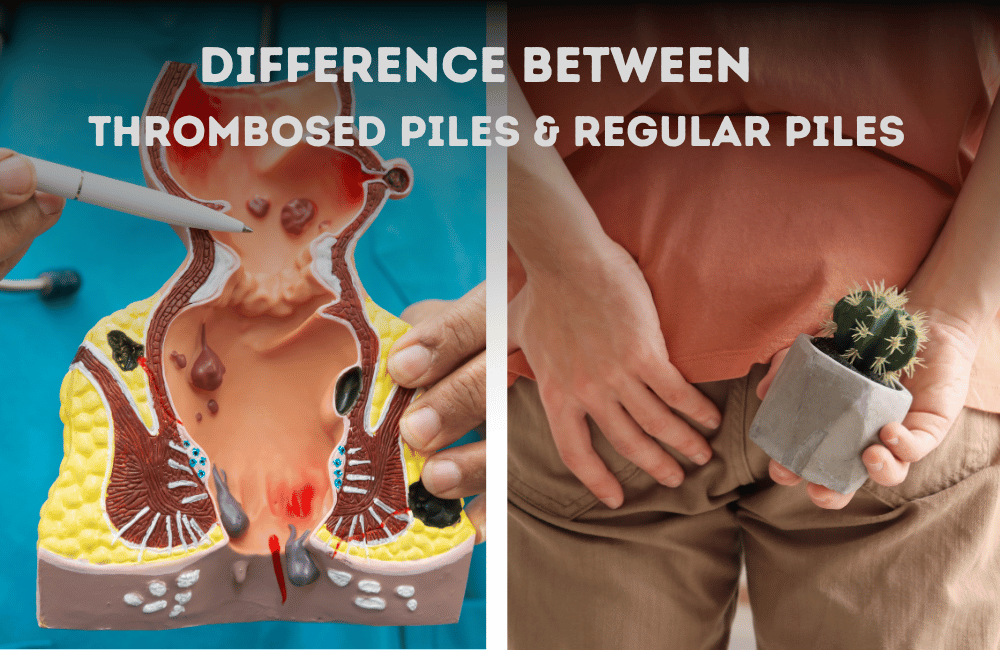
- The difference between thrombosed piles and regular hemorrhoids lies mainly in pain severity and the presence of a blood clot.
- A thrombosed hemorrhoid contains a blood clot and causes sudden, severe pain.
- Regular hemorrhoids are swollen veins and may cause little or no pain.
- Thrombosed piles feel hard and often look purple or blue.
- Pain from thrombosed hemorrhoids typically peaks within 2–3 days.
Introduction
Understanding the difference between thrombosed piles and regular hemorrhoids is important because not all hemorrhoids cause the same symptoms or require the same level of care.
While regular hemorrhoids are simply swollen veins around the anus, thrombosed piles occur when a blood clot forms inside an external hemorrhoid. This clot significantly increases pain and swelling. If you suddenly notice a hard, painful lump that appears purple or blue, it may indicate thrombosis rather than a regular hemorrhoid.
Recognizing this difference early helps you decide whether simple home care is enough or if medical evaluation is necessary.
What Is a Regular Hemorrhoid?
A regular hemorrhoid may be internal or external. Understanding the difference between internal and external piles can help identify the source of symptoms more clearly.
Regular hemorrhoids are usually soft and may cause:
- Mild discomfort
- Itching
- Bleeding during bowel movements
- A feeling of fullness
Many internal hemorrhoids do not cause pain at all.
What Is a Thrombosed Hemorrhoid?
A thrombosed hemorrhoid develops when a blood clot forms inside an external hemorrhoid. This clot blocks blood flow, creating intense pressure and severe pain.
Common symptoms include:
- Sudden sharp pain
- Hard lump near the anus
- Purple or bluish discoloration
- Increased pain while sitting
This is the key factor in the difference between thrombosed piles and regular hemorrhoids — thrombosis causes intense pain due to clot formation.
Difference Between Thrombosed Piles and Regular Hemorrhoids
Below is a clear side-by-side comparison to help you understand the difference more easily.
| Feature | Regular Hemorrhoid | Thrombosed Hemorrhoid |
|---|---|---|
| Pain Level | Mild discomfort or no pain | Severe, sharp, constant pain |
| Texture | Soft swelling | Hard, firm lump |
| Appearance | Skin-colored or slightly red | Dark purple or blue |
| Cause | Swollen vein | Blood clot inside external hemorrhoid |
| Onset | Gradual | Sudden |
| Pain Peak | Usually mild | Peaks within 48–72 hours |
| Duration | May persist mildly | Pain improves in 1–2 weeks |
| Bleeding | Common | Less common |
| Urgency | Often manageable | May require medical attention if severe |
The most noticeable difference between thrombosed piles and regular hemorrhoids is how painful and firm the thrombosed lump feels compared to the softer swelling of a regular hemorrhoid.
Why Do Acute Anal Fissures Become Chronic?
You may suspect thrombosis if:
- The pain started suddenly
- The lump feels hard rather than soft
- The area appears dark purple or blue
- Sitting becomes difficult
If symptoms are mild and mainly involve itching or light bleeding, it is more likely a regular hemorrhoid.
When to Seek Medical Care
Although many hemorrhoids improve on their own, you should seek medical advice if:
- Pain is severe and persistent
- Bleeding is heavy
- Symptoms last more than two weeks
- Fever develops
Consulting a proctologist in Bangalore can help confirm whether you are experiencing a thrombosed hemorrhoid or a regular hemorrhoid and determine appropriate treatment.
Final Thoughts
In summary, the difference between thrombosed piles and regular hemorrhoids comes down to clot formation and pain severity. Regular hemorrhoids are typically soft and may cause mild discomfort, while thrombosed hemorrhoids involve a blood clot that leads to sudden, intense pain and a hard, discolored lump.
For patients with recurring symptoms, laser piles treatment in Bangalore may offer long-term relief.
If you are unsure about your symptoms or experience severe pain, medical evaluation ensures accurate diagnosis and appropriate care.
FAQs
Sudden severe pain combined with a hard, purple lump usually indicates a thrombosed hemorrhoid. Regular hemorrhoids are softer and less painful.
Most thrombosed piles improve within one to two weeks. Pain reduces first, and swelling gradually decreases.
Pain may persist longer, and swelling can worsen. In rare cases, complications may develop.
Seek medical care if bleeding is heavy, pain worsens, fever develops, or symptoms last longer than two weeks.
Surgery is not always necessary. It is typically considered only in severe or persistent cases.