
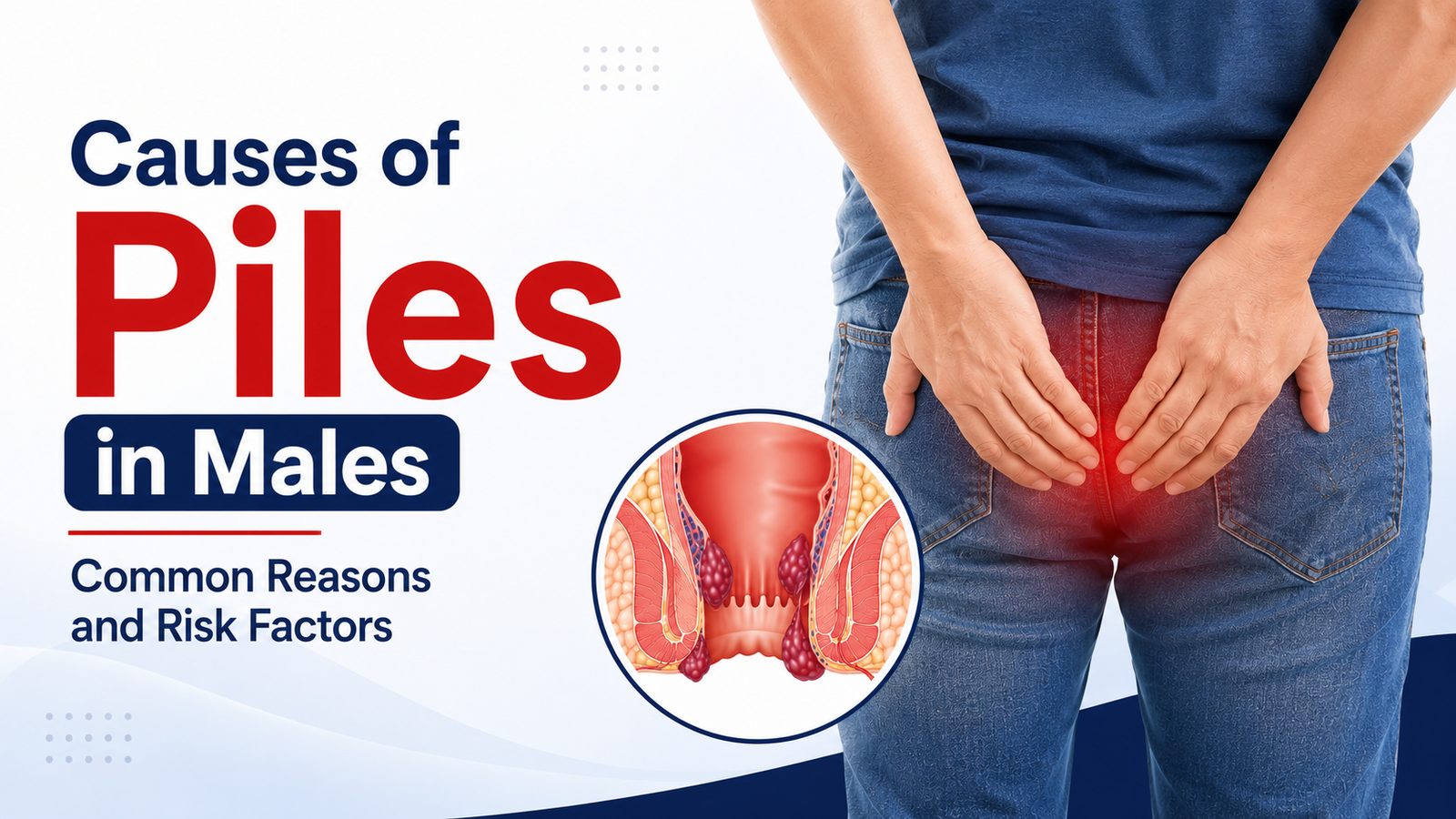
Causes of Piles in Males: Common Reasons and Risk Factors
Causes of piles in males are often related to increased pressure around the lower rectum and anus. Understanding these factors can help you identify habits that may be contributing to the problem.
⏱️ 8 min read 🩺 Medically reviewed by Dr. Varun Kumar J, MBBS, DNB General Surgery, FMAS, FIAGES
Causes of piles in males are often related to increased pressure around the lower rectum and anus. Constipation, hard stools, repeated straining, prolonged toilet sitting, a low-fibre diet, heavy lifting and prolonged sitting are some factors that may contribute to piles. However, the causes of piles in males are not always limited to one habit or activity. Several factors can occur together and increase the likelihood of developing symptoms.
Understanding the causes of piles in males can help you identify bowel and lifestyle habits that may be contributing to the problem and know when recurring symptoms should be assessed by a doctor.
Why Do Men Get Piles?
To understand the causes of piles in males, it helps to first understand what happens around the anus and lower rectum.
Piles, also called hemorrhoids, are swollen blood vessels and supporting tissues in this area. Increased pressure during bowel movements or other activities can contribute to the development or worsening of hemorrhoidal symptoms.
So, why do men get piles? Constipation and straining are common contributors, but prolonged toilet sitting, heavy lifting, sedentary habits, diarrhoea, age, body weight and individual susceptibility can also play a role.
ℹ️ Important
There is usually no single explanation for the causes of piles in males.
What Are the Common Causes of Piles in Males?
When looking at the causes of piles in males, bowel habits are an important place to start.
Constipation and Hard Stools
Constipation is one of the common factors associated with piles. When stools become hard or difficult to pass, you may need to push harder during a bowel movement. Repeated straining can increase pressure around the anal region. If constipation continues for a long time, addressing the bowel habit may be more useful than focusing only on the symptoms of piles.
Straining During Bowel Movements
Repeated straining is closely linked with constipation. Some people strain because their stools are hard, while others try to force a bowel movement even when they do not have a strong urge to pass stool. If you regularly need to push hard, it is worth looking at the reason for the difficulty rather than continuing to strain.
Sitting on the Toilet for Too Long
Spending a long time on the toilet is another factor associated with hemorrhoids. Using your phone, reading or browsing while on the toilet can make it easy to remain seated longer than necessary. Extended toilet sitting may increase pressure around the anal region. Try to avoid unnecessary toilet time and repeated straining.
Low-Fibre Diet
A consistently low-fibre diet may contribute to constipation and harder stools. Fibre-rich foods such as vegetables, fruits, whole grains and pulses can help support regular bowel movements. A low-fibre diet should not be described as a direct cause of piles. Its importance is mainly related to its potential contribution to constipation and straining.
Not Drinking Enough Water
Adequate fluid intake can support normal bowel habits. In some people, inadequate fluid intake may contribute to harder stools, particularly when fibre intake is also low. However, dehydration is not a direct cause of piles. Its relevance is mainly through its possible effect on stool consistency and constipation.
Heavy Lifting and Weight Training
Heavy lifting can temporarily increase pressure within the abdomen, particularly when lifting involves significant straining. Men who regularly perform weight training or physically demanding work should pay attention to lifting technique and avoid unnecessary straining. Heavy lifting does not mean that piles will definitely develop — it is better considered one possible contributing factor.
Sitting for Long Hours
Many men spend several hours each day sitting at a desk, driving or working in a sedentary environment. Prolonged sitting alone should not be described as a direct cause of piles. However, a sedentary routine may occur alongside reduced physical activity, constipation and irregular bowel habits. Regular movement during the day can support general health and healthy bowel habits.
Chronic Diarrhoea
The causes of piles in males are not limited to constipation. Frequent or chronic diarrhoea can involve repeated bowel movements and irritation around the anus. Frequent wiping may also aggravate the area. If diarrhoea continues or repeatedly returns, its underlying cause should be evaluated rather than assuming that piles are responsible.
What Lifestyle Factors Contribute to Piles in Men?
Lifestyle is important when considering the causes of piles in males, particularly when several factors occur together.
| Lifestyle Factor | How It May Contribute |
|---|---|
| Low-fibre diet | May contribute to constipation and harder stools |
| Inadequate fluid intake | May contribute to harder stools in some people |
| Long toilet sitting | May increase pressure around the anal region |
| Heavy lifting | Can temporarily increase abdominal pressure |
| Prolonged sitting | May occur alongside a sedentary routine |
| Low physical activity | May contribute to constipation and other risk factors |
| Frequent diarrhoea | Can irritate the anal area |
These factors do not mean that piles will definitely develop. Individual risk varies from person to person.
Male-Specific Factors That May Increase the Risk of Piles
The basic mechanism of piles is similar in men and women. However, certain lifestyle patterns can be particularly relevant when discussing the causes of piles in males.
Gym Workouts and Heavy Lifting
Men who regularly perform weight training may repeatedly increase abdominal pressure during certain exercises. The concern may be greater when heavy lifting involves excessive straining or improper technique. If symptoms repeatedly appear after intense workouts, discuss the pattern with a healthcare professional.
Long Hours of Driving
Professional drivers and men with long daily commutes may spend several hours sitting continuously. Long periods of inactivity can occur alongside constipation or other bowel-habit changes. Taking appropriate movement breaks and maintaining regular physical activity can support healthier routines.
Desk-Based Work
Desk-based work can involve prolonged periods of sitting. The issue is not that sitting at a desk directly causes hemorrhoids. Instead, prolonged inactivity may occur together with factors such as low physical activity, constipation, poor dietary habits or irregular toilet habits.
Toilet Habits
Toilet habits can influence the amount of pressure placed on the anal region. Habits worth avoiding include:
- Repeatedly straining to pass stool
- Sitting on the toilet for a long time
- Trying to force a bowel movement
- Ignoring the urge to pass stool regularly
- Spending unnecessary time on the toilet
Improving these habits can help reduce some of the factors associated with piles.
What Other Factors Can Increase the Risk of Piles in Men?
Lifestyle is not the only part of the causes of piles in males. Other factors may also influence a person’s susceptibility.
Being Overweight or Obese
Higher body weight may increase pressure within the abdominal and pelvic region and has been associated with hemorrhoids. However, piles can occur in people of any body size, so weight should be considered one factor rather than the sole explanation.
Ageing
The tissues supporting the veins around the rectum and anus can become weaker with age. As these supporting tissues change, some people may become more susceptible to hemorrhoids.
Family History
Some people may have a greater tendency to develop hemorrhoids because of inherited differences in connective tissue or vein support. A family history does not mean that someone will definitely develop piles. Other bowel and lifestyle factors still matter.
Can Prostate Problems Contribute to Piles?
Prostate problems are not considered a direct cause of piles. However, some men with urinary difficulties may strain while trying to pass urine. Repeated straining can increase pressure within the abdominal and pelvic region. If you have urinary difficulties along with recurring piles symptoms, mention both problems during your consultation.
Can Piles Be Caused by Something Other Than Constipation?
Yes. Constipation and straining are common contributors, but they are not the only factors associated with piles. Prolonged toilet sitting, heavy lifting, prolonged inactivity, diarrhoea, increased body weight, ageing and individual susceptibility may also play a role.
Therefore, understanding the causes of piles in males requires looking at the person’s overall bowel habits, lifestyle and other risk factors rather than focusing on constipation alone.
Why Do Piles Keep Coming Back in Men?
If piles keep returning, the factors contributing to them may still be present. Possible contributors include:
- Ongoing constipation
- Repeated straining
- Spending too long on the toilet
- A consistently low-fibre diet
- Inadequate fluid intake
- Prolonged sitting
- Repeated heavy lifting
- A sedentary lifestyle
- Other individual risk factors
Recurring symptoms do not necessarily mean that one particular habit is responsible. If symptoms continue despite changes to bowel and lifestyle habits, a medical assessment can help determine the cause. Appropriate piles treatment options can then be discussed based on the type and severity of hemorrhoids.
Are Piles Different in Men and Women?
The basic mechanism of piles is similar in both men and women. The difference may be in the circumstances and lifestyle factors that contribute to increased pressure. For some men, heavy lifting, weight training, prolonged driving or desk-based work may be relevant.
Therefore, the causes of piles in males should not be reduced to simply being male. Individual bowel habits, lifestyle, age and other risk factors all matter.
How Can Men Reduce Their Risk of Piles?
Understanding the causes of piles in males can also help identify habits that may be worth changing.
Eat Enough Fibre
Include fibre-rich foods such as vegetables, fruits, whole grains and pulses as part of a balanced diet.
Drink Adequate Fluids
Maintain adequate fluid intake according to your individual needs and health circumstances.
Avoid Unnecessary Straining
Allow yourself enough time to pass stool naturally instead of repeatedly forcing a bowel movement.
Don’t Sit on the Toilet for Too Long
Use the toilet when you need to pass stool and avoid unnecessary prolonged sitting.
Stay Physically Active
Regular movement can support general health and healthy bowel habits, particularly if your daily routine involves long periods of sitting.
Use Proper Lifting Technique
If you lift weights or perform physically demanding work, use appropriate technique and avoid unnecessary straining.
Address Persistent Constipation
If constipation keeps returning despite dietary and lifestyle changes, speak with a healthcare professional.
When Should You See a Doctor for Piles?
Not every symptom around the anus is caused by piles. Consider getting evaluated if you have:
⚠️ Seek Medical Evaluation If You Experience
- Persistent or recurrent rectal bleeding
- Significant or worsening pain
- A lump that does not settle
- Repeated swelling around the anus
- Symptoms that keep returning
- Persistent changes in bowel habits
- Uncertainty about what is causing your symptoms
Rectal bleeding should not automatically be assumed to be piles. A doctor can assess your symptoms and determine whether further evaluation is appropriate. If you need specialist assessment, consulting a proctologist can help identify the cause of persistent or recurring anorectal symptoms.
Experiencing Recurring Symptoms? Get a Specialist Assessment
At Hari Laser Clinics, our specialists can assess your symptoms, identify contributing factors, and recommend the most appropriate treatment — from lifestyle changes to advanced laser procedures.
Frequently Asked Questions
Why Do Men Get Piles?
What Is the Biggest Reason for Piles?
Can Constipation Cause Piles in Men?
Can Heavy Lifting Cause Piles?
Can Gym Workouts Cause Piles?
Can Sitting on the Toilet for Too Long Cause Piles?
Does Sitting All Day Increase the Risk of Piles?
Can Diarrhoea Cause Piles?
Can a Low-Fibre Diet Cause Piles?
Can Dehydration Cause Piles?
Can Genetics Increase the Risk of Piles?
Can Prostate Problems Contribute to Piles?
Why Do Piles Keep Coming Back in Men?
Medical Review: Medically reviewed by Dr. Varun Kumar J — MBBS, DNB General Surgery, FMAS, FIAGES
This article is intended for general health information and does not replace an examination or personalised medical advice from a qualified healthcare professional.