
Key Takeaways
- Compression stockings for varicose veins may help reduce swelling, heaviness, and leg discomfort.
- They apply gentle pressure that helps blood move upward toward the heart.
- They support symptoms but usually do not remove damaged veins permanently.
- Different compression levels suit different stages of vein problems.
- Medical treatment may still be needed for severe varicose veins.
Introduction
Compression stockings for varicose veins are commonly used to reduce leg swelling, heaviness, aching, and tiredness. Many people wear them during work, travel, pregnancy, or after vein treatment. These stockings apply controlled pressure to the legs and support blood circulation.
Many patients ask whether compression stockings for varicose veins really work. In many cases, they help control symptoms and improve comfort during daily activities. However, they usually do not permanently remove enlarged or damaged veins.
Doctors often recommend compression stockings for varicose veins during the early stages of vein disease. They may also help after procedures or during long hours of standing or sitting.
People with worsening symptoms should not ignore possible
warning signs of varicose veins because untreated vein problems may slowly become more severe.
What Are Compression Stockings for Varicose Veins?
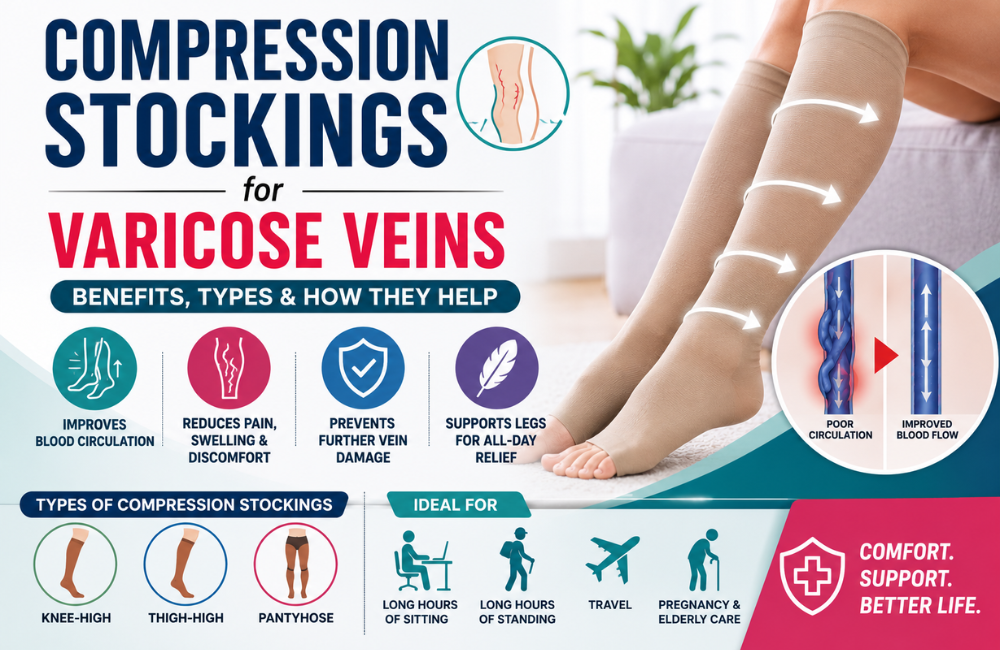
Compression stockings for varicose veins are elastic medical stockings designed to improve blood flow in the legs. Unlike regular socks, they apply graduated pressure. This means they feel tighter near the ankle and gradually become less tight higher up the leg.
This pressure helps blood move upward instead of pooling inside weak veins. As a result, many patients notice less swelling and heaviness during the day.
Compression stockings for varicose veins are available in different styles:
- Knee-high stockings
- Thigh-high stockings
- Full-length stockings
The correct type usually depends on where the veins are located.
Do Compression Stockings for Varicose Veins Really Help?
Yes, compression stockings for varicose veins may help many patients manage symptoms. They often reduce:
- Leg swelling
- Heaviness
- Mild pain
- Tired legs
- Discomfort after standing
In addition, they may support circulation during daily activities. Many people feel more comfortable while walking or working when they wear properly fitted stockings.
However, compression stockings for varicose veins do not remove damaged veins permanently. Instead, they mainly help manage symptoms and improve circulation.
Patients with severe symptoms may still require proper varicose veins treatment for long-term relief.
How Compression Stockings Work
Healthy veins contain tiny valves that help blood flow upward toward the heart. However, damaged veins allow blood to pool inside the legs. This pressure slowly enlarges the veins and causes swelling.
Compression stockings apply gentle external pressure to the legs. As a result, they help:
- Improve blood circulation
- Reduce swelling
- Support weak veins
- Reduce vein pressure
- Minimize leg fatigue
Many doctors describe compression stockings as external support for weak leg veins.
Types of Compression Stockings for Varicose Veins
Knee-High Compression Stockings
Knee-high stockings usually help patients with varicose veins below the knee. In addition, many people find them easier to wear daily.
They are commonly used for:
- Mild swelling
- Standing jobs
- Early varicose veins
- Long travel
Thigh-High Compression Stockings
Thigh-high stockings extend above the knee. Therefore, doctors may recommend them when varicose veins affect the upper legs.
They may provide broader support for larger vein problems.
Full-Length Compression Stockings
Full-length stockings support the entire leg. They are commonly used during pregnancy or when both legs have extensive varicose veins.
Some patients also prefer them for better overall coverage.
Open-Toe vs Closed-Toe Compression Stockings
Open-toe stockings leave the toes uncovered. Therefore, they may feel cooler and more comfortable in hot weather. Closed-toe stockings cover the full foot and are commonly used for everyday wear.
Comfort and proper fitting are important in both styles.
Compression Levels Explained (mmHg Guide)
Compression stockings come in different pressure levels measured in mmHg. The right level depends on symptom severity and medical advice.
Mild Compression (15–20 mmHg)
This level may help:
- Mild swelling
- Tired legs
- Long travel discomfort
- Early spider veins
Many people use this level for prevention and mild support.
Moderate Compression (20–30 mmHg)
Doctors commonly recommend this level for varicose veins. It may help reduce:
- Moderate swelling
- Leg heaviness
- Aching veins
- Visible vein discomfort
Many medical-grade compression stockings for varicose veins fall into this range.
Higher Compression (30–40 mmHg)
Higher compression levels usually help severe swelling or advanced vein disease. However, patients should use these stockings under medical supervision.
Higher pressure is not always better.
How to Wear Compression Stockings Properly
Compression stockings usually work best when patients wear them early in the morning before swelling increases.
For better comfort:
- Smooth wrinkles carefully
- Avoid folding the top edge
- Remove them before sleep unless advised otherwise
- Wash them regularly
Proper fitting is very important. Tight or poorly fitted stockings may feel uncomfortable and may not work properly.
Common Mistakes to Avoid
Many patients reduce the benefits of compression stockings by using them incorrectly.
Avoid:
- Wearing the wrong size
- Using regular tight socks instead of medical stockings
- Sleeping in them unnecessarily
- Wearing stretched-out stockings
- Ignoring worsening symptoms
Compression stockings should support circulation without causing numbness or severe pain.
Who Should Use Compression Stockings?
Compression stockings for varicose veins may help:
- Teachers
- Office workers
- Drivers
- Nurses
- Pregnant women
- People who stand long hours
They may also help patients recovering after vein procedures.
Some patients who undergo EVLT treatment may need compression stockings during recovery.
Who Should Avoid Compression Stockings?
Compression stockings may not suit everyone. Patients with the following conditions should seek medical advice first:
● Severe artery disease
● Poor circulation
● Severe skin infections
● Large leg wounds
● Advanced diabetes-related nerve damage
Doctors usually evaluate circulation before recommending stronger compression levels.
Can Compression Stockings Cure Varicose Veins?
Compression stockings for varicose veins mainly help control symptoms. However, they usually do not permanently remove damaged veins.
Many patients still require treatments such as:
- EVLT
- RFA
- VenaSeal
- Laser vein treatment
Patients comparing procedures often read about EVLT vs RFA treatment to understand available options.
Some patients also worry about the risk of varicose veins returning after treatmen over time.
When Should You See a Doctor?
Medical evaluation may be necessary if you notice:
- Severe swelling
- Skin darkening
- Bleeding veins
- Sudden leg pain
- Burning sensations
- Hard painful veins
- Leg ulcers
These symptoms may indicate worsening vein disease.
Some patients also search whether varicose vein surgery is painful before considering treatment.
Tips to Improve Results Along With Compression Stockings
- Walking regularly
- Elevating the legs
- Avoiding prolonged sitting
- Maintaining healthy weight
- Exercising regularly
- Avoiding long standing periods
Frequently Asked Questions
No. They mainly reduce symptoms and support circulation.
Most patients remove them before sleeping unless a doctor advises otherwise.
Many patients commonly use 20–30 mmHg stockings, although the ideal level depends on symptom severity.
Most patients wear them during daytime activities and remove them before sleep.
Yes. Doctors often recommend compression stockings during pregnancy to reduce swelling and improve circulation.
Knee-high stockings usually help lower-leg veins, while thigh-high stockings may help upper-leg varicose veins.
Conclusion
Compression stockings for varicose veins may help reduce swelling, heaviness, aching, and tired legs. They improve circulation and support weak veins during daily activities. In addition, many patients feel more comfortable while standing or walking.
However, compression stockings for varicose veins mainly help control symptoms rather than permanently cure damaged veins. Therefore, patients with severe swelling, pain, skin changes, or worsening veins should seek proper medical evaluation for long-term treatment options.
Reference Links
- Do compression stockings help to treat varicose veins?
- Graduated compression stockings for the initial treatment of varicose veins in people without venous ulceration