
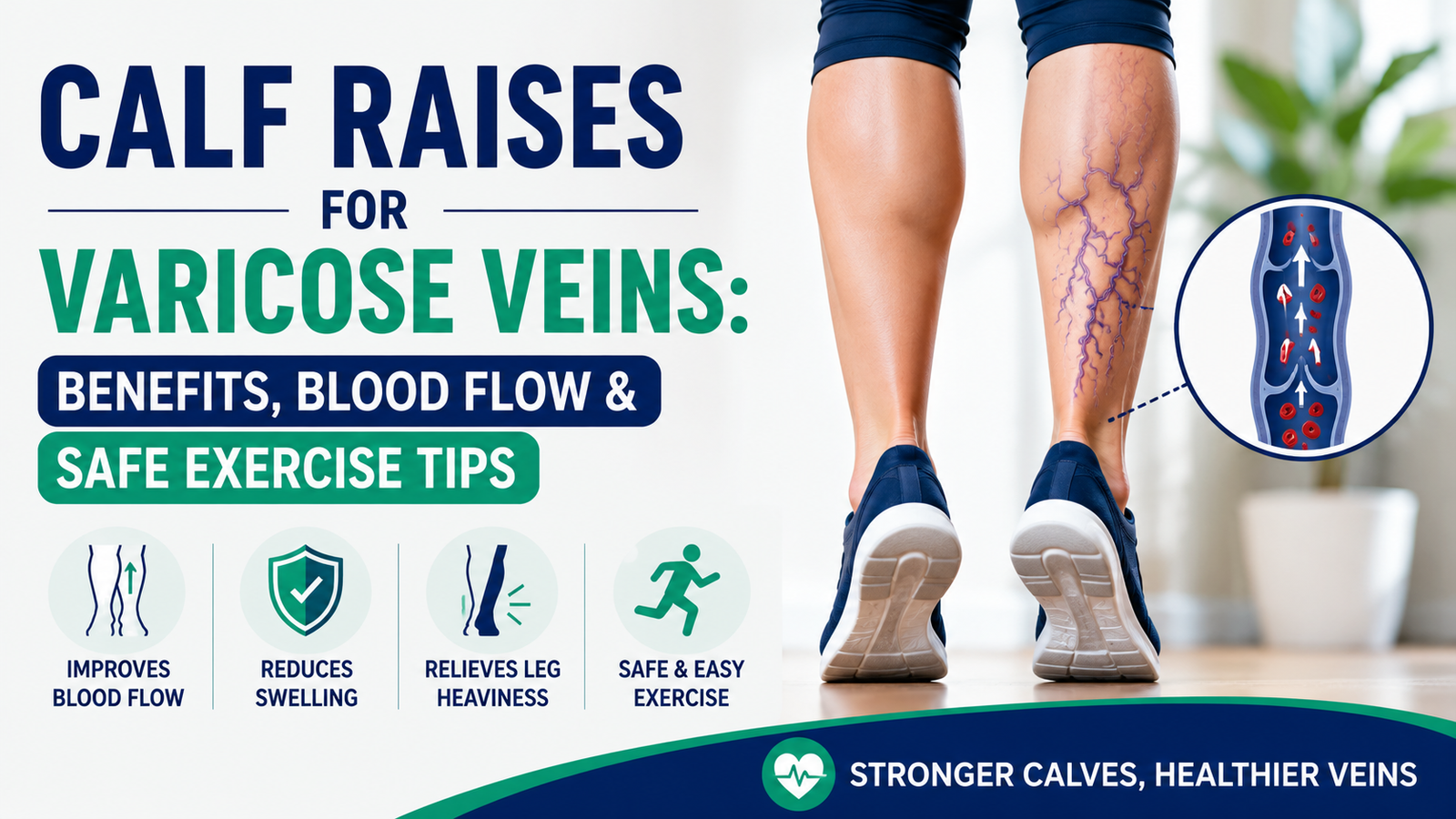
Why Calf Raises Help Varicose Veins
Calf raises for varicose veins are often recommended because they help activate the calf muscles and support healthy blood circulation in the legs. Many people with varicose veins experience heaviness, swelling, aching, or tired legs after standing or sitting for long periods. Since movement plays an important role in venous blood flow, simple exercises such as calf raises may help reduce discomfort and improve circulation naturally.
Varicose veins develop when vein valves become weak and allow blood to collect in the lower legs. As a result, veins can become enlarged, twisted, and more visible beneath the skin. In addition, some people notice symptoms such as burning, throbbing, itching, or leg fatigue that affect daily activities.
Fortunately, regular movement can help improve circulation. Among the many exercises available, calf raises for varicose veins are simple, low-impact, and suitable for most people. While they cannot remove existing varicose veins, they may help reduce symptoms and support overall vein health.
What Are Calf Raises?
Calf raises are simple exercises that involve lifting your heels off the ground and rising onto the balls of your feet.
This movement primarily works the calf muscles located at the back of the lower leg. These muscles play an important role in helping blood travel from the legs back toward the heart.
Because of this function, calf raises are often recommended as part of a circulation-friendly exercise routine.
Heel Raises vs Calf Raises
The terms heel raises and calf raises usually refer to the same movement.
During the exercise:
- The heels lift upward
- The calf muscles contract
- The ankle extends slightly
- Blood circulation receives additional support
Although the movement appears simple, proper technique helps maximize the benefits.
Do Calf Raises Help Varicose Veins?
Many people wonder whether calf raises for varicose veins actually help reduce symptoms. While the exercise does not cure varicose veins, it may support circulation and improve comfort in some individuals.
The main benefit comes from activating the calf muscles, which help push blood upward through the veins.
Potential Benefits
Regular calf raises may help:
- Improve blood circulation
- Reduce blood pooling in the legs
- Ease feelings of heaviness
- Support vein function
- Reduce leg fatigue after prolonged standing
Furthermore, individuals who spend long hours sitting or standing may benefit the most from frequent calf muscle activation.
Symptoms That May Improve
Some people notice temporary improvement in:
- Leg heaviness
- Mild swelling
- Tired legs
- Aching discomfort
- Tightness in the calves
However, results vary from person to person.
What Calf Raises Cannot Do
Although calf raises for varicose veins can help circulation, they cannot:
- Remove damaged veins
- Repair faulty vein valves
- Cure advanced vein disease
- Replace medical treatment
Therefore, people experiencing persistent symptoms should not rely on exercise alone.
How to Do Calf Raises for Varicose Veins Properly
Proper technique is important when performing calf raises for varicose veins. Slow and controlled movement is generally more effective than rushing through repetitions.
Basic Standing Calf Raise
Follow these steps:
- Stand upright with feet shoulder-width apart.
- Keep your back straight.
- Slowly raise your heels.
- Rise onto the balls of your feet.
- Hold for 2–3 seconds.
- Lower your heels slowly.
- Repeat.
Avoid bouncing or jerking movements.
Recommended Repetitions
For beginners:
- 10–15 repetitions
- 2–3 sets
- Once or twice daily
Consistency is more important than intensity.
Seated Calf Raises
Individuals with balance concerns may prefer seated calf raises.
To perform them:
- Sit comfortably in a chair.
- Keep your feet flat on the floor.
- Lift your heels slowly.
- Hold briefly.
- Lower them gradually.
This variation can be useful for older adults and office workers.
Wall-Supported Calf Raises
People who feel unsteady can use a wall for support.
This method:
- Improves stability
- Reduces fall risk
- Makes exercise more comfortable
Why Calf Raises for Varicose Veins May Improve Circulation
One reason calf raises for varicose veins are commonly recommended is their effect on the calf muscle pump.
Understanding the Calf Muscle Pump
The calf muscles are often called the “second heart” of the legs.
When they contract:
- Veins are gently compressed
- Blood moves upward
- Pooling decreases
- Circulation improves
As a result, regular movement can help support healthier blood flow.
Why Standing Still Makes Symptoms Worse
Long periods of standing can increase pressure inside the leg veins.
Consequently, blood may collect in the lower legs, leading to:
- Swelling
- Heaviness
- Aching
- Fatigue
This explains why symptoms often worsen by the end of the day.
Walking and Calf Raises
In addition, walking and calf raises repeatedly activate the calf muscles.
Therefore, these activities may temporarily improve circulation and reduce feelings of heaviness.
Best Time to Perform Calf Raises
The timing of exercise can make a difference.
During Long Standing Hours
Workers in professions such as:
- Teaching
- Retail
- Healthcare
- Hospitality
- Manufacturing
may benefit from performing calf raises during short breaks.
During Long Sitting Periods
Similarly, office workers and frequent travelers can use calf raises to encourage circulation.
A few repetitions every hour may help prevent prolonged blood pooling.
After Extended Inactivity
After sitting for a long time, calf raises can:
- Reduce stiffness
- Improve circulation
- Wake up the leg muscles
Can Calf Raises for Varicose Veins Prevent Future Problems?
Many people ask whether calf raises for varicose veins can prevent vein problems altogether.
The answer is not completely.
Calf Raises Support Circulation
Regular calf movement may:
- Improve venous blood flow
- Reduce stagnation
- Support healthy circulation
Because of this, calf raises can be part of a healthy lifestyle strategy.
Exercise Alone Is Not Enough
However, varicose veins can develop because of:
- Genetics
- Pregnancy
- Aging
- Obesity
- Hormonal changes
- Long-standing occupations
Therefore, exercise reduces risk factors but cannot eliminate them entirely.
Mistakes to Avoid While Doing Calf Raises
Certain mistakes may reduce the benefits of the exercise.
Moving Too Fast
- Fast repetitions often decrease muscle engagement.
- Instead, use slow and controlled movement.
Using Excessive Weight
- Heavy resistance can increase pressure within the veins.
- For this reason, beginners should start with body weight alone.
Ignoring Symptoms
Stop exercising if you notice:
- Sudden pain
- Significant swelling
- Severe discomfort
These symptoms may require medical evaluation.
Holding Your Breath
- Holding your breath increases internal pressure.
- Instead, breathe steadily throughout the movement.
Exercises That May Help Along With Calf Raises
Although calf raises for varicose veins are beneficial, combining them with other activities often produces better results.
Walking
Walking remains one of the best exercises for vein health.
It helps:
- Activate the calf muscles
- Improve circulation
- Reduce blood pooling
Ankle Pumps
Ankle pumps are particularly useful during:
- Flights
- Office work
- Long car rides
They encourage circulation without requiring much effort.
Leg Elevation
Elevating the legs above heart level may temporarily reduce:
- Swelling
- Heaviness
- Fatigue
Cycling and Swimming
- Both activities are low-impact and circulation-friendly.
- Furthermore, they place less strain on the joints while supporting blood flow.
Exercises to Avoid With Varicose Veins
Not all exercises affect veins in the same way.
Heavy Weightlifting
- Excessive straining may temporarily increase pressure inside the veins.
- While strength training is not automatically harmful, proper technique is important.
Squats and Deadlifts
- Moderate squats and deadlifts are often acceptable.
- However, poor form and excessive weight may increase discomfort in susceptible individuals.
High-Impact Jumping
- Repeated jumping may aggravate symptoms in some people with advanced varicose veins.
Who Should Modify Calf Raises?
Certain individuals may need safer exercise variations.
People With Severe Vein Symptoms
Those experiencing:
- Significant swelling
- Skin changes
- Severe pain
should consult a healthcare professional before beginning a new exercise routine.
Older Adults
- Chair-supported or wall-supported calf raises may be safer.
Individuals With Balance Issues
- Supportive modifications can reduce the risk of falls.
When Exercise Alone Is Not Enough
Exercise can help manage symptoms. However, it cannot correct damaged veins.
Warning Signs That Need Medical Attention
Seek evaluation if you develop:
- Persistent swelling
- Skin discoloration
- Painful bulging veins
- Bleeding veins
- Leg ulcers
- Worsening symptoms
Some people eventually develop persistent swelling, skin changes, or painful ulcers that may require treatment from a vascular specialist.
Understanding Vein Symptoms
Varicose veins often cause heaviness, aching, swelling, itching, and visible bulging veins. Learning to recognize these warning signs can help people seek care before complications develop. Read more about common varicose vein symptoms.
Other Treatments That May Help Varicose Veins
Exercise is only one part of vein care.
Compression Stockings
Compression stockings may help improve circulation and reduce symptoms during prolonged standing.
EVLT Treatment
For people whose symptoms continue to worsen despite lifestyle changes, minimally invasive treatments such as <a href=”https://harilaserclinics.com/what-is-endovenous-laser-therapy-evlt/”>EVLT</a> may be considered.
Frequently Asked Questions
Yes. Calf raises for varicose veins may support circulation and reduce mild symptoms such as heaviness and fatigue.
Most people can begin with 10–15 repetitions for 2–3 sets daily.
No. Exercise supports circulation but does not remove damaged veins.
Yes. Seated or wall-supported variations are often appropriate.
In most cases, yes. The terms are commonly used interchangeably.
Walking, calf raises, swimming, cycling, and ankle pumps are frequently recommended.
Conclusion
Calf raises for varicose veins are a simple and practical way to support blood circulation in the legs. Because they activate the calf muscle pump, they may help reduce heaviness, mild swelling, and tired legs caused by prolonged sitting or standing.
However, calf raises for varicose veins are not a cure. They cannot repair damaged vein valves or remove existing varicose veins. Even so, they remain a useful part of a broader vein-health routine that includes regular movement, weight management, and healthy lifestyle habits.
Most importantly, individuals experiencing persistent swelling, skin changes, pain, or worsening symptoms should seek medical evaluation. Early assessment and appropriate treatment can help prevent complications and improve long-term vein health.
Reference Links
- The 7 Best Exercises To Reduce Varicose Vein Symptoms
- What are the Best Exercises for Varicose Veins?