
Introduction
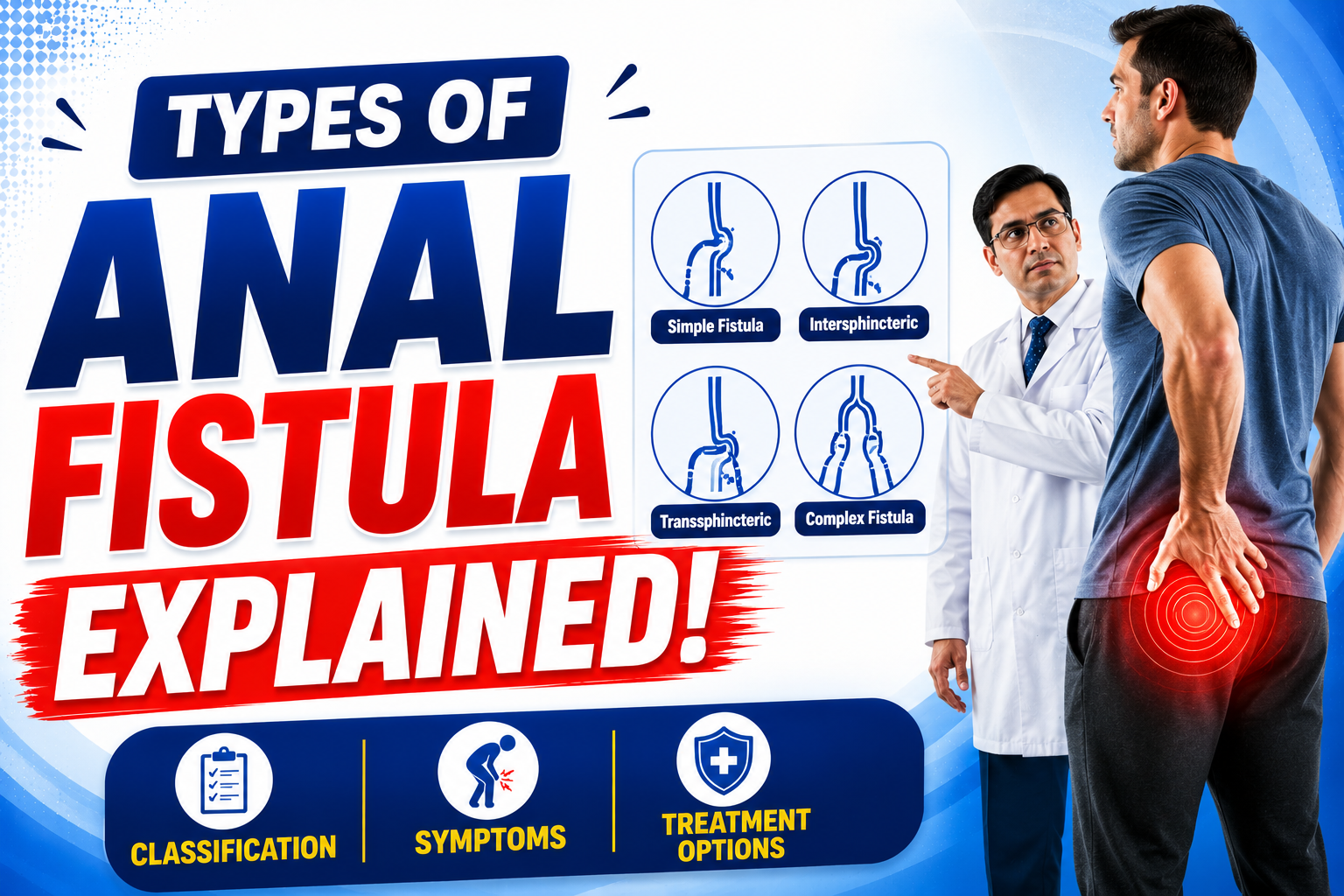
An anal fistula is a small tunnel that forms between the inside of the anal canal and the skin around the anus. Although the condition is common, many people do not realize that there are different types of anal fistula. Each type follows a different path through the tissues around the anus, and this can affect symptoms, treatment choices, recovery, and the chances of the fistula coming back.
Many patients focus only on symptoms such as pain, swelling, or discharge. However, doctors focus on something equally important—the exact path of the fistula. Understanding the different types of anal fistula helps doctors choose the safest and most effective treatment while protecting the muscles responsible for bowel control.
Some fistulas are simple and easier to treat. Others are more complex and may require advanced procedures. Therefore, identifying the type of fistula is one of the most important steps before treatment begins.
In this article, we explain the major types of anal fistula, how they are classified, their symptoms, and how the type of fistula affects treatment planning.
What Is an Anal Fistula?
An anal fistula is an abnormal tunnel that connects the anal canal to the skin near the anus.
In most cases, it develops after an infection in one of the small glands inside the anal canal. When one of these glands becomes blocked, bacteria can grow and form an abscess. Even after the abscess drains or is treated, a tunnel may remain behind. This tunnel becomes a fistula.
Because the infection often persists inside the tract, symptoms may continue for weeks or months if treatment is delayed.
Common symptoms include:
- Persistent pus or fluid discharge
- Pain around the anus
- Swelling or tenderness
- Recurrent abscesses
- Skin irritation
- Bleeding during bowel movements
- Foul-smelling drainage
Many fistulas begin after an abscess. Therefore, understanding the difference between an abscess and a fistula can help patients seek treatment earlier and avoid repeated infections.
Why Is Anal Fistula Classification Important?
Not every fistula is treated in the same way.
Some fistulas pass through very little muscle tissue. Others travel through important muscles that help control bowel movements. Because of this, doctors need to know the exact path of the tract before recommending treatment.
This process is known as anal fistula classification.
The classification of anal fistula helps doctors:
- Understand the location of the tract
- Measure how much muscle is involved
- Decide on the safest treatment
- Reduce the risk of the fistula coming back
- Protect bowel control
As a result, two patients with similar symptoms may need completely different treatment plans.
Understanding Parks Classification of Anal Fistula
The most commonly used system for describing types of anal fistula is called the Parks Classification.
The perianal fistula Parks classification groups fistulas according to how they pass through or around the anal sphincter muscles. These muscles are important because they help control bowel movements.
The fistula in ano Parks classification divides fistulas into four main categories:
- Intersphincteric fistula
- Transsphincteric fistula
- Suprasphincteric fistula
- Extrasphincteric fistula
Understanding these categories helps patients understand why treatment recommendations can differ from one person to another.
An intersphincteric fistula is the most common among all types of anal fistula.
In this type, the tract remains between the internal and external sphincter muscles before opening onto the skin.
Because the tract follows a relatively direct route, treatment is often simpler than with more complex fistulas.
Common Symptoms
Patients may notice:
- Mild pain
- Occasional swelling
- Persistent drainage
- Recurrent infection
This is considered the most common type of anorectal fistula. Fortunately, many patients with this type respond well to treatment when diagnosed early.
A transsphincteric fistula travels through both the internal and external sphincter muscles before reaching the skin.
Since the tract crosses important muscles, treatment requires more careful planning.
Symptoms
Symptoms may include:
- Ongoing discharge
- Recurrent abscesses
- Pain while sitting
- Swelling around the anus
Because more muscle tissue is involved, doctors often choose treatments that protect bowel control while still removing the fistula.
A suprasphincteric fistula follows a more complicated path.
Instead of passing directly through the muscles, the tract travels upward above the sphincter muscles before looping downward toward the skin.
Although this type is less common, it can be more difficult to diagnose and treat.
Why It Is More Complex
The tract may extend deeper into the surrounding tissues. Therefore, detailed imaging is often needed before treatment begins.
MRI scans are especially useful because they help doctors identify the complete path of the fistula.
An extrasphincteric fistula is the rarest of the major different types of anal fistula.
In this type, the tract bypasses the sphincter muscles and may extend from deeper areas of the rectum to the skin.
Possible Causes
Extrasphincteric fistulas may be linked to:
- Previous surgery
- Trauma
- Severe infection
- Inflammatory bowel disease
Because these fistulas are uncommon and complex, specialist assessment is usually required before treatment.
Simple vs Complex Anal Fistulas
In addition to the Parks Classification, doctors often describe fistulas as simple or complex.
What Is a Simple Fistula?
A simple fistula usually has:
- One tract
- Limited muscle involvement
- Lower risk of recurrence
- Easier treatment planning
Many intersphincteric fistulas fall into this category.
What Is a Complex Fistula?
A complex fistula may have:
- Multiple tracts
- Significant muscle involvement
- Recurrent infections
- Previous failed treatment
These fistulas are generally more challenging to treat.
Why This Difference Matters
The difference between simple and complex fistulas affects:
- Treatment choice
- Recovery time
- Follow-up care
- Long-term outcomes
Therefore, proper diagnosis remains essential before deciding on treatment.
Can an Anal Fistula Be Painless?
Many people believe that fistulas always cause severe pain. However, that is not always true.
The answer to the question can fistula be painless is yes.
Some fistulas cause little discomfort. Instead, patients may only notice persistent drainage or mild skin irritation.
However, a painless fistula should never be ignored.
Even if symptoms seem mild, the tract can continue to cause infection beneath the skin. Over time, the condition may worsen and become more difficult to treat.
Symptoms Seen in Different Types of Anal Fistula
Although the various types of anal fistula differ in their location and complexity, many share similar symptoms.
Common symptoms include:
- Persistent discharge
- Swelling around the anus
- Pain or tenderness
- Bleeding
- Skin irritation
- Recurrent abscesses
- Foul-smelling drainage
Some people ignore these symptoms because they come and go. However, recurring symptoms often indicate an ongoing problem.
Recognizing the warning signs of an anal fistula early can help prevent repeated infections and treatment delays.
How Doctors Diagnose the Type of Anal Fistula
Symptoms alone cannot identify the exact type of fistula.
Therefore, doctors use several methods to determine the location and complexity of the tract.
Physical Examination
The first step is usually a detailed examination of the affected area.
Doctors look for:
- External openings
- Areas of swelling
- Drainage sites
- Signs of infection
MRI Fistulogram
MRI is one of the most useful tests for evaluating types of anal fistula.
It helps doctors:
- Identify hidden tracts
- Detect secondary branches
- Locate abscesses
- Understand muscle involvement
Endoanal Ultrasound
In some cases, ultrasound provides additional information about the tract and surrounding muscles.
Examination Under Anesthesia
Complex fistulas sometimes require examination under anesthesia to fully map the tract before treatment.
Together, these investigations help doctors develop an accurate treatment plan.
How the Type of Anal Fistula Affects Treatment
Treatment depends heavily on fistula type.
A procedure that works well for one patient may not be suitable for another. Therefore, treatment decisions are based on the anatomy and complexity of the fistula.
Fistulotomy
Fistulotomy involves opening the tract so that it can heal naturally. This approach is often used for simple fistulas.
Laser Treatment
For suitable patients, laser treatment for anal fistula offers a minimally invasive option.
Potential benefits include:
- Less tissue damage
- Faster recovery
- Reduced discomfort
- Better preservation of surrounding muscles
Seton Placement
Some complex fistulas require a seton to help drain infection while protecting the sphincter muscles.
LIFT Procedure
The LIFT procedure is another technique used to treat selected complex fistulas while preserving bowel control.
Treatment for Complex Fistulas
More advanced fistulas may require staged procedures or specialized surgical approaches. The best option depends on the exact type and location of the tract.
Can Anal Fistulas Heal Without Surgery?
Many patients hope that a fistula will disappear on its own.
Unfortunately, complete healing without treatment is uncommon.
Symptoms may improve temporarily. However, the tract itself usually remains present. Because of this, infection and drainage often return later.
Many patients delay treatment because of common misconceptions about fistula disease, believing that symptom improvement means the fistula has healed. In reality, medical evaluation is usually necessary to confirm healing.
When Should You See a Doctor?
Early treatment can prevent complications and improve outcomes. You should consult a doctor if you experience:
- Persistent drainage
- Recurrent abscesses
- Pain around the anus
- Swelling
- Bleeding
- A non-healing opening near the anus
The sooner a fistula is diagnosed, the easier it may be to treat.
Conclusion
Understanding the various types of anal fistula is important because the type of fistula affects diagnosis, treatment, recovery, and the risk of recurrence. While symptoms such as pain, discharge, and swelling may be similar across different cases, the path of the tract can vary significantly.
Therefore, identifying the exact fistula type is a key step before treatment begins. Early diagnosis allows doctors to choose the safest treatment while protecting bowel control and reducing the chances of the condition coming back. If you experience ongoing drainage, recurrent abscesses, or other symptoms of a fistula, seeking medical advice early can help prevent complications and improve long-term outcomes. Learn more about our anal fistula treatment in Bangalore for safe, effective care.
Frequently Asked Questions
The four major types are intersphincteric, transsphincteric, suprasphincteric, and extrasphincteric fistulas.
The intersphincteric fistula is generally the most common type.
Parks classification is a system that categorizes fistulas according to their relationship with the anal sphincter muscles.
Yes. Some fistulas cause little or no pain, especially when drainage occurs freely.
Complex fistulas involving significant muscle tissue are usually more challenging to manage.
Yes. The treatment approach depends heavily on the type and complexity of the fistula.
Complete healing without treatment is uncommon because the tract usually remains present.
Diagnosis may involve physical examination, MRI, ultrasound, and examination under anesthesia.