
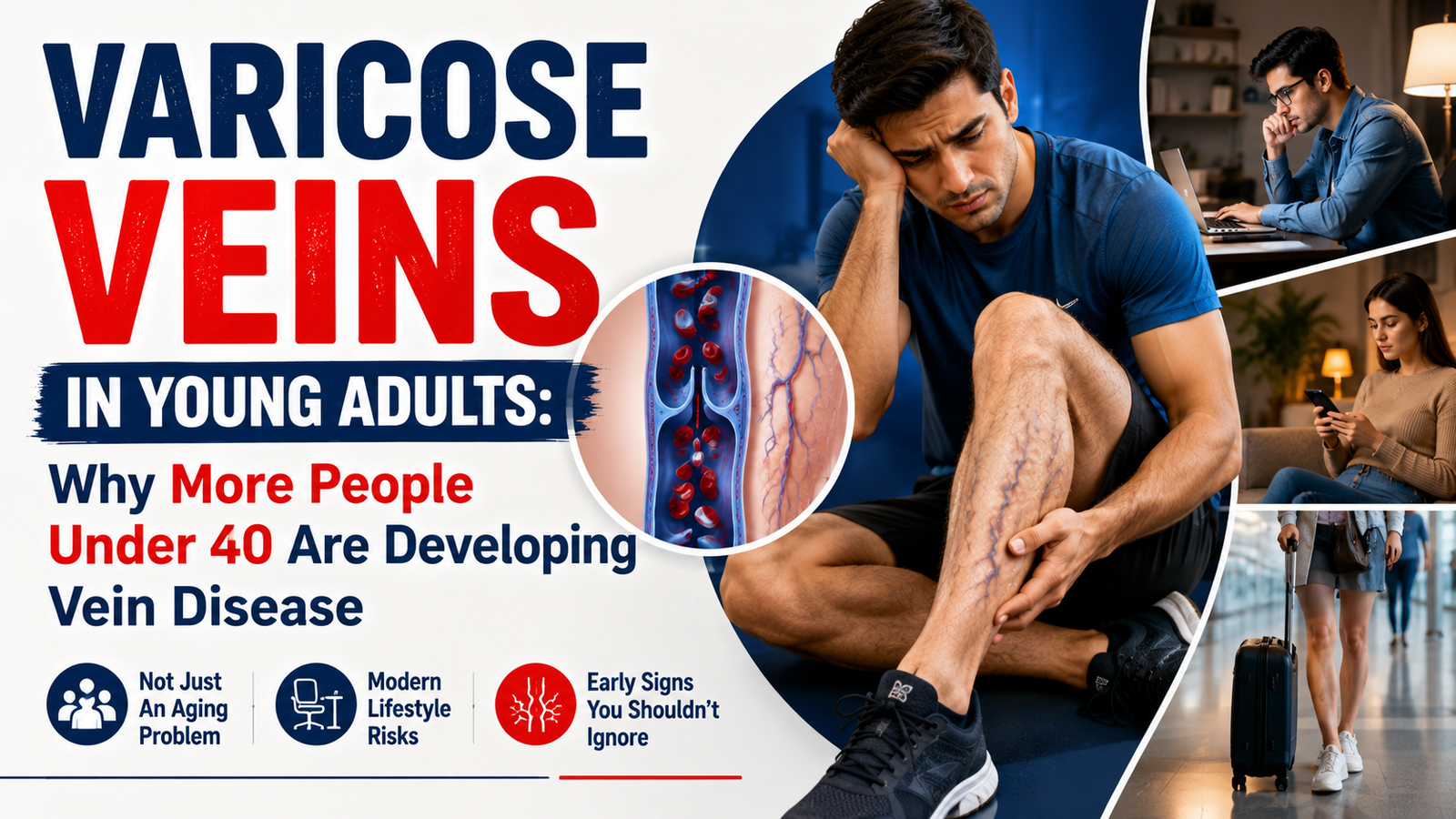
Varicose Veins in Young Adults: Why More People Under 40 Are Developing Vein Disease
Sedentary lifestyles, desk jobs, pregnancy, and genetics are causing varicose veins to appear earlier than ever. Here’s what every young adult needs to know.
⏱️ 8 min read 🩺 Reviewed by Hari Laser Clinics Vascular Team
For many years, varicose veins were considered a condition that mainly affected older adults. Today, however, doctors are seeing a growing number of people in their 20s and 30s developing enlarged, twisted veins in their legs. Busy work schedules, long hours of sitting, physically demanding jobs, obesity, pregnancy, and family history have all contributed to this rising trend.
Many young adults dismiss early symptoms such as aching legs, heaviness, mild swelling, or visible blue veins as temporary fatigue. Unfortunately, these warning signs may indicate the beginning of chronic venous disease, which can gradually worsen if left untreated.
✅ The Good News
Early diagnosis and modern treatments have made managing varicose veins easier than ever. Minimally invasive procedures like Endovenous Laser Treatment (EVLT) and Radiofrequency Ablation (RFA) can effectively treat damaged veins with minimal discomfort and faster recovery compared to traditional surgery.
What Are Varicose Veins?
Varicose veins are enlarged, twisted veins that usually appear on the legs and feet. They develop when the tiny one-way valves inside the veins become weak or damaged. These valves normally help blood flow upward toward the heart. When they stop working properly, blood begins to pool inside the veins, increasing pressure and causing the veins to stretch and enlarge.
Although they often appear as blue or purple bulging veins beneath the skin, varicose veins are much more than a cosmetic concern. They are a sign of poor blood circulation and may lead to discomfort, swelling, skin changes, and long-term complications if not treated.
Common symptoms include:
- Visible twisted blue or purple veins
- Aching or throbbing leg pain
- Feeling of heavy legs
- Swelling around the ankles
- Burning or itching over the veins
- Night-time leg cramps
- Fatigue after standing for long periods
Why Varicose Veins in Young Adults?
The increasing number of young adults with varicose veins is largely linked to modern lifestyles. While ageing remains a risk factor, several other factors now contribute to vein disease much earlier in life.
🧬 Genetics
Family history is one of the strongest risk factors. If one or both parents have varicose veins, the chances of developing the condition at a younger age are significantly higher. Inherited weakness in the vein walls or valves makes it easier for blood to pool.
💺 Sedentary Lifestyle
Many professionals spend 8–10 hours each day sitting at a desk. Prolonged sitting reduces calf muscle activity, slowing circulation and increasing pressure inside the leg veins.
- IT professionals & software engineers
- Students & accountants
- Graphic designers & remote workers
🧍 Jobs Requiring Prolonged Standing
Standing continuously for several hours places excessive pressure on the veins.
- Teachers, nurses & doctors
- Retail employees & hairdressers
- Security personnel & factory workers
- Chefs
🏃 Lack of Physical Activity
Exercise keeps the calf muscles active, helping pump blood back toward the heart. A physically inactive lifestyle allows blood to remain in the lower limbs for longer, increasing the risk of vein damage.
⚖️ Obesity
Excess body weight increases pressure on the veins, making it harder for blood to flow upward. Over time, this stretches the vein walls and weakens the valves. Maintaining a healthy weight benefits both vein health and overall cardiovascular health.
🤰 Pregnancy & Hormonal Changes
Pregnancy increases blood volume and places additional pressure on the pelvic and leg veins. Hormonal changes also relax the blood vessel walls. Some women notice improvement after childbirth, while others continue to experience symptoms requiring treatment.
🏋️ Heavy Weightlifting
Strength training itself does not directly cause varicose veins. However, lifting very heavy weights with improper breathing techniques may temporarily increase pressure inside the abdominal and leg veins — especially in people who already have weak vein valves.
🚬 Smoking & Poor Lifestyle Habits
Smoking damages blood vessels and reduces healthy circulation. When combined with poor diet, obesity, dehydration, and inactivity, it significantly increases the likelihood of chronic vein disease.
Early Symptoms You Should Never Ignore
Varicose veins usually develop gradually. Many young adults mistake the early signs for ordinary muscle fatigue, delaying medical attention.
⚠️ Watch for These Warning Signs
- Visible blue or purple veins beneath the skin
- Aching or throbbing pain in the legs
- Persistent feeling of heavy legs
- Swelling around the ankles
- Burning or itching over the veins
- Night cramps or restless legs
- Leg fatigue after standing
- Brown skin discoloration near the ankles
If symptoms continue despite rest, it is important to consult a vein specialist before the condition progresses.
Can Varicose Veins Become Serious?
Yes. While mild varicose veins may initially seem harmless, untreated vein disease often worsens because damaged vein valves cannot repair themselves. Possible complications include:
🩸 Chronic Venous Insufficiency (CVI)
Persistent pooling of blood reduces healthy circulation and causes long-term leg pain, swelling, and heaviness.
🩹 Bleeding Veins
Because varicose veins have thinner walls, even a small injury can cause significant bleeding.
🔴 Skin Changes
Poor circulation may lead to brown pigmentation, dry skin, thickened skin, and persistent itching around the ankles.
🔥 Superficial Thrombophlebitis
Inflammation and clot formation within superficial veins can cause redness, swelling, warmth, and tenderness.
🩺 Venous Ulcers
Poor blood flow can cause slow-healing wounds around the ankles that require specialised treatment — a serious complication of long-term untreated vein disease.
⚡ Key Takeaway
Seeking treatment early greatly reduces the risk of these complications. Modern minimally invasive procedures mean there is no reason to delay care.
How Are Varicose Veins Diagnosed?
Accurate diagnosis is essential for choosing the right treatment. At Hari Laser Clinics, evaluation typically includes a detailed history, physical examination, and a specialised scan.
📋 Medical History
Your doctor will discuss symptoms, occupation, family history, previous blood clots, pregnancy history, and lifestyle habits.
🔍 Physical Examination
The legs are examined for enlarged veins, swelling, skin changes, tenderness, and signs of advanced venous disease.
📡 Duplex Doppler Ultrasound
The gold standard for diagnosing varicose veins. This painless scan identifies blood flow patterns, damaged valves, venous reflux, blood clots, and vein anatomy — guiding the most appropriate treatment plan.
Modern Treatment Options for Varicose Veins
Treatment depends on the severity of the condition and the ultrasound findings. At Hari Laser Clinics, every patient receives a personalised treatment plan.
🌿 Conservative Management
Regular exercise, weight loss, leg elevation, compression stockings, healthy diet, and avoiding prolonged sitting or standing. These measures improve symptoms but do not repair damaged valves.
💉 Sclerotherapy
Suitable for small varicose veins and spider veins. Uses an injection to close the affected vein with minimal discomfort.
📡 Radiofrequency Ablation (RFA)
Uses controlled heat to seal damaged veins, improving circulation with minimal discomfort and a short recovery period.
⭐ Endovenous Laser Treatment (EVLT)
One of the most advanced treatments available. A laser fibre is inserted into the affected vein under ultrasound guidance, sealing it from within — no major cuts, minimal pain, same-day discharge.
Why EVLT Is the Preferred Choice for Young Adults
Young adults often prefer EVLT because it fits their active lifestyle — minimal downtime, no large scars, and fast return to work.
- Minimally invasive — no large cuts or stitches
- Less post-procedure pain compared to conventional surgery
- Same-day discharge — go home the same day
- Early return to work and daily activities
- Short recovery time
- Better cosmetic outcomes — no visible scarring
- Long-lasting symptom relief
- High success rates
Most patients are encouraged to walk soon after treatment and resume light daily activities within a short period.
How to Prevent Varicose Veins
Although genetics cannot be changed, healthy habits can significantly reduce the risk of developing varicose veins or slow their progression.
- Stay physically active — walking, swimming, cycling, and yoga are excellent choices
- Walk every hour if you have a desk job — even a short walk helps
- Avoid standing continuously for long periods — shift position regularly
- Maintain a healthy body weight
- Eat a fibre-rich, balanced diet and stay hydrated
- Quit smoking
- Wear compression stockings if advised by your doctor
- Elevate your legs after long periods of standing
- Seek medical advice when symptoms first appear — don't wait
Why Choose Hari Laser Clinics?
At Hari Laser Clinics, patients receive comprehensive care for varicose veins using advanced diagnostic tools and minimally invasive treatments. We focus not only on treating visible veins but also on improving long-term vein health and overall quality of life.
- Detailed vein evaluation with Duplex Doppler Ultrasound
- Personalised treatment plans tailored to each patient
- Advanced EVLT and RFA procedures
- Experienced laser surgeons
- Faster recovery with minimal discomfort
- Patient-focused follow-up care
- Guidance on preventing recurrence
Experiencing Leg Pain or Visible Veins? Get Evaluated Today
At Hari Laser Clinics, our specialists offer personalised evaluation and advanced minimally invasive treatment options to help restore healthy circulation and get you back to an active, comfortable lifestyle.
Frequently Asked Questions
Can young adults get varicose veins?
Are varicose veins dangerous?
Can exercise cure varicose veins?
What is the best treatment for varicose veins?
Is laser treatment painful?
How long is recovery after EVLT?
Can varicose veins come back?
When should I see a doctor?
This article is for informational purposes only and does not substitute professional medical advice. Please consult a qualified specialist at Hari Laser Clinics for diagnosis and treatment tailored to your condition.