
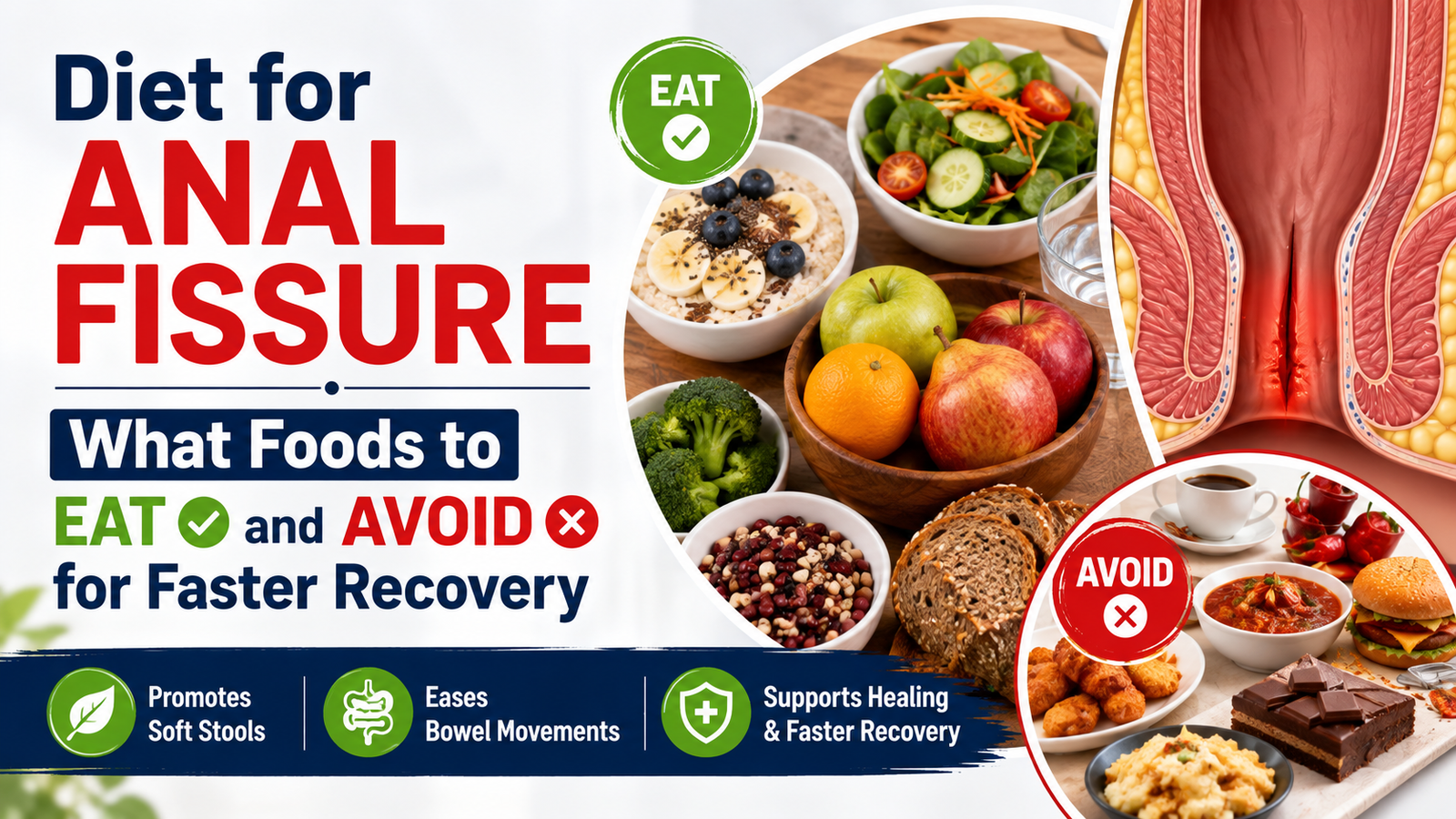
Diet for Anal Fissure: What Foods to Eat and Avoid for Faster Recovery
The right food choices can make or break your recovery from an anal fissure. Learn which foods help healing and which to avoid — with a practical Indian diet for anal fissure plan.
⏱️ 8 min read 🩺 Reviewed by Hari Laser Clinics Specialist Team
An anal fissure is a small tear in the lining of the anus that can cause sharp pain, burning, and bleeding during bowel movements. Although medications and medical treatment are important in some cases, your daily diet plays a major role in how quickly the fissure heals. Every bowel movement either supports healing or reopens the tear, making food choices an important part of recovery.
The primary goal of a diet for anal fissure is to keep stools soft and easy to pass. Foods rich in fibre, adequate water intake, and healthy bowel habits reduce constipation and straining, giving the injured tissue time to heal naturally.
Why Does Diet Matter in Anal Fissure Recovery?
Many people focus only on creams or medications, but diet is equally important during recovery. An anal fissure heals best when bowel movements are soft, regular, and require minimal straining. When stools become hard because of constipation or inadequate fibre intake, they stretch the anal canal while passing — this can reopen the tear, increase pain, and restart the healing process. Repeated injury may even turn an acute fissure into a chronic one.
A balanced diet for anal fissure helps by:
- Softening stools naturally
- Reducing constipation
- Preventing excessive straining
- Decreasing pain during bowel movements
- Supporting faster tissue healing
- Lowering the risk of recurrence
ℹ️ Important
While dietary changes can help many acute fissures heal, persistent symptoms should not be ignored. If pain or bleeding continues despite following a healthy diet, consult a specialist. Anal Fissure Treatment in Bangalore →
Best Foods to Eat for Anal Fissure Recovery
Choosing the right foods is one of the most effective ways to support healing. Instead of relying on a single “superfood,” focus on a balanced diet for anal fissure that provides fibre, fluids, and nutrients throughout the day.
🌾 1. Whole Grains
Naturally rich in fibre — absorb water, add bulk to stools, and help them pass easily without excessive straining.
- Oats / Oatmeal
- Brown rice
- Whole wheat chapati
- Quinoa
- Barley
🍎 2. Fresh Fruits
Provide dietary fibre, vitamins, antioxidants, and water that support digestive health and encourage smooth bowel movements.
- Papaya (contains papain enzyme)
- Pears & apples (with skin)
- Bananas
- Oranges
- Kiwi & berries
🥦 3. Fibre-Rich Vegetables
Essential for fibre, vitamins, minerals, and antioxidants that support digestive health and tissue repair.
- Spinach
- Broccoli
- Carrots
- Pumpkin
- Bottle gourd
- Beetroot
🫘 4. Lentils, Beans & Pulses
Excellent sources of both fibre and plant-based protein. Improve bowel movements while supporting overall nutrition.
- Lentils (dal)
- Chickpeas
- Kidney beans
- Green gram
- Black-eyed peas
🌱 5. Seeds That Support Digestion
Soluble fibre from seeds absorbs water and helps soften stools naturally. Sprinkle over oatmeal, yogurt, or salads.
- Flaxseeds (ground)
- Chia seeds
- Psyllium husk (Isabgol — as advised by doctor)
🥛 6. Probiotic Foods
A healthy balance of gut bacteria supports digestion and promotes regular bowel movements. Choose unsweetened varieties.
- Plain curd / yogurt
- Kefir
- Traditional buttermilk
7. Drink Plenty of Water
Even the highest-fibre diet for anal fissure will not work effectively without adequate hydration. Water helps fibre absorb moisture, making stools softer and easier to pass. Without enough fluids, increasing fibre alone may actually worsen constipation.
Most adults should aim for approximately 2 to 3 litres of water each day. Along with plain water, you can also include:
- Coconut water
- Buttermilk
- Clear vegetable soups
- Lemon water without excess sugar
💧 Remember
Fibre, water, and regular physical activity work together to maintain soft stools and healthy digestion. Increasing fibre without adequate water can worsen constipation.
Learn how to prevent anal fissures from recurring: How to Prevent Anal Fissure from Recurring →
Foods to Avoid During Anal Fissure Recovery
Avoiding foods that contribute to constipation or irritate the digestive tract is equally important. Hard stools and repeated straining can reopen the tear, increase pain, and delay healing.
🌶️ 1. Spicy Foods
May irritate the digestive tract and cause a burning sensation while passing stools. Avoid until the fissure has healed.
- Green or red chillies
- Spicy curries
- Pickles with excess chilli
- Hot sauces
Can Spicy Food Worsen an Anal Fissure? →
🍟 2. Processed & Refined Foods
Low in fibre, high in refined carbohydrates — slow digestion and increase the risk of constipation.
- White bread
- Cakes & pastries
- Pizza & burgers
- Instant noodles
- Chips & packaged snacks
🍖 3. Deep-Fried Foods
Take longer to digest, contribute to sluggish bowel movements, and provide very little fibre.
- French fries
- Pakoras
- Samosas
- Fried chicken
- Poori
🧀 4. Excess Cheese & High-Fat Dairy
May contribute to constipation in some people. Choose plain curd or yogurt instead, which provide probiotics that support gut health.
🥩 5. Red Meat
Contains very little fibre and takes longer to digest. Choose lean proteins alongside fibre-rich foods.
- Fish
- Skinless chicken
- Lentils & chickpeas
- Beans
🍺 6. Alcohol & Excess Caffeine
May contribute to dehydration, making stools harder and more difficult to pass. If you drink coffee or tea, increase your water intake throughout the day to compensate.
Sample Indian Diet Plan for Anal Fissure Recovery
A practical meal plan makes it easier to meet your daily fibre and hydration goals while reducing constipation.
| Meal | Recommended Foods |
|---|---|
| Early Morning | Warm water with soaked raisins or 1 teaspoon of soaked flaxseeds |
| Breakfast | Vegetable oats or oatmeal with papaya and plain curd |
| Mid-Morning | Apple, pear, or banana with plenty of water |
| Lunch | Brown rice or whole wheat chapati, dal, cooked vegetables, salad, and curd |
| Evening Snack | Coconut water, buttermilk, or roasted chickpeas |
| Dinner | Vegetable soup, whole wheat chapati, dal, and lightly cooked vegetables |
| Before Bed | Warm water if needed to maintain hydration |
Healthy Eating Habits That Support Faster Healing
Even the best diet for anal fissure may not be enough if healthy bowel habits are ignored. Small lifestyle changes can reduce strain during bowel movements and lower the risk of recurrence.
- Drink 2–3 litres of water throughout the day
- Increase fibre gradually instead of making sudden changes
- Eat meals at regular times
- Chew food thoroughly
- Don't delay the urge to pass stools
- Avoid sitting on the toilet for long periods
- Stay physically active with at least 20–30 minutes of walking daily
These habits are also important for preventing future episodes: How to Prevent Anal Fissure from Recurring →
Can Diet Alone Heal an Anal Fissure?
For many people with an acute anal fissure, following the right diet for anal fissure can significantly improve symptoms. Increasing fibre intake, staying hydrated, and avoiding constipation reduce pressure on the tear and allow it to heal naturally.
However, diet has its limitations. If the fissure has been present for more than six weeks, causes severe pain after every bowel movement, or repeatedly returns despite following a healthy diet, it may have become chronic. Chronic fissures often develop a persistent muscle spasm that prevents healing and may require medical treatment.
🔍 Acute vs Chronic Anal Fissure
Understanding the difference between acute and chronic anal fissures can help you recognise when home remedies are no longer enough. Acute vs Chronic Anal Fissure — Key Differences Explained →
When Should You See a Doctor?
Many anal fissures improve with dietary changes and home care, but some require professional evaluation. Consult a specialist if you experience:
⚠️ See a Specialist If You Notice
- Severe pain during or after bowel movements
- Bleeding that continues for several weeks
- A fissure that hasn’t healed after 4–6 weeks
- Recurrent anal fissures
- Difficulty passing stools despite increasing fibre and water intake
- A lump or skin tag near the fissure
If your symptoms persist despite following a healthy anal fissure diet, explore Anal Fissure Treatment in Bangalore →
Still Experiencing Pain Despite Dietary Changes?
Our specialists at Hari Laser Clinics can evaluate your condition and recommend the most appropriate treatment — from dietary guidance to advanced laser procedures — for faster, lasting relief.
Frequently Asked Questions
What is the best diet for an anal fissure?
Is banana good for an anal fissure?
Can I eat rice if I have an anal fissure?
Are eggs safe during anal fissure recovery?
How much water should I drink?
This article is for informational purposes only and does not substitute professional medical advice. Please consult a qualified specialist at Hari Laser Clinics for diagnosis and treatment tailored to your condition.