
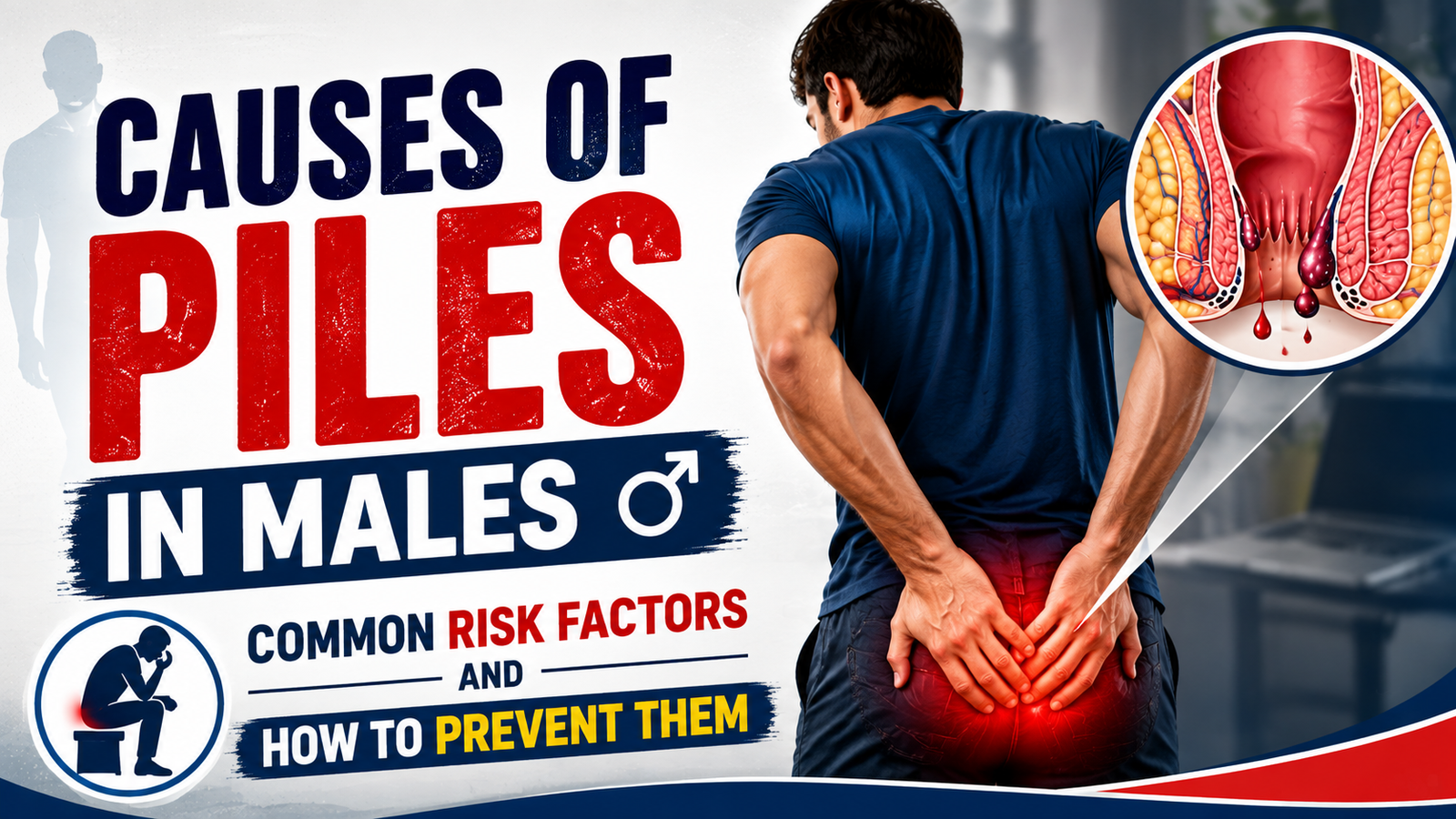
Causes of Piles in Males: Common Risk Factors and How to Prevent Them
Chronic constipation, prolonged sitting, heavy lifting, obesity — understand why men develop piles and what you can do to prevent and treat them.
⏱️ 8 min read 🩺 Reviewed by Hari Laser Clinics Specialist Team
Piles, also known as hemorrhoids, are swollen veins in the lower rectum or around the anus. Although they can affect both men and women, certain lifestyle habits, occupations, and health conditions make many men more likely to develop them. Understanding the causes of piles in males is the first step toward preventing the condition and seeking treatment before symptoms become severe.
The most common causes include chronic constipation, straining during bowel movements, prolonged sitting, low-fiber diets, heavy lifting, obesity, and chronic diarrhea. All of these factors increase pressure on the veins in the anal region. Over time, the veins stretch, enlarge, and become inflamed.
✅ Good News
Many of these risk factors are preventable. Simple lifestyle changes — eating more fibre, staying hydrated, exercising regularly, and avoiding prolonged straining — can significantly reduce the risk of developing piles. How to Prevent Piles →
What Causes Piles in Males?
Inside the anal canal are small cushions of blood vessels that help maintain continence. Under normal conditions, these veins remain healthy and flexible. However, when repeated pressure is placed on them, they begin to stretch and swell. Over time, this constant pressure weakens the supporting tissues, causing the veins to enlarge and form piles.
Piles may develop inside the rectum (internal piles) or around the anus (external piles). Both types share many of the same risk factors, but their symptoms may differ. Learn the Difference Between Internal and External Piles →
Why Are Men More Likely to Develop Piles?
Although piles affect both men and women, several lifestyle factors make men more likely to experience repeated pressure on the rectal veins. Many men work in jobs that involve long hours of sitting, driving, or heavy physical labour. Lifestyle habits such as diets high in processed foods and low in fibre, inadequate water intake, obesity, smoking, and lack of regular exercise all increase the likelihood of constipation and poor bowel habits.
Some medical conditions are also more common in older men — for example, an enlarged prostate may cause repeated straining during urination, indirectly increasing pressure within the pelvic floor. While being male does not directly cause hemorrhoids, these lifestyle and health factors explain why many men are more likely to develop them during adulthood.
Most Common Causes of Piles in Males
💩 1. Chronic Constipation
One of the leading causes. When stools become hard and difficult to pass, many people strain repeatedly during bowel movements, increasing pressure inside the rectum and causing veins to stretch and swell.
- Low fibre intake
- Inadequate water consumption
- Lack of physical activity
- Ignoring the urge to pass stools
- Certain medications
🥗 2. Low-Fibre Diet
A diet lacking fibre results in hard stools that require excessive straining. Frequent consumption of fast food, processed snacks, refined flour, sugary drinks, and large amounts of red meat provides very little dietary fibre.
- Whole grains
- Fresh fruits
- Green leafy vegetables
- Lentils and beans
- Nuts and seeds
💺 3. Prolonged Sitting
Remaining seated for several hours reduces circulation in the pelvic region and increases pressure on the veins around the anus. Some people also spend excessive time on the toilet while using their phones, further increasing pressure.
- Office workers & software professionals
- Drivers
- Gamers
- People working from home
🏋️ 4. Heavy Weightlifting & Strenuous Activity
When lifting heavy objects, many people unintentionally hold their breath while straining. This increases pressure inside the abdomen, which is then transmitted to the rectal veins. Repeating this process over months or years may contribute to piles.
- Improper breathing during lifts
- Excessive straining
- Poor bowel habits combined with gym training
⚖️ 5. Obesity & Excess Body Weight
Carrying excess body weight increases pressure inside the abdomen and pelvis, placing continuous stress on the rectal veins. Men who are overweight are also more likely to experience constipation, reduced physical activity, and prolonged sitting — all of which further increase the risk.
🚽 6. Chronic Diarrhea
Frequent bowel movements repeatedly irritate the anal canal and increase inflammation around the rectal veins. Constant wiping and repeated pressure during episodes of diarrhea can damage the delicate tissues surrounding the anus.
- Digestive infections
- Irritable Bowel Syndrome (IBS)
- Food intolerances
- Inflammatory bowel diseases
👴 7. Ageing
As men grow older, the connective tissues supporting the veins around the rectum naturally become weaker. Blood vessel walls also lose elasticity, making them more likely to stretch under pressure. Piles become more common after age 45, though younger adults can also develop them due to poor lifestyle habits.
🧬 8. Family History & Genetics
Some men are genetically more likely to develop piles because they inherit weaker connective tissues or vein walls. If your parents or close family members have experienced hemorrhoids, your risk may be slightly higher. However, genetics alone is rarely responsible — healthy lifestyle habits still play the biggest role.
🫀 9. Prostate Problems & Straining During Urination
An enlarged prostate (Benign Prostatic Hyperplasia or BPH) is common in older men and may indirectly contribute to piles. When urination becomes difficult, many men strain repeatedly to empty the bladder. This repeated increase in abdominal and pelvic pressure affects the rectal veins in much the same way as straining during bowel movements. Although prostate problems do not directly cause piles, they may increase the risk when combined with constipation, prolonged sitting, or obesity.
Additional Risk Factors That Increase the Chances of Developing Piles
Besides the major causes, several everyday habits increase the likelihood of developing hemorrhoids. Most of these risk factors are preventable.
- Sitting on the toilet for long periods while using a mobile phone
- Ignoring the urge to pass stools
- Drinking too little water
- Eating a low-fibre diet
- Smoking
- Excessive alcohol consumption
- Lack of regular exercise
- Long hours of sitting at work
- Frequent heavy lifting without proper technique
One of the simplest ways to reduce your risk is by adopting healthy bowel habits: How to Prevent Piles: Tips and Strategies →
Early Symptoms Men Should Never Ignore
The causes of piles in males usually develop gradually, and the symptoms may be mild at first. Recognising the warning signs early allows treatment to begin before the condition progresses.
⚠️ Common Symptoms — Seek Evaluation If You Notice
- Bright red bleeding during bowel movements
- Pain while passing stools
- Itching around the anus
- Swelling near the anal opening
- A soft lump around the anus
- Mucus discharge
- A feeling that the bowel has not emptied completely
Learn more about the early signs of piles: Early Piles Signs You Must Not Ignore →
Can Piles Be Prevented?
Yes. Many of the causes of piles in males are linked to lifestyle habits, making prevention possible for many people.
- Eat 25–35 grams of fibre every day
- Drink at least 2–3 litres of water daily
- Exercise regularly — walking, swimming, or cycling are ideal
- Avoid prolonged sitting — take a short walk every hour
- Don't strain during bowel movements
- Respond promptly to the urge to pass stools
- Maintain a healthy body weight
- Avoid sitting on the toilet for extended periods
- Use proper technique and controlled breathing during heavy lifting
Diet plays a major role in prevention. Learn about the best foods for piles: Best Foods for Piles → | High-Fiber Foods to Prevent Piles → | Can Water and Sleep Prevent Piles? →
When Should You See a Doctor?
Lifestyle changes can help prevent and manage early piles, but they are not always enough. Medical evaluation is recommended if you experience:
- Persistent bleeding during bowel movements
- Severe pain or swelling
- A prolapsed pile that doesn't go back inside
- Symptoms lasting longer than one week
- Frequent recurrence of piles
- Difficulty sitting because of pain
- A lump that suddenly becomes very painful
Modern treatments such as laser surgery are minimally invasive, less painful, and allow faster recovery compared to traditional surgery. Piles Treatment in Bangalore →
Why Choose Hari Laser Clinics?
At Hari Laser Clinics, our experienced specialists combine accurate diagnosis with advanced minimally invasive procedures to deliver personalised care for every patient.
- Experienced laser and proctology specialists
- Comprehensive evaluation and accurate diagnosis
- Advanced Laser Piles Surgery for suitable patients
- Personalised treatment plans — no unnecessary procedures
- Day-care procedures with minimal hospital stay
- Less pain and quicker recovery compared to conventional surgery
- Patient-centred care and dedicated follow-up
- Guidance on lifestyle changes to reduce recurrence
Experiencing Symptoms? Get a Proper Diagnosis Today
At Hari Laser Clinics, our specialists will evaluate your condition and recommend the most appropriate treatment — from lifestyle guidance to advanced laser procedures — for lasting relief.
Frequently Asked Questions
What is the main cause of piles in males?
Why do men get piles more often?
Can gym workouts cause piles?
Does sitting for long hours cause piles?
Can piles go away on their own?
This article is for informational purposes only and does not substitute professional medical advice. Please consult a qualified specialist at Hari Laser Clinics for diagnosis and treatment tailored to your condition.