
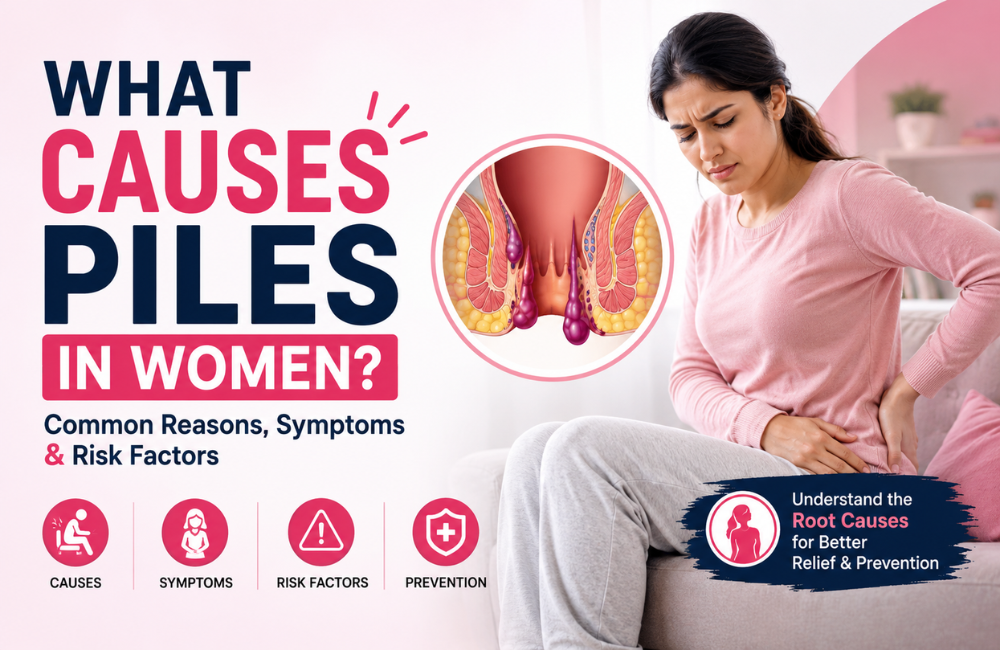
Key Takeaways
- The most common causes of piles in women include constipation, pregnancy, prolonged sitting, and straining during bowel movements.
- Hormonal changes and childbirth can increase pressure on rectal veins.
- Piles are especially common during pregnancy and after delivery.
- Early symptoms include itching, bleeding, swelling, and pain during bowel movements.
- Lifestyle changes and early treatment can help reduce recurrence and discomfort.
Introduction
Understanding the causes of piles in women is important because many women ignore early symptoms until the condition becomes painful or recurrent.
Piles, also called hemorrhoids, are common in women and are often linked to constipation, pregnancy, prolonged sitting, and hormonal changes. In many cases, daily lifestyle habits and bowel patterns play a major role in triggering symptoms.
Knowing the common risk factors, early warning signs, and prevention methods can help women manage symptoms early and avoid complications.
What Are Piles?
Piles are swollen veins in the lower rectum or around the anus. They can develop internally inside the rectum or externally around the anal opening.
Internal piles may cause painless bleeding, while external piles are more likely to cause swelling, pain, itching, or discomfort while sitting. Understanding the difference between internal and external piles can help identify symptoms more accurately.
Why Are Women More Prone to Piles?
Women are more vulnerable to piles because of physical and hormonal factors that increase pressure around rectal veins.
Pregnancy, childbirth, and hormonal fluctuations can weaken supporting tissues and increase strain during bowel movements. Women are also more likely to experience constipation during pregnancy or menopause, which further raises the risk.
In some cases, pelvic floor stress after childbirth and long periods of sitting due to work or household responsibilities can also contribute to piles development.
Common Causes of Piles in Women
Chronic Constipation and Straining
Constipation is one of the most common causes of piles in women. Hard stools and repeated straining increase pressure inside rectal veins, causing them to swell over time.Ignoring the urge to pass stool, poor hydration, and irregular bowel habits can make constipation worse and increase irritation around the anal area.Pregnancy and Childbirth
Pregnancy significantly increases the risk of piles. As the uterus grows, it places extra pressure on pelvic and rectal veins. Hormonal changes during pregnancy can also slow bowel movements, making constipation more common.The risk becomes even higher during the third trimester and after vaginal delivery because pushing during labor increases pressure around rectal tissues. Many women notice piles symptoms for the first time after childbirth.Sitting Too Long
Prolonged sitting can increase pressure around the lower rectum, especially in women with desk jobs or sedentary lifestyles.Long sitting hours may increase rectal pressure, similar to how sitting too long can worsen piles symptoms.Low-Fiber Diet and Poor Hydration
A diet low in fiber can make stools harder and more difficult to pass. This increases straining and irritation during bowel movements.Low water intake can also worsen constipation and make symptoms more uncomfortable. Adding more high fiber foods to daily meals may help reduce bowel strain and improve stool consistency.Hormonal Changes and Menopause
Hormonal changes during menopause may affect digestion and bowel movement patterns. Some women experience slower digestion, constipation, and reduced tissue support around rectal veins during this stage.Reduced physical activity and lifestyle changes after menopause may also increase the risk of piles.Obesity and Lack of Exercise
Excess body weight increases abdominal pressure, which can affect blood flow around rectal veins.Lack of regular movement or exercise may also slow digestion and contribute to constipation, increasing the chances of piles development.Can Pregnancy and Childbirth Cause Piles?
Yes, pregnancy and childbirth are among the most common causes of piles in women.
Increased blood flow during pregnancy, pressure from the growing uterus, and constipation all contribute to vein swelling around the rectum. During vaginal delivery, pushing can place additional strain on rectal tissues, leading to painful or swollen piles afterward.
Many women experience discomfort while sitting or fear pain during bowel movements after delivery, especially during the postpartum recovery period.
Early Symptoms of Piles Women Should Not Ignore
- Bleeding during bowel movements
- Itching or irritation near the anus
- Pain or burning sensation while passing stool
- Swelling or a lump near the anus
- Discomfort while sitting
Why Do Piles Keep Coming Back?
Foods and Habits That Can Trigger Piles
- Processed and low-fiber foods
- Poor water intake
- Delaying bowel movements
- Excessive spicy food
- Sedentary lifestyle habits
When Should Women Worry About Piles?
Women should seek medical attention if symptoms become persistent or severe. Warning signs include:
- Frequent bleeding
- Severe pain
- Prolapsed piles that do not go back inside
- Recurring symptoms despite lifestyle changes
- Difficulty sitting or passing stool
Persistent symptoms should not be ignored because they may affect daily activities and quality of life.
When Should Women Seek Medical Treatment?
Frequently Asked Questions
Women commonly develop piles due to constipation, pregnancy, hormonal changes, and prolonged sitting.
Yes, pregnancy increases pressure around rectal veins and commonly causes piles.
Yes, piles are especially common during pregnancy and after childbirth.
Poor bowel habits, constipation, low-fiber diets, and prolonged sitting may increase recurrence risk.
Yes, prolonged sitting may increase pressure around rectal veins and worsen symptoms.
Conclusion
Understanding the causes of piles in women can help identify early risk factors and reduce the chances of worsening symptoms.
Constipation, pregnancy, prolonged sitting, hormonal changes, and lifestyle habits all play a major role in piles development. Early care, healthy bowel habits, and timely treatment can help reduce discomfort and improve long-term recovery.
Reference Links
- Symptoms & Causes of Hemorrhoids
- Lifestyle and Risk Factors in Hemorrhoidal Disease