
Key Takeaways
- Piles are classified into four grades based on severity and prolapse.
- Grade 1 piles are mild, while Grade 4 piles are more severe and may require surgery.
- Symptoms often worsen as the grade progresses.
- Early treatment may help prevent complications and progression.
- Understanding piles grades can help patients choose the right treatment at the right time.
Introduction
Many people do not realize that piles are classified into different stages based on severity. Understanding the 4 grades of piles can help patients recognize symptoms early and seek the right treatment before the condition worsens.
As piles progress from Grade 1 to Grade 4, symptoms such as bleeding, swelling, prolapse, pain, and discomfort usually become more noticeable. Knowing how piles are graded also helps doctors decide whether lifestyle changes, medication, procedures, or surgery may be needed.
What Are the 4 Grades of Piles?
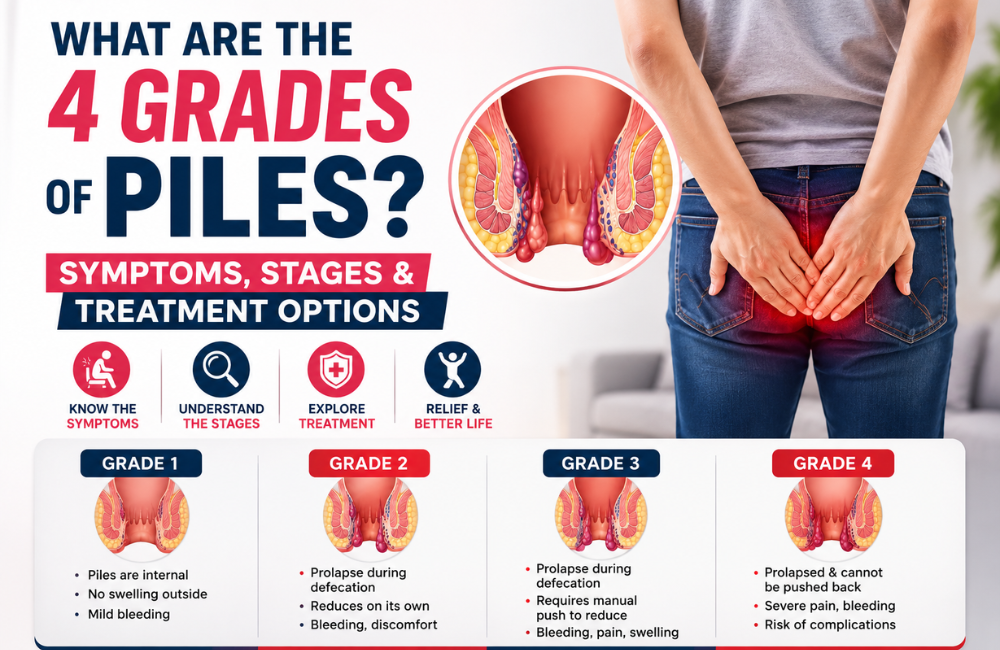
The grading system is mainly used for internal piles and is based on how much the swollen tissue prolapses, or comes out, during bowel movements.
Grade 1 piles remain inside the rectum, while Grade 4 piles stay permanently outside and may cause severe discomfort. Understanding the difference between
internal and external piles
can make the grading system easier to understand.
Grade 1 Piles – Mild Hemorrhoids Without Prolapse
Grade 1 piles are the mildest form of internal hemorrhoids. The swollen veins remain inside the rectum and do not come outside during bowel movements.
Common symptoms may include:
- Mild bleeding during bowel movements
- Small streaks of blood on tissue paper
- Mild irritation or discomfort
- Feeling of incomplete bowel movement
Pain is usually minimal at this stage, and many people may not even realize they have piles until bleeding appears.
Grade 2 Piles – Piles That Come Out During Straining
In Grade 2 piles, the swollen tissue may come out temporarily while passing stool or straining, but it goes back inside on its own afterward.
Symptoms may include:
- Bleeding during bowel movements
- Itching or irritation
- Mucus discharge
- Feeling a small lump during straining
At this stage, piles may begin causing more noticeable discomfort, especially during constipation.
Grade 3 Piles – Prolapse That Needs Manual Push
Grade 3 piles prolapse during bowel movements and do not go back inside automatically. They usually need to be pushed back manually.
Common symptoms include:
- Larger prolapse or lump outside the anus
- Pain or discomfort while sitting
- Swelling and irritation
- Difficulty maintaining hygiene
- Fear or discomfort during bowel movements
Many patients at this stage begin seeking medical treatment because symptoms become harder to ignore.
Grade 4 Piles – Severe or Permanent Prolapse
Grade 4 piles are the most severe stage. The prolapsed tissue remains permanently outside and cannot be pushed back inside.
Symptoms may include:
- Severe swelling
- Persistent pain or discomfort
- Difficulty sitting for long periods
- Bleeding and irritation
- Increased risk of thrombosis or strangulation
Severe swelling may sometimes resemble thrombosed hemorrhoids because of pain and inflammation.
Symptoms Comparison Across All 4 Grades
| Grade | Bleeding | Pain | Lump/Prolapse | Common Treatment |
|---|---|---|---|---|
| Grade 1 | Mild | Minimal | No visible prolapse | Lifestyle changes, medicines |
| Grade 2 | Common | Mild | Comes out temporarily | Medication, procedures |
| Grade 3 | Frequent | Moderate | Needs manual push | Procedures or surgery |
| Grade 4 | Severe | Moderate to severe | Permanent prolapse | Surgery more common |
Which Grade of Piles Needs Surgery?
Not all piles require surgery. Treatment usually depends on the severity of symptoms and the grade of piles.
- Grade 1 piles are often managed with diet changes and medication
- Grade 2 piles may improve with medication or minimally invasive procedures
- Grade 3 piles sometimes require procedural treatment or surgery
- Grade 4 piles are more likely to need surgical treatment
Different piles treatment options may be recommended depending on the severity and grade.
Can Early Treatment Prevent Severe Piles?
Yes, early treatment and healthy bowel habits may help prevent piles from progressing to more severe stages.
Simple measures that may help include:
- Avoiding constipation
- Drinking enough water
- Eating more fiber-rich foods
- Avoiding prolonged sitting and straining
Improving bowel habits and eating more high fiber foods may help reduce worsening symptoms.
What Happens If Piles Are Left Untreated?
Ignoring piles symptoms may allow the condition to worsen gradually over time. Mild piles may progress into more severe grades if constipation, straining, or poor bowel habits continue.
Untreated piles may lead to:
- Frequent bleeding
- Increased prolapse
- Pain and swelling
- Thrombosis risk
- Difficulty sitting comfortably
Seeking treatment early may help avoid complications and more invasive procedures later.
When Should You See a Doctor?
Medical evaluation is important if you experience:
- Persistent bleeding
- Painful prolapse
- Severe swelling
- Recurrent piles symptoms
- Difficulty sitting or passing stool
Recognizing early piles signs can help prevent progression to severe piles.
Treatment Options for Different Grades of Piles
Treatment options may vary depending on symptom severity and the grade of piles.
Possible treatments include:
- Lifestyle and dietary changes
- Medications
- Sitz baths and home care
- Rubber band ligation
- Laser treatment or surgery
Procedures like rubber band ligation may help manage certain grades of piles without major surgery.
Severe or recurring symptoms may require proper piles treatment after medical evaluation.
Frequently Asked Questions
There are four grades of internal piles based on severity and prolapse.
Grade 4 piles are generally considered the most severe because they remain prolapsed and may lead to complications.
Grade 3 piles prolapse during bowel movements and need to be pushed back manually.
Some symptoms may improve temporarily, but severe Grade 4 piles often require procedural treatment.
Doctors assess prolapse, swelling, bleeding, and symptom severity during examination.
Conclusion
Understanding the 4 grades of piles can help patients recognize symptom severity and seek the right treatment early.
As piles progress from mild to severe stages, symptoms such as bleeding, prolapse, swelling, and pain may become more difficult to manage. Early treatment, healthy bowel habits, and medical guidance may help prevent progression and reduce complications.
Reference Links
- Different Types of Piles
- Hemorrhoids: From basic pathophysiology to clinical management