
Introduction
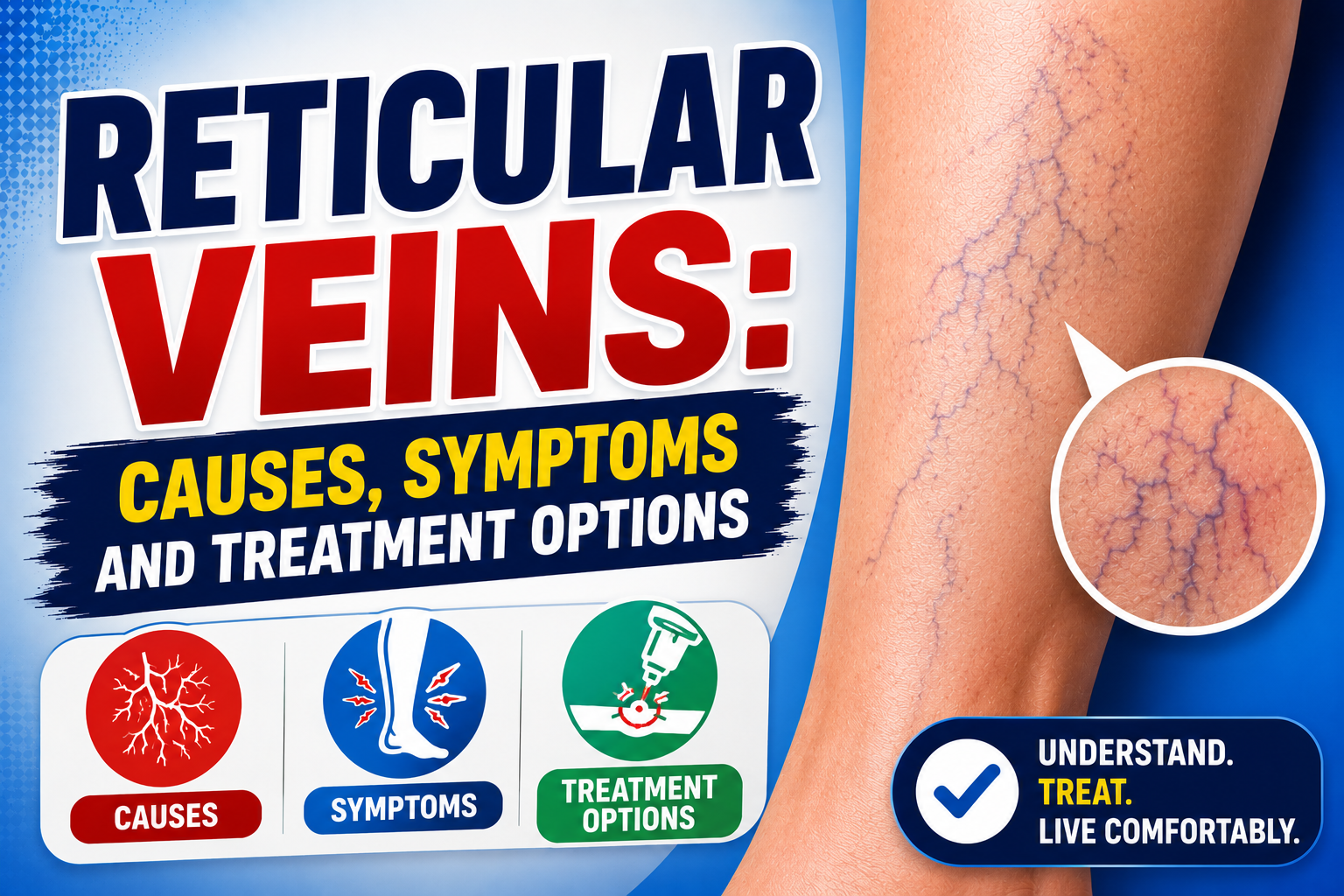
Have you noticed flat, bluish-green veins visible just beneath the surface of your skin – particularly behind your knees or on your inner thighs? They are not as small as spider veins, and they do not bulge out like varicose veins – they sit somewhere in between, tracing a network of blue-green lines across your skin.
These are called reticular veins – and they are one of the most commonly misunderstood and underdiagnosed vein conditions in India.
Many people ignore reticular veins because they do not cause dramatic symptoms. Others mistake them for harmless superficial marks on the skin. But reticular veins are a genuine form of venous disease that can cause discomfort, worsen over time, and – most importantly – act as feeder vessels that drive the development of spider veins across large areas of the leg.
In this complete guide, the vascular surgery experts at Hari Laser Clinics, Bangalore explain everything you need to know about reticular veins – what they are, why they develop, how they differ from spider veins and varicose veins, and how they are most effectively treated.
What Are Reticular Veins?
Reticular veins – also known as feeder veins or intradermal varices – are dilated, discolored veins that sit just below the skin surface. They typically measure 1 to 3 mm in diameter – larger than spider veins (which are under 1 mm) but smaller than true varicose veins (which are 3 mm or more and visibly bulge above the skin).
The word “reticular” comes from the Latin word for “net” – and it perfectly describes their appearance. Reticular veins form a flat, net-like or branching pattern of blue-green vessels that are clearly visible through the skin but do not protrude above it.
They most commonly appear on the:
- Back of the knees – the most typical location
- Inner and outer thighs
- Ankles and lower legs
- Back of the calf
Reticular Veins vs Spider Veins vs Varicose Veins
Understanding where reticular veins sit in the spectrum of venous disease is important for choosing the right treatment.
Factor | Spider Veins | Reticular Veins | Varicose Veins |
Size | Under 1 mm | 1 to 3 mm | 3 mm or more |
Appearance | Thin web-like lines | Flat blue-green network | Bulging, twisted, rope-like |
Color | Red, purple, blue | Blue or green | Dark blue or purple |
Location | Surface of skin | Just below skin | Deeper beneath skin |
Protrusion | Flat – no protrusion | Flat – no protrusion | Visibly bulges above skin |
Symptoms | Usually cosmetic | Mild aching, itching | Pain, swelling, heaviness |
Role | End result of venous pressure | Feeder vessels for spider veins | Primary venous disease |
Treatment | Sclerotherapy, surface laser | Microsclerotherapy, foam sclerotherapy | EVLT laser, surgery |
The most important relationship to understand is between reticular veins and spider veins. Reticular veins very frequently act as feeder vessels – they carry blood at elevated pressure into clusters of spider veins. If you treat spider veins without addressing the underlying reticular feeder vein, the spider veins will keep recurring.
What Causes Reticular Veins?
Reticular veins develop when the walls of medium-sized superficial veins weaken and lose their elasticity – causing them to dilate and become permanently visible through the skin. Several factors contribute to this:
- Genetics and Family History
As with most vein conditions, heredity is the most powerful risk factor. If your parents or close relatives have reticular veins or varicose veins, your risk of developing them is significantly elevated. Genetically weak vein walls and faulty vein valves run strongly in families.
- Female Sex and Hormonal Factors
Reticular veins are significantly more common in women than in men. Female sex hormones – particularly estrogen and progesterone – relax the smooth muscle in vein walls, reducing their tone and making them more prone to dilation. This is why reticular veins often first appear or worsen during:
- Puberty
- Pregnancy
- Perimenopause and menopause
- When taking oral contraceptive pills or hormone replacement therapy
- Prolonged Standing or Sitting
Occupations that require extended periods of standing – teachers, healthcare workers, retail staff – or prolonged sitting – IT professionals, office workers – increase venous pressure in the lower legs. Over time this chronic pressure stretches and weakens superficial vein walls, leading to reticular vein development.
- Age
As we get older, vein walls naturally lose collagen and elasticity. Vein valves also become less efficient with age – allowing blood to pool and pressure to build in superficial vessels. This is why reticular veins become more common and more prominent from the 30s and 40s onward.
- Obesity and Excess Body Weight
Carrying excess weight increases the load on the entire venous system – particularly in the lower limbs. Elevated intra-abdominal pressure in overweight individuals also restricts blood return from the legs, causing pressure to build in superficial veins.
- Sedentary Lifestyle
A lack of regular physical activity means the calf muscle pump – which plays a critical role in pushing blood from the legs back up to the heart – is underused. Poor calf muscle activation leads to blood pooling in the lower leg veins and increased pressure on superficial vessel walls.
- Previous Vein Procedures or Trauma
In some patients, previous vein treatments – particularly if incomplete – or trauma to the leg can damage surrounding superficial vessels and contribute to reticular vein formation.
Symptoms of Reticular Veins
Reticular veins cause a broader range of symptoms than spider veins – though they are still milder than truncal varicose veins.
Cosmetic symptoms:
- Visible flat, blue-green network of veins – particularly prominent behind the knees and on the thighs
- Associated clusters of spider veins in the surrounding area fed by the reticular veins
Physical symptoms:
- Mild to moderate aching or heaviness in the legs – especially after prolonged standing or at the end of the day
- Itching or burning sensation over or around the visible veins
- Mild tenderness when pressure is applied directly over the reticular vein
- Localized swelling around the ankles in some patients – particularly in more advanced cases
- Restlessness in the legs – an uncomfortable urge to move the legs, particularly at night
It is important to note – the severity of symptoms does not always correlate with the visible extent of reticular veins. Some patients with extensive visible reticular veins have minimal symptoms, while others with less visible involvement experience significant discomfort.
Are Reticular Veins Dangerous?
Reticular veins themselves are not directly dangerous – they do not cause blood clots, do not rupture, and do not lead to serious medical complications on their own.
However, there are important reasons not to ignore them:
They are feeder vessels for spider veins. Reticular veins supply blood at elevated pressure into clusters of spider veins on the skin surface. Treating spider veins without addressing the underlying reticular feeder means the spider veins will almost certainly recur – often within months.
They indicate venous insufficiency. The presence of reticular veins – particularly if widespread or symptomatic – signals that your superficial venous system is under pressure. Without assessment, you cannot rule out deeper varicose vein involvement.
They can worsen over time. Left untreated, reticular veins tend to enlarge gradually and the associated spider vein clusters can spread significantly.
They affect quality of life. For many patients – particularly women – the appearance of reticular veins on the legs causes significant self-consciousness and affects their choice of clothing and participation in activities.
How Are Reticular Veins Diagnosed?
Accurate diagnosis of reticular veins requires a thorough assessment by a vascular specialist. At Hari Laser Clinics, this includes:
Clinical Examination
Your vascular surgeon examines your legs carefully – both standing and lying down – to map the extent and distribution of reticular veins and identify associated spider vein clusters. Transillumination (shining a light through the skin) is sometimes used to better visualize the reticular network.
Venous Doppler Ultrasound
While reticular veins themselves are too small to require Doppler assessment, a Doppler ultrasound is essential to:
- Rule out underlying truncal varicose veins (great saphenous or small saphenous vein reflux)
- Identify incompetent perforator veins contributing to superficial venous pressure
- Guide the overall treatment plan
This step is critical – treating reticular veins without ruling out deeper venous disease is incomplete and increases the risk of recurrence.
Treatment Options for Reticular Veins
Reticular veins respond very well to treatment. The two main approaches are:
Microsclerotherapy – The First-Line Treatment
Microsclerotherapy is the gold standard treatment for reticular veins. It is similar to standard sclerotherapy for spider veins but uses a finer needle and lower concentration sclerosant suited to the size of reticular vessels.
How it works:
- An ultra-fine needle is used to inject a sclerosant solution directly into the reticular vein
- The sclerosant irritates and damages the vein wall, causing it to swell shut and seal
- Blood is redirected through healthy veins
- The treated vein gradually fades and is absorbed by the body over 4 to 8 weeks
- Multiple veins can be treated in a single session
What to expect:
- Mild stinging sensation during injection – well tolerated by most patients
- No anesthesia required
- Walk out and resume normal activities immediately
- Mild bruising or redness at injection sites – resolves within a few days
- Compression stockings to be worn for 1 to 2 weeks after treatment
- Final results visible after 6 to 12 weeks
How many sessions are needed?
Most patients require 2 to 4 sessions spaced 4 to 6 weeks apart for complete clearance, depending on the extent of reticular veins.
Foam Sclerotherapy
For slightly larger reticular veins – particularly those measuring closer to 3 mm – foam sclerotherapy is often more effective than liquid microsclerotherapy.
How it is different from liquid sclerotherapy:
- The sclerosant is mixed with air or carbon dioxide gas to create a foam consistency
- Foam displaces blood more effectively within the vein – meaning better contact between the sclerosant and the vein wall
- This results in more efficient and complete sealing of the vessel
- Foam sclerotherapy is particularly useful for larger reticular veins and for targeting feeder vessels that supply multiple clusters of spider veins
Advantages of foam sclerotherapy:
- More effective for larger reticular vessels than liquid sclerotherapy
- Smaller volume of sclerosant needed
- Real-time ultrasound guidance can be used for deeper vessels
- Excellent safety profile
Combination Treatment – Reticular Veins and Spider Veins Together
When reticular veins are acting as feeder vessels for widespread spider vein clusters – which is very commonly the case – the most effective approach is treating both simultaneously:
- Foam sclerotherapy targets the reticular feeder veins first
- Microsclerotherapy or surface laser then addresses the associated spider vein clusters
This combination approach produces significantly better and longer-lasting results than treating spider veins alone – because eliminating the feeder vessel removes the source of elevated pressure driving spider vein formation.
When EVLT Is Needed First
If your Doppler ultrasound reveals underlying truncal varicose veins or significant saphenous vein reflux – these must be treated first with EVLT laser treatment before addressing reticular veins and spider veins.
Treating only the surface manifestations while leaving deeper venous disease untreated is a common mistake that leads to rapid recurrence of reticular and spider veins. At Hari Laser Clinics, we always assess and address the entire venous system – not just what is visible on the surface.
Post-Treatment Care for Reticular Veins
Immediately After Treatment:
- Compression stockings must be worn continuously for the first 48 hours, then during daytime hours for 2 weeks
- Walk for at least 30 minutes immediately after your sclerotherapy session – movement helps the treated veins clear
- Avoid intense exercise, hot baths, saunas, steam rooms, and jacuzzis for 2 weeks
- Avoid direct sun exposure on treated areas for at least 4 weeks – sun exposure can cause permanent pigmentation over treated veins
- Apply SPF 50 sunscreen if treated areas will be exposed to sunlight
In the Weeks Following Treatment:
- Treated veins will initially appear darker or more prominent before they begin to fade – this is completely normal
- Bruising along treated veins resolves within 1 to 2 weeks
- Final results become visible gradually over 6 to 12 weeks as the body absorbs the treated vessels
Can Reticular Veins Be Prevented?
While you cannot completely eliminate your genetic predisposition to reticular veins, these measures significantly reduce your risk and slow progression:
- Wear graduated compression stockings during long working hours – especially if you stand or sit for extended periods
- Take regular movement breaks every 30 to 40 minutes during the workday
- Exercise regularly – swimming, cycling, and walking are particularly beneficial for venous circulation
- Maintain a healthy body weight to reduce pressure on leg veins
- Elevate your legs for 15 to 20 minutes daily after long periods of standing
- Avoid tight clothing around the thighs or waist that restricts venous return
- Stay well hydrated – adequate hydration maintains healthy blood viscosity
- Avoid prolonged heat exposure – hot baths and saunas cause veins to dilate
Frequently Asked Questions
No. Reticular veins are larger than spider veins – measuring 1 to 3 mm compared to under 1 mm for spider veins. They are also blue-green in color rather than red or purple. Most importantly, reticular veins frequently act as feeder vessels that supply blood into clusters of spider veins – meaning treating spider veins alone without addressing the reticular feeders leads to rapid recurrence.
No. Reticular veins do not resolve on their own. They tend to remain stable or gradually worsen over time. Treatment is required if you want them removed.
Most patients experience only a mild stinging or burning sensation during injection – similar to a small insect bite. The procedure is very well tolerated and does not require anesthesia.
Treated veins initially appear darker before they fade. Most patients begin to see visible improvement at 4 to 6 weeks, with final results apparent at 6 to 12 weeks after each session.
Treated reticular veins are permanently destroyed and absorbed by the body – they do not return. However, new reticular veins can develop over time in other areas, particularly if underlying risk factors are not managed.
Yes – a Doppler ultrasound is strongly recommended before treatment to rule out underlying varicose veins or saphenous vein reflux. If deeper venous disease is present and not treated first, reticular veins and spider veins are likely to recur rapidly after surface treatment.
Most patients require 2 to 4 sessions spaced 4 to 6 weeks apart. The exact number depends on the extent and distribution of reticular veins.
Conclusion
Reticular veins occupy an important – and often overlooked – position in the spectrum of venous disease. They are more than a cosmetic nuisance. As feeder vessels for spider veins, they play a central role in the development and recurrence of surface vein problems across the legs.
The good news is that reticular veins respond very well to modern sclerotherapy techniques. With accurate diagnosis, proper assessment of the underlying venous system, and the right treatment approach, most patients achieve excellent clearance with minimal discomfort and no downtime.
Do not let reticular veins spread unaddressed. Early treatment is simple, effective, and produces long-lasting results.
Concerned about reticular veins or spider veins? Get a complete vascular assessment at Hari Laser Clinics, Bangalore.