
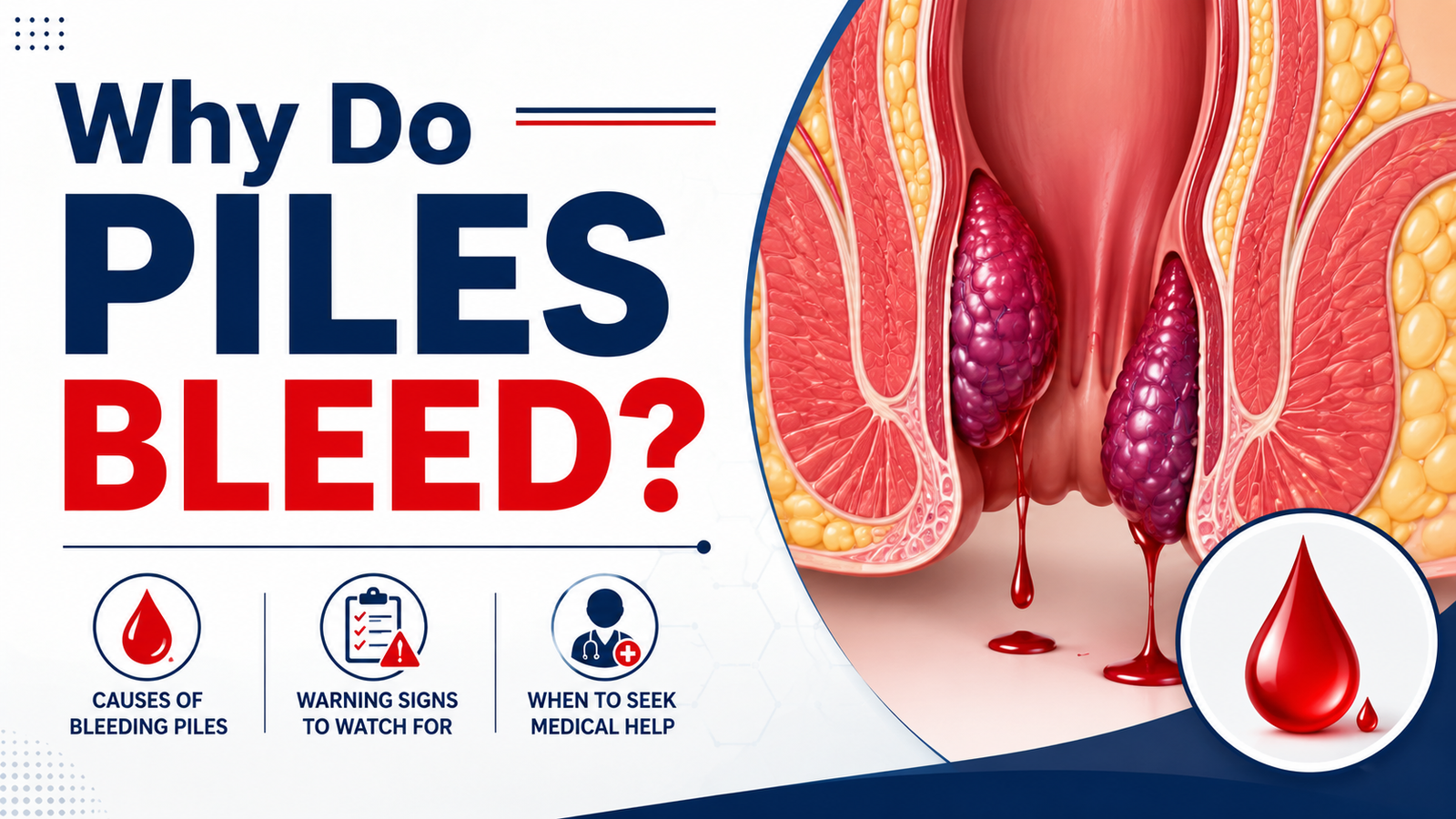
Why Do Piles Bleed? Causes, Warning Signs & Laser Treatment Explained
A complete guide to understanding bleeding piles — what causes it, when it’s serious, and how advanced laser treatment at Hari Laser Clinics can help you get lasting relief.
🗓️ Updated June 2026 ⏱️ 9 min read 🩺 Reviewed by Hari Laser Clinics Specialist Team
Seeing blood after a bowel movement can be alarming — and if you’ve been diagnosed with piles, you may wonder whether this is normal or a sign that something is seriously wrong. Bleeding is one of the most common symptoms of piles (hemorrhoids), affecting a large proportion of people who suffer from this condition at some point in their lives. Understanding why it happens, what it means, and when to seek treatment can make all the difference between ongoing discomfort and a quick, lasting recovery.
What Are Piles, and Why Do They Bleed?
Piles, or hemorrhoids, are swollen blood vessels that develop in and around the lower rectum and anus. Everyone has hemorrhoidal tissue — it’s a normal part of the anal anatomy that helps with continence. Piles develop when these vascular cushions become enlarged, inflamed, or displaced due to increased pressure over time.
The blood vessels inside this swollen tissue have thin, delicate walls. As the piles enlarge, the tissue covering them stretches and becomes fragile, making it easy to injure — especially during bowel movements when stool passes directly over the area.
When hard stool scrapes against these swollen veins, or when straining sharply increases pressure within them, the thin vessel walls can tear slightly. Since these are veins under relatively low pressure compared to arteries, the bleeding is usually not forceful, but it can still appear bright red and noticeable, especially against light-coloured toilet tissue or water.
Internal piles, in particular, often bleed without pain. This is because the upper part of the rectum, where internal hemorrhoidal tissue is located, has far fewer pain-sensing nerve endings than the skin around the anus. This is precisely why bleeding is frequently the very first symptom people notice — long before they feel any discomfort at all.
Common Causes of Piles Bleeding
- Straining during bowel movements — increases pressure on already swollen veins, causing them to rupture or tear
- Constipation and hard stools — scrapes against piles tissue as it passes, causing small tears in the lining
- Chronic diarrhea — frequent, forceful bowel movements can also irritate and erode hemorrhoidal tissue over time
- Prolonged sitting or standing — increases pressure in the rectal veins, especially with desk jobs or jobs requiring long hours on one's feet
- Pregnancy and childbirth — increased pelvic pressure, hormonal changes, and physical strain of delivery
- Heavy lifting — repeated straining raises abdominal pressure and can worsen existing piles
- Low-fiber diets — leads to harder stools, more straining, and higher likelihood of bleeding episodes
- Obesity — excess body weight adds constant pressure on the pelvic and rectal veins
- Sedentary lifestyle — slows digestion and contributes to constipation, indirectly increasing bleeding risk
Internal Piles Bleeding
Usually painless, bright red blood seen on stool, toilet paper, or in the toilet bowl. Often the very first noticeable symptom, frequently appearing before any lump or discomfort develops.
External Piles Bleeding
May be accompanied by pain, itching, swelling, or a visible lump near the anus, particularly if a blood clot forms inside the swollen vein (thrombosed hemorrhoid).
Understanding Piles by Grade
Doctors classify internal piles into four grades based on severity, which helps determine the likelihood and pattern of bleeding, as well as the most suitable treatment approach.
| Grade | Description | Bleeding Pattern |
|---|---|---|
| Grade I | Small, remain inside the rectum | Mild, occasional spotting |
| Grade II | Prolapse during straining, retract on their own | Noticeable bleeding during bowel movements |
| Grade III | Prolapse, require manual repositioning | Frequent bleeding, sometimes with discomfort |
| Grade IV | Permanently prolapsed, cannot be pushed back | Persistent bleeding, often with pain and swelling |
Is Bleeding From Piles Dangerous?
In most cases, bleeding from piles is mild and not life-threatening. It typically appears as bright red blood on toilet paper, in the stool, or in the toilet water — and usually stops on its own shortly after the bowel movement ends. Over time, however, repeated bleeding episodes, even if individually mild, can contribute to fatigue or anemia in some patients if left unaddressed for long periods.
However, bleeding should never be assumed to be “just piles” without proper evaluation, since several other conditions — including anal fissures, infections, inflammatory bowel disease, and in rare cases, colorectal growths — can present with very similar symptoms. A professional diagnosis ensures the actual source of bleeding is correctly identified.
⚠️ When You Should See a Doctor Immediately
- Blood that is dark red, maroon, or black in colour (may indicate bleeding higher in the digestive tract)
- Heavy or continuous bleeding rather than occasional spotting
- Bleeding accompanied by severe pain, dizziness, or weakness
- Unexplained weight loss alongside bleeding
- New bleeding symptoms in people above the age of 40
- A noticeable change in bowel habits along with bleeding
- Bleeding that persists for more than a week despite home care
How Is the Cause of Bleeding Diagnosed?
Since rectal bleeding can stem from multiple causes, the specialists at Hari Laser Clinics follow a structured, thorough diagnostic approach before recommending any treatment:
- Detailed medical history — understanding bowel habits, diet, family history, and the exact pattern of bleeding
- Physical and digital rectal examination — assessing the piles, their grade, and the surrounding tissue
- Proctoscopy or anoscopy — a focused internal examination to directly view the rectal lining and confirm the source of bleeding
- Colonoscopy (when indicated) — recommended for patients over 40 or with atypical bleeding patterns, to rule out other causes higher in the colon
Treatment Options for Bleeding Piles at Hari Laser Clinics
Treatment depends on the grade and severity of the piles, as well as the frequency and intensity of bleeding. At Hari Laser Clinics, treatment is always tailored to the individual after a complete diagnostic evaluation.
Conservative Management
For mild, early-stage bleeding, the first line of treatment usually involves a high-fiber diet, increased water intake, stool softeners, and topical medications to reduce inflammation and ease bleeding. This approach works well for Grade I piles and as a supportive measure alongside other treatments.
Advanced Laser Treatment
For recurring or moderate-to-severe bleeding, laser piles treatment (LASER Hemorrhoidoplasty) offers a precise, minimally invasive solution. A focused laser beam is used to shrink and seal off the swollen blood vessels, cutting off their blood supply without the need for traditional cuts or stitches.
Why Choose Laser Treatment for Bleeding Piles?
- Minimal bleeding during and after the procedure compared to conventional surgery
- Day-care procedure — most patients go home the same day
- Little to no cuts or stitches required
- Significantly reduced post-procedure pain
- Faster return to work and daily activities
- Lower risk of recurrence when combined with lifestyle changes
- Precise targeting that preserves surrounding healthy tissue
Tips to Reduce Piles Bleeding at Home
- Avoid straining — give your body time during bowel movements instead of forcing it
- Increase fiber intake through fruits, vegetables, and whole grains
- Stay well hydrated throughout the day to keep stools soft
- Avoid sitting on the toilet for long periods, including avoiding phone use while seated
- Use a warm sitz bath for 10–15 minutes to soothe irritated tissue
- Avoid heavy lifting and strenuous exercise until the piles are properly assessed
- Incorporate gentle daily movement, such as walking, to support healthy digestion
- Limit spicy and processed foods, which can sometimes worsen irritation
While these measures can reduce symptoms and slow down bleeding episodes, they do not address the underlying swollen veins. A proper medical evaluation remains the only reliable way to fully resolve recurring bleeding and prevent it from returning.
What Happens If Bleeding Piles Are Left Untreated?
Ignoring persistent bleeding can allow piles to progress to a higher grade, where they prolapse further, bleed more frequently, and become more difficult to manage with conservative measures alone. In some cases, untreated piles can lead to thrombosis (clot formation), causing sudden, intense pain, or to chronic blood loss that gradually affects energy levels and overall health. Early evaluation and treatment, particularly with minimally invasive options like laser therapy, typically lead to faster, more comfortable recovery than waiting until the condition worsens.
Don't Ignore Bleeding — Get It Checked Today
Our specialists at Hari Laser Clinics can accurately diagnose the cause of your bleeding and recommend the right treatment — including advanced, minimally invasive laser care — for fast, lasting relief.