
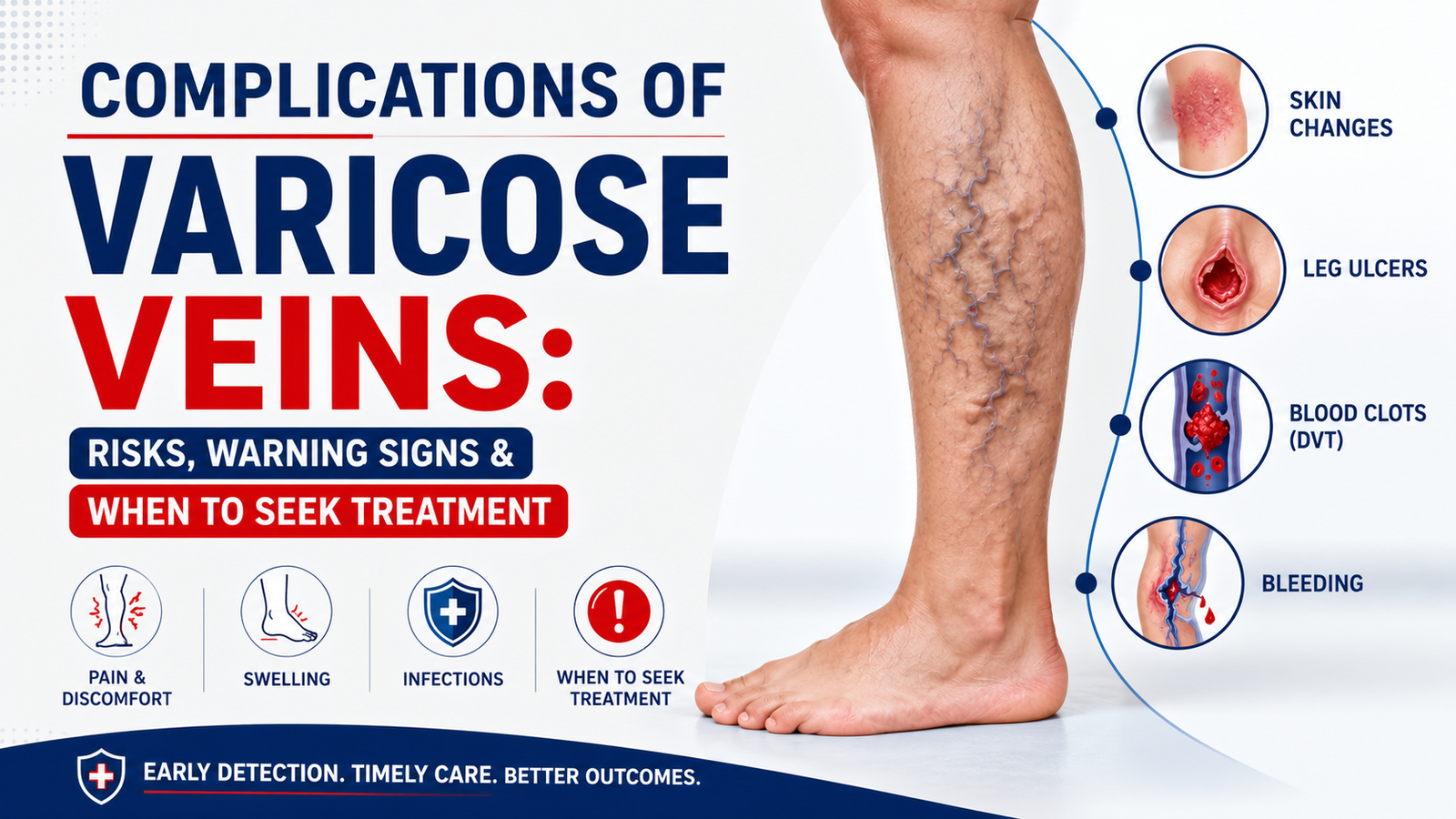
Why Varicose Vein Complications Matter
Many people think varicose veins are just a looks issue. In fact, they are not. Untreated vein problems can slowly harm blood flow and cause real pain over time. The complications of varicose veins often start small. Mild heaviness or swelling may seem harmless at first. However, symptoms can get much worse if damaged veins are left alone.
Healthy veins carry blood back to the heart using tiny valves. When these valves weaken, blood starts to pool inside the veins. As a result, pressure builds, veins swell, and symptoms grow harder to ignore.
Early on, you may only notice sore legs or visible veins. Over time, though, untreated vein disease can cause skin damage, swelling, bleeding, or open sores. For this reason, it is important to understand how the complications of varicose veins can develop and worsen.
If you already have heavy legs, swelling, itching, or bulging veins, it helps to know how things can get worse. Read more about common warning signs here: Don’t Ignore Varicose Veins
What Happens When Varicose Veins Are Left Untreated?
Varicose veins usually get worse slowly. Because of this, many people put off treatment for years.
When blood pools in damaged veins:
- Pressure in the legs goes up
- Veins swell even more
- Swelling happens more often
- Skin may start to change
- Blood flow keeps getting worse
At first, symptoms may only show up after a long day on your feet. Later, however, the pain may last all day.
Some people also get long-term swelling around the ankles. In more advanced cases, the skin turns dark, gets thick, or itches badly because blood flow is poor. As a result, the complications of varicose veins can affect daily life, sleep, and how well you move around.
Common Complications of Varicose Veins
Many people ignore varicose veins for years. As a result, untreated vein disease can lead to several painful and serious problems. Below are the most common complications of varicose veins to watch out for.
1. Chronic Leg Pain and Heaviness
Ongoing leg pain is one of the most common complications of varicose veins. In fact, it is often the first sign that something is wrong.
People often feel:
- Aching legs
- Throbbing pain
- Burning
- Tired legs
- Heavy legs after standing
Symptoms tend to get worse by evening. In addition, standing for long periods adds even more pressure to the veins. Over time, therefore, everyday tasks like walking, working out, or standing at work can become hard.
2. Swelling in the Legs and Ankles
Poor blood flow often causes fluid to build up in the lower legs. As pressure in the veins rises:
- Ankles puff up
- Shoes feel tighter
- Legs feel heavy
- Skin looks stretched
Swelling is usually worse after a long day on your feet. However, some people see mild relief after resting or raising their legs. Still, swelling that keeps coming back may mean the complications of varicose veins are getting more serious.
3. Skin Changes and Discoloration
Skin damage is a clear sign of long-term blood flow problems. When blood pools for too long:
- Skin may turn brown or dark purple
- The area may itch
- Skin may get thick
- Dryness and soreness may get worse
These changes tend to show up near the ankles, where pressure is highest. This happens because unhealthy veins slowly leak blood products into the skin tissue over time. As a result, the skin becomes permanently damaged if left untreated.
4. Bleeding Varicose Veins
Varicose veins close to the skin surface can become very fragile. Even a small knock can therefore cause:
- Sudden bleeding
- Slow oozing
- Skin irritation
- The vein bursting again
Older adults and those with very large veins face a higher risk. Bleeding may look minor at first. Nevertheless, if it keeps happening, it should never be ignored.
5. Venous Ulcers
Venous ulcers are among the most serious complications of varicose veins. These sores are:
- Slow to heal
- Usually found near the ankles
- Linked to poor blood flow
- Often painful or weeping
Poor oxygen supply stops the skin from healing the way it should. Consequently, ulcers may stay open for weeks or even months. Some people end up with painful sores that need care from a vascular specialist.
6. Blood Clots and Superficial Thrombophlebitis
Inflamed varicose veins can sometimes lead to clot-related problems. Specifically, superficial thrombophlebitis may cause:
- Redness along the vein
- Tenderness to touch
- Warm skin
- A hard, cord-like lump under the skin
Most of these clots stay near the surface. However, any symptoms that keep getting worse should still be checked by a doctor. In particular, ongoing redness, pain, or sudden swelling should never be brushed off.
When Do the Complications of Varicose Veins Become Dangerous?
The complications of varicose veins become more serious when they start to affect blood flow, skin health, or movement. Watch out for:
- Swelling that won’t go down
- Severe pain
- Open skin sores
- Bleeding veins
- Skin turning dark
- Sudden redness or warmth
- Veins that feel hard and painful
Mild visible veins are not always a danger sign. However, if symptoms keep getting worse, vein disease may be progressing. Therefore, see a doctor if symptoms start getting in the way of daily life
Can the Complications of Varicose Veins Affect Overall Health?
Varicose veins do not usually cause heart disease directly. Nevertheless, they can have a big impact on overall quality of life. Long-term vein disease may lead to:
- Less ability to move around
- Poor sleep
- Limits on exercise
- Daily leg tiredness
- Stress over pain or appearance
Some people stop being active because their legs hurt or feel too heavy. As a result, reduced movement makes blood flow even worse over time. Furthermore, long-term symptoms also affect work performance for people who spend hours on their feet each day.
Who Is at Higher Risk of Serious Complications of Varicose Veins?
Some people are more likely to see their vein disease get worse. Risk factors include:
- A family history of varicose veins
- Being overweight
- Pregnancy
- Getting older
- Jobs that involve lots of standing
- Not moving enough
These things raise pressure in the veins or weaken the vein walls over time. For example:
- Standing long hours causes blood to pool
- Extra body weight adds pressure to the legs
- Pregnancy changes blood flow and vein pressure
- Aging slowly weakens vein valves
Because of this, the complications of varicose veins may develop faster in people with these risk factors.
How to Stop the Complications of Varicose Veins From Getting Worse
Making changes early may slow things down and ease symptoms. Below are some of the most helpful steps.
Stay Physically Active
Walking and regular movement help blood flow in the legs. Simple activity may:
- Cut down on blood pooling
- Help the calf muscles pump blood
- Support healthier circulation
Therefore, sitting or standing still for too long should be avoided when possible.
Avoid Standing for Long Hours
Standing non-stop raises pressure in the leg veins. If you must stand for long periods:
- Take short walking breaks
- Stretch your legs often
- Shift your weight from foot to foot
Even small moves like these help keep blood flowing through the day.
Elevate Your Legs
Raising your legs helps blood flow back to the heart more easily. As a result, people often notice less swelling, heaviness, and pressure in the legs. In particular, raising your legs after work or a workout may ease symptoms for a while.
Maintain a Healthy Weight
Extra body weight puts more pressure on the veins. Keeping a healthy weight may therefore help:
- Lower circulation stress
- Improve how easily you move
- Reduce pressure in the legs
This often leads to better symptom control over time.
Use Compression Stockings When Advised
Compression stockings can support blood flow and reduce swelling. They work by:
- Helping blood move upward
- Cutting down on blood pooling
- Easing swelling and heaviness
However, getting the right fit and medical advice matters for them to work well.
Treatment Options for the Complications of Varicose Veins
The right treatment depends on how bad the veins are. Early symptoms may get better with compression therapy, lifestyle changes, regular movement, and leg elevation. More advanced complications of varicose veins, however, may need a minimally invasive procedure.
EVLT (Endovenous Laser Treatment)
EVLT uses laser energy to close damaged veins from the inside. Benefits may include:
- Small cuts
- Fast recovery
- Less downtime
- Better blood flow
Learn more about EVLT here: Endovenous Laser Treatment
RFA (Radiofrequency Ablation)
RFA uses heat to close off unhealthy veins. It is often used for large veins causing symptoms, long-term swelling, and painful varicose veins.
VenaSeal Treatment
VenaSeal uses a medical glue to seal damaged veins shut. Key benefits include minimal discomfort, quick recovery, and no heat involved.
Learn more about VenaSeal here: VenaSeal Treatment
When Should You See a Doctor About the Complications of Varicose Veins?
Get a medical check if symptoms keep getting worse. In particular, see a doctor if you have:
- Swelling that won’t go away
- Severe pain
- Skin turning dark
- Sores that won’t heal
- Bleeding veins
- Trouble walking
- Sudden redness or warmth in the leg
Getting help early can therefore stop more serious complications of varicose veins from developing.
Frequently Asked Questions
Yes. Untreated vein disease can lead to swelling, skin damage, ulcers, bleeding, or clot problems over time. In short, the complications of varicose veins should never be ignored.
Some people with varicose veins may develop superficial thrombophlebitis. This involves swelling and a clot near a surface vein.
Yes. Poor blood flow can eventually lead to slow-healing sores near the ankles.
Watch for ongoing swelling, dark skin, bleeding veins, open sores, or severe pain. If in doubt, see a doctor.
Symptoms usually get worse slowly. As a result, some people end up with long-term swelling, skin changes, ulcers, or poor circulation.
No. Although some veins are mainly cosmetic, worsening vein disease can end up affecting circulation and skin health.
Conclusion
The complications of varicose veins tend to build up slowly. Because of this, many people ignore early warning signs until the pain becomes hard to bear.
Ongoing swelling, sore legs, dark skin, bleeding veins, or open sores should never be brushed off. These signs may point to worsening blood flow that needs proper care. Furthermore, the longer these symptoms are ignored, the harder they become to treat.
Early diagnosis and the right treatment can ease pain, improve blood flow, and stop long-term damage. If symptoms keep getting worse, therefore, a vein specialist can help find the best path forward.
Reference Links
- The risk of harm whilst waiting for a varicose veins procedure
- Understanding the Risks of Untreated Varicose Veins