
Introduction
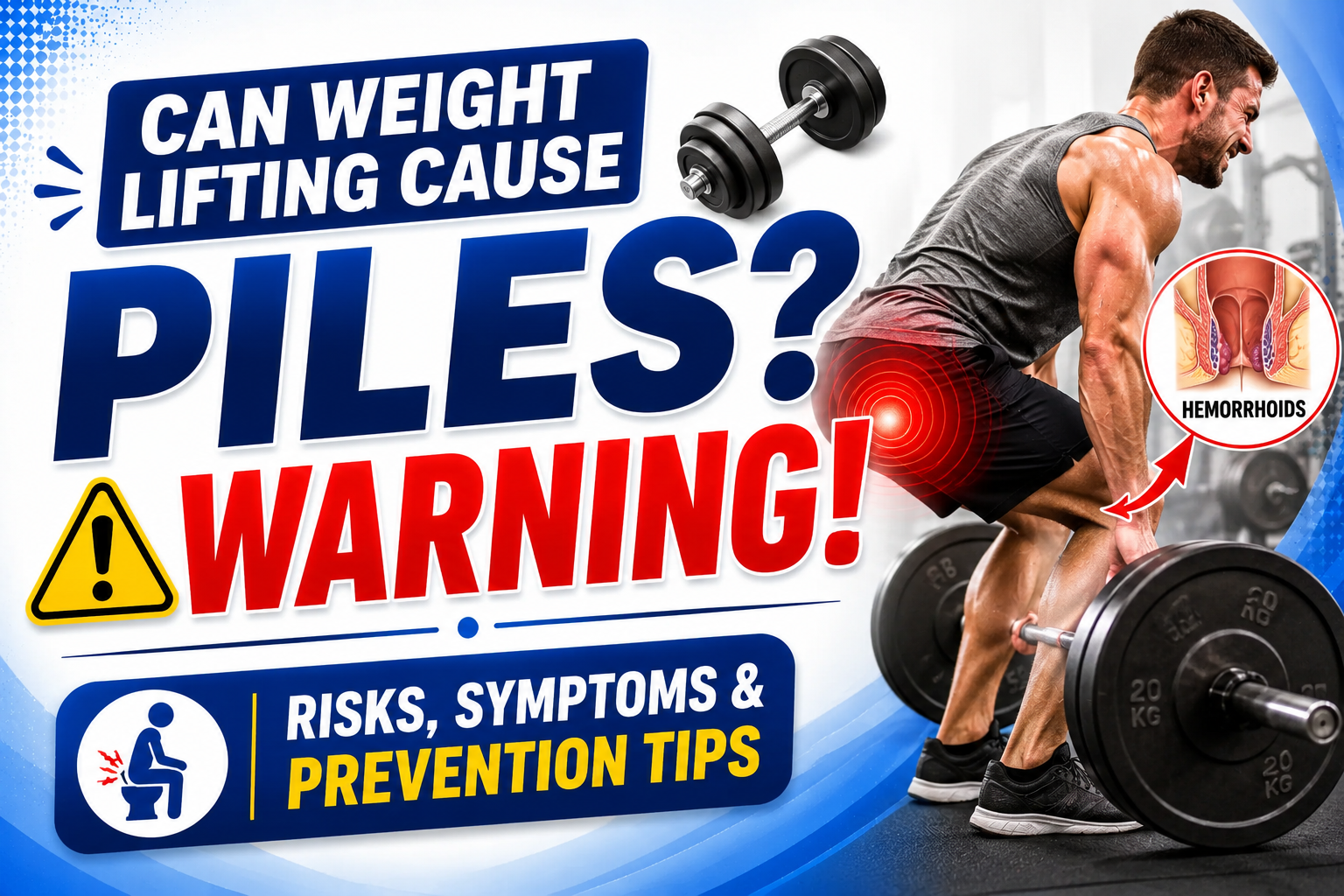
Many gym-goers ask, can weight lifting cause piles, especially when they experience discomfort, swelling, or bleeding after intense workouts. It is a common concern among people who regularly perform squats, deadlifts, leg presses, and other heavy resistance exercises.
The short answer is that weight lifting does not directly cause piles in most people. However, when discussing can weight lifting cause piles, it is important to understand how heavy lifting affects pressure inside the abdomen and rectal veins. In some individuals, repeated straining may aggravate existing hemorrhoids or contribute to symptoms when other risk factors are already present.
Understanding the relationship between heavy lifting and hemorrhoids can help you train safely while reducing the risk of complications.
Can Weight Lifting Cause Piles During Heavy Gym Training?
Many fitness enthusiasts search for can weight lifting cause piles because symptoms often appear after strenuous exercise. While lifting weights is generally safe, certain training habits can increase pressure in the lower abdomen and pelvic region.
Heavy compound movements require significant core stabilization. As a result, lifters may unknowingly strain the muscles around the rectum. Over time, this repeated pressure may contribute to hemorrhoid symptoms in susceptible individuals.
However, this does not mean every person who lifts weights will develop piles. Factors such as genetics, constipation, obesity, and diet often play a much larger role.
Why Do People Think Can Weight Lifting Cause Piles?
One reason many people wonder can weight lifting cause piles is that symptoms sometimes become noticeable after exercise. A person may complete a heavy workout and later experience itching, discomfort, swelling, or minor bleeding.
In reality, exercise frequently exposes an existing problem rather than creating a new one. Many individuals already have small hemorrhoids without realizing it. The increased abdominal pressure from lifting may simply make those symptoms more obvious.
Therefore, when asking can weight lifting cause piles, it is important to distinguish between developing hemorrhoids and aggravating existing ones.
Can Weight Lifting Cause Piles If You Already Have Hemorrhoids?
The answer to can weight lifting cause piles becomes more complex for people who already have hemorrhoids.
Existing piles are more sensitive to pressure and strain. Consequently, heavy lifting may increase discomfort, swelling, or bleeding if proper technique is not used.
This does not necessarily mean exercise must be avoided. In many cases, modifying workout intensity, improving breathing techniques, and avoiding excessive straining allow individuals to continue training safely.
People with severe symptoms should consider medical evaluation before returning to high-intensity lifting programs.
Can Weight Lifting Cause Piles More Than Other Exercises?
Compared with walking, swimming, cycling, or light resistance training, many people ask whether can weight lifting cause piles is a greater concern.
The primary difference lies in the amount of pressure generated during heavy lifts. Exercises such as deadlifts, squats, and leg presses create much higher intra-abdominal pressure than low-impact activities.
However, walking, swimming, and moderate exercise often improve circulation, support healthy digestion, and reduce constipation risk. For this reason, many healthcare professionals encourage regular physical activity as part of a healthy lifestyle
Can Weight Lifting Cause Piles More Than Other Exercises?
Compared with walking, swimming, cycling, or light resistance training, many people ask whether can weight lifting cause piles is a greater concern.
The primary difference lies in the amount of pressure generated during heavy lifts. Exercises such as deadlifts, squats, and leg presses create much higher intra-abdominal pressure than low-impact activities.
However, walking, swimming, and moderate exercise often improve circulation, support healthy digestion, and reduce constipation risk. For this reason, many healthcare professionals encourage regular physical activity as part of a healthy lifestyle
How Heavy Lifting Increases Pressure on Rectal Veins
Increased Intra-Abdominal Pressure
When lifting heavy weights, the muscles of the abdomen contract to stabilize the body. This action increases internal pressure and can place stress on rectal veins.
Holding Your Breath During Lifts
Many lifters use the Valsalva maneuver without realizing it. Holding the breath during a lift temporarily increases pressure inside the abdomen and pelvis.
Repeated Straining
Repeated straining during heavy lifts can affect rectal veins in a way similar to chronic constipation. This explains why questions such as can weight lifting cause piles and can heavy lifting cause piles are so common among gym-goers.
How to Prevent Piles While Weight Lifting
Understanding can weight lifting cause piles helps people focus on prevention rather than avoiding exercise altogether.
- Avoid Holding Your Breath: Exhale during the effort phase of each lift.
- Use Proper Technique: Good form distributes pressure more effectively throughout the body.
- Increase Weights Gradually: Progressive training reduces unnecessary strain.
- Stay Hydrated: Proper hydration helps maintain healthy bowel movements.
- Eat More Fiber: Fiber reduces constipation and minimizes straining.
- Avoid Excessive Pressure: Lifting heavier than necessary may increase the risk of symptom flare-ups.
Conclusion
The question can weight lifting cause piles does not have a simple yes-or-no answer. Weight lifting itself is not usually the direct cause of hemorrhoids. However, repeated straining, poor breathing techniques, and excessive abdominal pressure may aggravate existing piles or contribute to symptoms in individuals with other risk factors.
If you are concerned about whether can weight lifting cause piles applies to your situation, pay attention to symptoms such as bleeding, itching, swelling, or pain during exercise. Most people can continue training safely by using proper lifting techniques, staying hydrated, eating enough fiber, and avoiding unnecessary strain.
Persistent symptoms should never be ignored. Early medical evaluation can help identify the cause of your symptoms and ensure you receive appropriate treatment before complications develop.