
Introduction
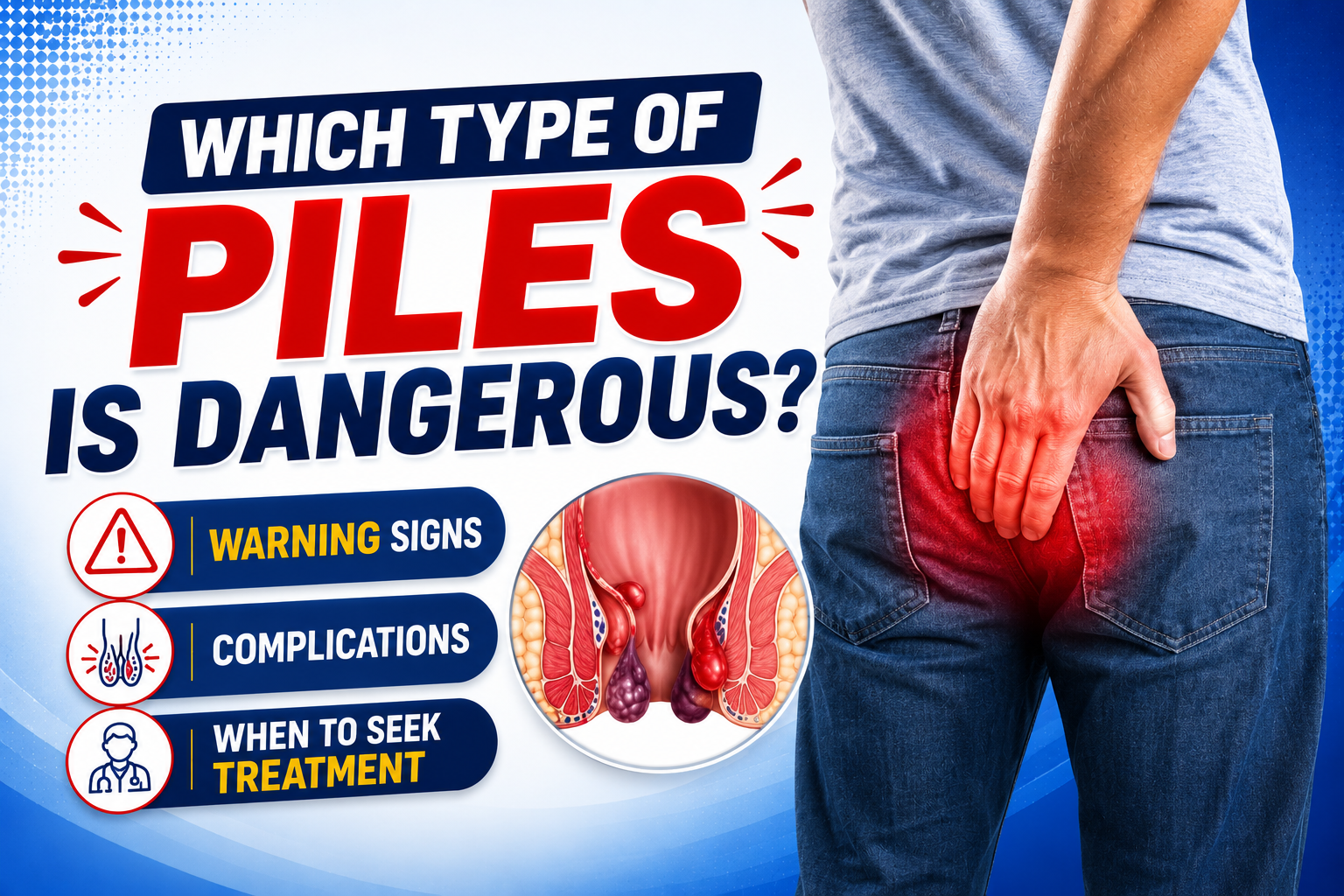
Which type of piles is dangerous? This is one of the most common questions people ask after noticing bleeding, pain, or swelling around the anus. Most piles are mild and improve with simple treatment. However, some forms can become painful and may lead to complications if ignored. Understanding which type of piles is dangerous helps you recognize warning signs early and seek treatment before symptoms become severe.
Piles, also called hemorrhoids, are swollen veins in the rectum or around the anus. They can develop because of constipation, straining during bowel movements, pregnancy, obesity, prolonged sitting, or increasing age. While many people live with mild piles, advanced piles often need medical attention. Therefore, knowing when piles become serious is important for protecting your health and quality of life.
What Are Piles?
Piles are enlarged veins that develop in the lower rectum or around the anus. Similar to varicose veins in the legs, these veins become swollen due to increased pressure. As a result, they may cause symptoms such as bleeding, itching, discomfort, swelling, or pain.
Several factors can increase the risk of developing piles:
- Chronic constipation
- Frequent straining during bowel movements
- Pregnancy
- Obesity
- Sitting for long periods
- Low-fiber diet
- Lack of physical activity
- Aging
Although piles are common, not every case is serious. Therefore, understanding the different types of piles is the first step in identifying which type of piles is dangerous.
Different Types of Piles
Piles are broadly divided into two main categories.
Internal Piles
Internal piles develop inside the rectum. Since they occur above the pain-sensitive area of the anal canal, they usually do not cause pain during the early stages.
Common symptoms include:
- Bright red bleeding during bowel movements
- Mild discomfort
- A feeling of incomplete bowel emptying
- Prolapse in advanced stages
External Piles
External piles develop under the skin around the anus. Because this area contains many nerve endings, external piles are often more painful than internal piles.
Symptoms may include:
- Pain
- Itching
- Swelling
- Irritation
- Difficulty sitting
To understand the differences in detail, read our article on internal vs external piles and their key differences.
Grades of Internal Piles
Internal piles are classified into four grades based on their severity.
Grade 1 Piles
Grade 1 piles remain inside the rectum and do not protrude outside the anus. They may cause mild bleeding but are generally considered the least severe type.
Grade 2 Piles
Grade 2 piles may come out during bowel movements but return inside on their own. Although symptoms can become more noticeable, complications remain uncommon.
Grade 3 Piles
Grade 3 piles protrude during bowel movements and must be pushed back manually. At this stage, discomfort and irritation become more frequent.
Grade 4 Piles
Grade 4 piles remain permanently outside the anus and cannot be pushed back inside. These piles are considered the most advanced form of internal hemorrhoids and often require medical treatment.
You can learn more about the progression of hemorrhoids by understanding the 4 grades of piles.
Which Type of Piles Is Dangerous?
When people ask which type of piles is dangerous, doctors usually focus on advanced or complicated piles rather than mild cases.
- Grade 4 Internal Piles
Grade 4 piles are often considered the most dangerous type of internal piles.
They may cause:
- Persistent prolapse
- Continuous discomfort
- Recurrent bleeding
- Difficulty maintaining hygiene
- Increased risk of complications
Because these piles remain outside the anus, conservative treatments often provide limited relief. Therefore, procedural treatment is frequently recommended.
- Thrombosed External Piles
A thrombosed pile develops when a blood clot forms inside an external hemorrhoid.
Symptoms can include:
- Sudden severe pain
- Hard lump near the anus
- Significant swelling
- Tenderness
- Difficulty sitting comfortably
Many patients describe thrombosed piles as one of the most painful hemorrhoid-related conditions.
Understanding the difference between thrombosed piles and regular hemorrhoids can help patients recognize when symptoms require medical attention.
- Severely Bleeding Piles
Occasional bleeding may occur with piles. However, persistent bleeding can become a concern.
Repeated blood loss may lead to:
- Fatigue
- Weakness
- Dizziness
- Iron-deficiency anemia
Therefore, piles that bleed frequently should always be evaluated by a doctor.
- Infected Piles
Although uncommon, infected piles require prompt medical attention.
Warning signs include:
- Fever
- Increasing pain
- Redness
- Swelling
- Pus discharge
As a result, delaying treatment can worsen symptoms and increase discomfort.
Severity Ranking of Different Types of Piles
Type of Piles | Risk Level |
Grade 1 Internal Piles | Low |
Grade 2 Internal Piles | Low |
Small External Piles | Low |
Grade 3 Internal Piles | Moderate |
Large External Piles | Moderate |
Grade 4 Internal Piles | High |
Thrombosed External Piles | High |
Severely Bleeding Piles | High |
Although most piles are not dangerous, some types need closer attention. In particular, Grade 4 internal piles and thrombosed external piles can cause severe pain, bleeding, and significant discomfort. As a result, doctors often recommend treatment sooner rather than later. Meanwhile, Grade 1 and Grade 2 piles usually respond well to lifestyle changes and conservative care.
Are Piles Dangerous?
Many people ask whether piles are dangerous because symptoms such as bleeding and pain can be worrying.
The good news is that most piles are not dangerous. In fact, many people successfully manage mild hemorrhoids with dietary changes, hydration, and simple treatments.
However, piles can become serious when:
- Symptoms continue for a long time
- Bleeding becomes frequent
- Severe pain develops
- Blood clots form
- Prolapse becomes permanent
Therefore, early diagnosis can help prevent unnecessary complications.
Can Piles Kill You?
Many patients worry that piles could become life-threatening. This concern is understandable, especially when symptoms include bleeding or severe pain. However, piles rarely cause death. Even so, certain complications can affect overall health if treatment is delayed for a long time.
- Severe Blood Loss
Persistent bleeding can eventually contribute to anemia.
Symptoms may include:
- Tiredness
- Weakness
- Dizziness
- Shortness of breath
- Delayed Diagnosis of Other Conditions
Some people assume rectal bleeding is always caused by piles. As a result, serious conditions such as colorectal cancer, polyps, or inflammatory bowel disease may remain undiagnosed.
- Rare Complications
Although rare, infection and severe thrombosis may require urgent medical attention. Therefore, any ongoing symptoms should be assessed by a healthcare professional.
Which Type of Piles Is Dangerous if Left Untreated?
The answer depends on the severity of symptoms and how long the condition has been present.
Early Stage
Symptoms often include:
- Mild itching
- Occasional bleeding
- Minor discomfort
Intermediate Stage
As piles enlarge, symptoms may become more noticeable.
These include:
- Increased swelling
- Frequent bleeding
- Prolapse
- Irritation
Advanced Stage
Without treatment, some piles may progress to:
- Grade 4 prolapse
- Thrombosed piles
- Chronic pain
- Persistent bleeding
- Significant discomfort during daily activities
Because of this, early intervention is often beneficial.
Many people reduce their risk of progression by following practical strategies that help prevent piles from worsening or recurring.
Which Type of Piles Is Dangerous: Internal or External?
People often wonder whether internal or external piles are more dangerous.
Internal Piles
Internal piles generally cause less pain during the early stages. However, advanced internal piles can prolapse and become increasingly difficult to manage.
External Piles
External piles are often more painful because they occur in a sensitive area around the anus.
Which Causes More Complications?
Grade 4 internal piles usually carry a greater risk of long-term complications. On the other hand, thrombosed external piles often cause more immediate pain and discomfort.
Therefore, both conditions can become serious in different ways.
Treatment Options for Dangerous Piles
Once you understand which type of piles is dangerous, the next step is learning how doctors manage the condition. Treatment depends on the type of piles, symptom severity, and how long the problem has been present. Fortunately, several effective treatment options are available today.
Lifestyle Changes
Doctors often recommend:
- Increasing fiber intake
- Drinking more water
- Exercising regularly
- Avoiding prolonged sitting
- Preventing constipation
Sitz Baths
Warm sitz baths may reduce irritation, itching, and discomfort. In addition, a sitz bath for piles is often recommended as a simple home-care measure that can provide temporary symptom relief.
Medications
Certain medications may help reduce symptoms temporarily and improve comfort.
Rubber Band Ligation
For selected internal piles, doctors may recommend rubber band ligation, a minimally invasive procedure commonly used for symptomatic hemorrhoids.
Laser Piles Surgery
Advanced piles may require procedural treatment when symptoms do not improve with conservative measures. Many patients compare different options before deciding on treatment. Therefore, understanding the advantages and disadvantages of laser piles surgery can be helpful when discussing treatment plans with a specialist.
Treatment plans vary depending on the grade of piles, symptom severity, and patient preference. Because of this, patients often benefit from learning how to choose the right piles treatment before making a decision.
When Should You See a Doctor?
You should seek medical attention if:
- Bleeding continues for several days
- Pain becomes severe
- Piles repeatedly return
- A lump develops around the anus
- Home remedies do not provide relief
- Daily activities become difficult
Early treatment often prevents progression and improves long-term outcomes.
Frequently Asked Questions
Grade 4 internal piles and thrombosed external piles are generally considered the most dangerous types because they can cause severe symptoms and complications.
Yes. Some piles may worsen over time and lead to prolapse, thrombosis, bleeding, and chronic discomfort.
Piles rarely become life-threatening. However, severe bleeding and delayed diagnosis of other conditions can create serious health concerns.
Grade 4 internal piles often cause more long-term complications, while thrombosed external piles usually cause more immediate pain.
Occasional bleeding is common. However, persistent or heavy bleeding should always be evaluated by a doctor.
Piles become more concerning when they cause severe pain, significant bleeding, prolapse, thrombosis, infection, or symptoms that interfere with daily life.
Conclusion
Which type of piles is dangerous? In most cases, Grade 4 internal piles and thrombosed external piles pose the greatest risk of complications. While piles are rarely life-threatening, advanced hemorrhoids can cause severe pain, persistent bleeding, prolapse, and significant discomfort if left untreated.
Therefore, it is important not to ignore ongoing symptoms. Early diagnosis and appropriate treatment can help prevent complications, improve comfort, and support a better quality of life. If you experience persistent bleeding, severe pain, or prolapsed piles, consulting a specialist can help determine the most suitable treatment option. Our team offers advanced piles treatment in Bangalore to help you find lasting relief.