
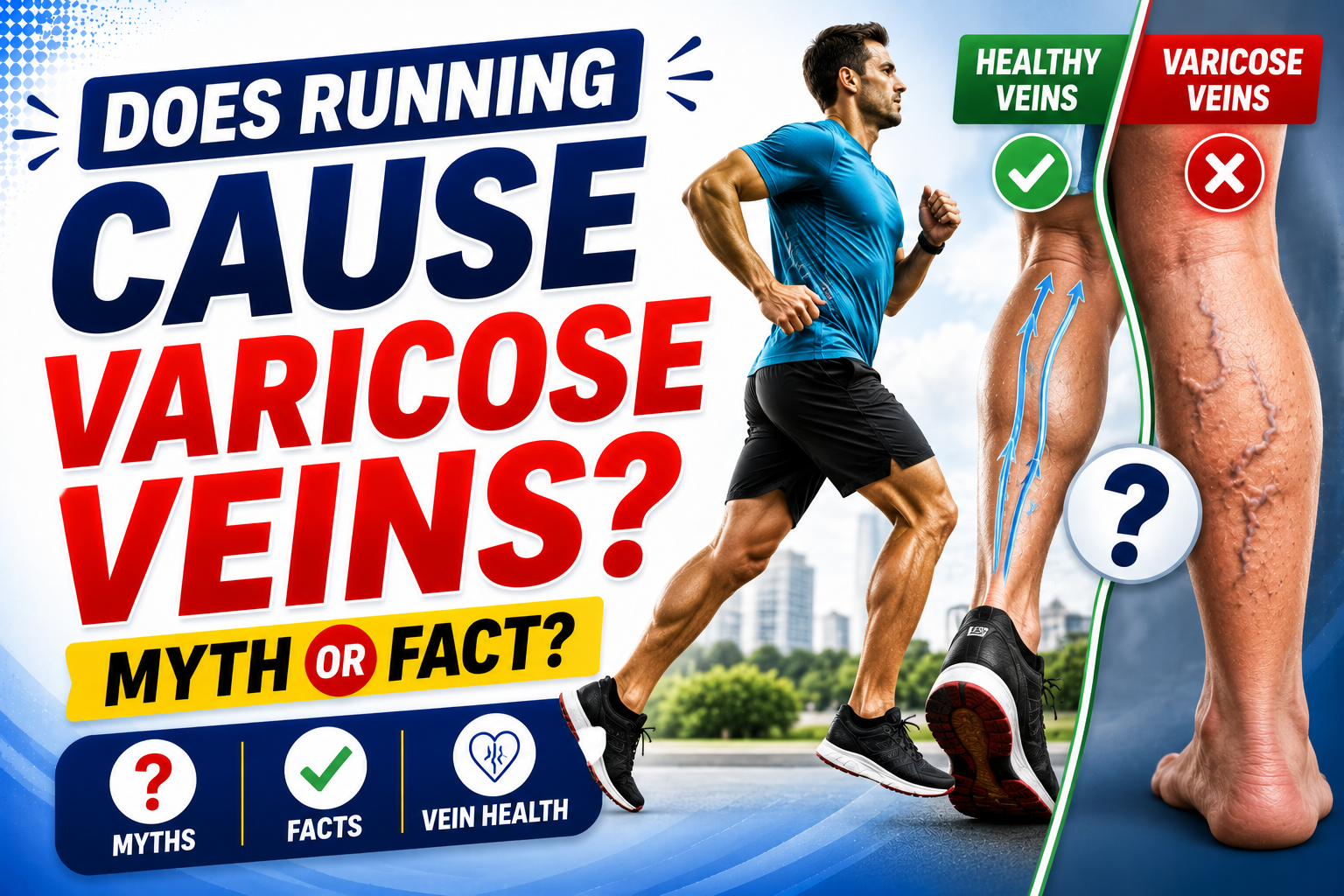
Introduction
Many people ask, does running cause varicose veins, especially when they notice visible veins or leg discomfort after exercise. It is a common concern among runners, joggers, and fitness enthusiasts who want to stay active while protecting their vein health.
The good news is that does running cause varicose veins can usually be answered with a simple no. In fact, regular running often supports healthy circulation and helps the muscles in your legs move blood back toward the heart. However, some runners still develop varicose veins. As a result, many people wonder whether running is helping or harming their veins.
Understanding the connection between running and vein health can help you exercise safely. Moreover, it can help you recognize warning signs early and know when medical attention may be needed.
What Are Varicose Veins?
Varicose veins are enlarged, twisted veins that commonly appear on the legs and feet. They develop when the valves inside the veins become weak or damaged.
Under normal conditions, these valves keep blood moving in one direction toward the heart. When they stop working properly, blood can flow backward and collect inside the veins. Over time, this extra pressure causes the veins to stretch, enlarge, and become visible beneath the skin.
Common Symptoms of Varicose Veins
Symptoms may include:
- Aching legs
- Leg heaviness
- Swelling around the ankles
- Burning sensations
- Throbbing discomfort
- Night cramps
- Itching around the veins
- Visible blue or purple veins
Many people ignore these symptoms at first. However, early recognition is important because vein disease can gradually worsen if left untreated.
You can learn more about common warning signs in this article on varicose vein symptoms.
Does Running Cause Varicose Veins?
The short answer is no.
Medical research shows that running does not directly cause varicose veins. Instead, running often improves circulation in the legs and helps blood return to the heart more efficiently.
During a run, the calf muscles contract repeatedly. These contractions push blood upward toward the heart. As a result, less blood collects in the lower legs, which supports healthy vein function.
This is why many doctors encourage regular physical activity as part of a healthy lifestyle for people concerned about circulation.
What Actually Causes Varicose Veins?
Several factors play a much larger role than running.
Common causes include:
- Family history
- Aging
- Pregnancy
- Excess body weight
- Hormonal changes
- Long periods of standing
- Chronic vein disease
Therefore, a person who runs regularly may still develop varicose veins if one or more of these risk factors are present.
Does Running Cause Varicose Veins in Healthy Individuals?
For most healthy individuals, the answer remains no.
Running does not damage healthy vein valves. Likewise, it does not directly create varicose veins in people with normal vein function.
However, some individuals already have underlying risk factors. These may include inherited valve weakness, aging, obesity, or early vein disease. In such cases, running may make existing symptoms more noticeable without actually causing the condition.
Therefore, if veins seem more visible after a run, it does not automatically mean the activity caused them. More often, exercise simply reveals a problem that was already developing.
If Running Doesn't Cause Varicose Veins, Why Do Some Runners Get Them?
This is one of the most common questions among active individuals.
Genetics Still Matters
Genetics is one of the strongest risk factors for varicose veins.
If close family members have varicose veins, you may inherit weaker vein walls or valve function. Because of this, varicose veins can develop even in people who exercise regularly and stay active.
Age-Related Changes
As people get older, veins naturally lose some of their elasticity.
In addition, the valves inside the veins may become less efficient. Consequently, varicose veins can appear later in life even among experienced runners.
Existing Vein Valve Weakness
Running supports circulation. However, exercise cannot repair damaged vein valves.
If vein disease already exists, running may help reduce symptoms while the underlying condition continues to progress.
Long-Distance Running and Vein Pressure
Long-distance runners may experience temporary increases in vein pressure during intense training.
This does not mean running causes varicose veins. Instead, it may highlight an existing weakness in the veins that was previously unnoticed.
Does Running Cause Varicose Veins or Help Vein Health?
For many people, running actually benefits vein health.
Improves Blood Circulation
Running encourages continuous blood flow throughout the body.
As a result, blood is less likely to pool in the lower legs. Better circulation supports healthier vein function over time.
Activates the Calf Muscle Pump
The calf muscles are often called the “second heart” of the legs.
Each running stride activates these muscles and helps move blood upward. This natural pumping action reduces blood pooling and supports circulation.
Helps Maintain a Healthy Weight
Excess weight places additional pressure on the veins.
Therefore, maintaining a healthy weight through regular exercise may reduce strain on the venous system.
Encourages Regular Movement
Many vein-related symptoms become worse after prolonged sitting or standing.
Running encourages regular movement. As a result, many people experience less heaviness and fatigue in their legs.
Does Running Cause Varicose Veins to Worsen Over Time?
Running generally does not worsen varicose veins.
However, some individuals may notice temporary symptom flare-ups.
Temporary Symptom Increase
After long runs, some people experience:
- Increased leg heaviness
- Mild swelling
- Temporary aching
- More visible veins
These symptoms are usually temporary. In most cases, they improve after rest.
Advanced Vein Disease
People with significant vein disease may experience more discomfort during running.
In these situations, exercise may need adjustment rather than complete avoidance.
Ignoring Symptoms
Persistent pain, increasing swelling, or skin changes should not be ignored. These symptoms deserve medical attention.
Furthermore, continuing intense exercise despite significant symptoms may delay diagnosis and treatment.
Running vs Walking for Varicose Veins
Many people wonder whether walking or running is better for vein health.
The answer depends on symptom severity, fitness level, and overall health.
| Factor | Walking | Running |
|---|---|---|
| Circulation Support | Good | Very Good |
| Joint Impact | Low | Moderate |
| Beginner Friendly | Excellent | Moderate |
| Advanced Vein Disease | Often Better Tolerated | May Need Modification |
| Calf Muscle Activation | Moderate | High |
Walking is often recommended for beginners or individuals with significant symptoms.
On the other hand, running may provide additional cardiovascular benefits for those who tolerate it comfortably.
Can You Continue Running If You Already Have Varicose Veins?
In many cases, yes.
Mild Symptoms
People with mild symptoms can often continue running safely.
Monitoring symptoms and adjusting training intensity may be helpful.
Moderate Symptoms
Individuals with swelling or aching may benefit from:
- Shorter running sessions
- Recovery periods
- Compression therapy
- Cross-training activities
Severe Symptoms
Severe swelling, skin changes, ulcers, or significant pain require medical assessment before continuing intense exercise.
Should Runners With Varicose Veins Wear Compression Stockings?
Compression stockings may help some runners manage symptoms more comfortably.
These garments apply graduated pressure to the legs and support healthy blood flow.
Potential benefits include:
- Reduced swelling
- Improved comfort
- Less leg fatigue
- Better recovery after exercise
However, compression stockings do not remove varicose veins. Instead, they help manage symptoms and improve comfort during daily activities and exercise.
Warning Signs You Should Not Ignore While Running
Although running is generally safe, certain symptoms should never be ignored.
Persistent Swelling
Swelling that continues despite rest may indicate worsening vein disease.
Skin Discoloration
Brown or dark skin changes around the ankles can be a sign of chronic vein disease.
Bleeding Veins
Varicose veins located close to the skin surface can occasionally bleed.
Consequently, prompt medical attention is important.
Leg Ulcers
Non-healing wounds near the ankles should always be evaluated by a healthcare professional.
Severe Pain
Persistent or worsening pain is not normal and deserves medical evaluation.
These symptoms may indicate progression beyond simple cosmetic varicose veins.
When Can You Run After Varicose Vein Treatment?
Many patients want to return to exercise quickly after treatment.
Recovery time depends on the treatment used and how quickly the body heals.
After EVLT
Walking is often encouraged soon after treatment. You can learn more about EVLT treatment and how it helps treat damaged veins.
Gradual Return to Running
Most people benefit from gradually returning to:
- Walking
- Light jogging
- Running
- Higher-intensity exercise
Following your surgeon’s recommendations is important for a safe recovery.
When to See a Vascular Specialist
Lifestyle changes and exercise can help manage symptoms. However, they cannot correct damaged vein valves.
You should consider medical evaluation if you experience:
- Persistent swelling
- Pain that affects daily activities
- Skin discoloration
- Bleeding veins
- Leg ulcers
- Progressive symptoms despite exercise
Some people eventually develop persistent swelling, skin changes, or painful ulcers that may require treatment from a vascular specialist.
Treatment Options for Symptomatic Varicose Veins
Treatment depends on symptom severity and vein function.
Lifestyle Measures
Doctors may recommend:
- Regular exercise
- Weight management
- Leg elevation
- Avoiding prolonged standing
Compression Therapy
Compression stockings can help reduce symptoms and improve comfort.
EVLT
Modern minimally invasive treatments such as EVLT target damaged veins while allowing faster recovery than traditional surgery.
Advanced Vein Procedures
Doctors may recommend other treatments based on your vein condition and symptoms.
Conclusion
So, does running cause varicose veins? For most people, the answer is no. Running does not directly cause varicose veins. In fact, it often supports healthy circulation through regular calf muscle activity and improved blood flow.
However, genetics, aging, pregnancy, excess body weight, and weakened vein valves remain the primary causes of varicose veins. As a result, some runners may still develop the condition despite maintaining an active lifestyle.
If you are wondering whether does running cause varicose veins applies to your situation, pay attention to symptoms such as swelling, aching, skin discoloration, or visible bulging veins. Early evaluation can help identify underlying vein disease before complications develop.
For most individuals, running remains a safe and beneficial activity. Nevertheless, persistent symptoms should never be ignored. Early diagnosis and appropriate treatment can help maintain long-term vein health and prevent complications.
Frequently Asked Questions
No. Running does not directly cause varicose veins. Genetics and weakened vein valves are much more important factors.
Yes. Running may improve circulation, activate the calf muscles, and help maintain a healthy weight.
Running does not usually worsen varicose veins. However, some people with advanced vein disease may experience temporary symptom flare-ups.
Yes. Active individuals can still develop varicose veins if they have underlying risk factors such as genetics or chronic vein disease.
Walking is often easier to tolerate, especially for people with symptoms. Running may provide additional cardiovascular benefits for others.
Not necessarily. Many people continue running safely. However, worsening symptoms should be assessed by a healthcare professional.