
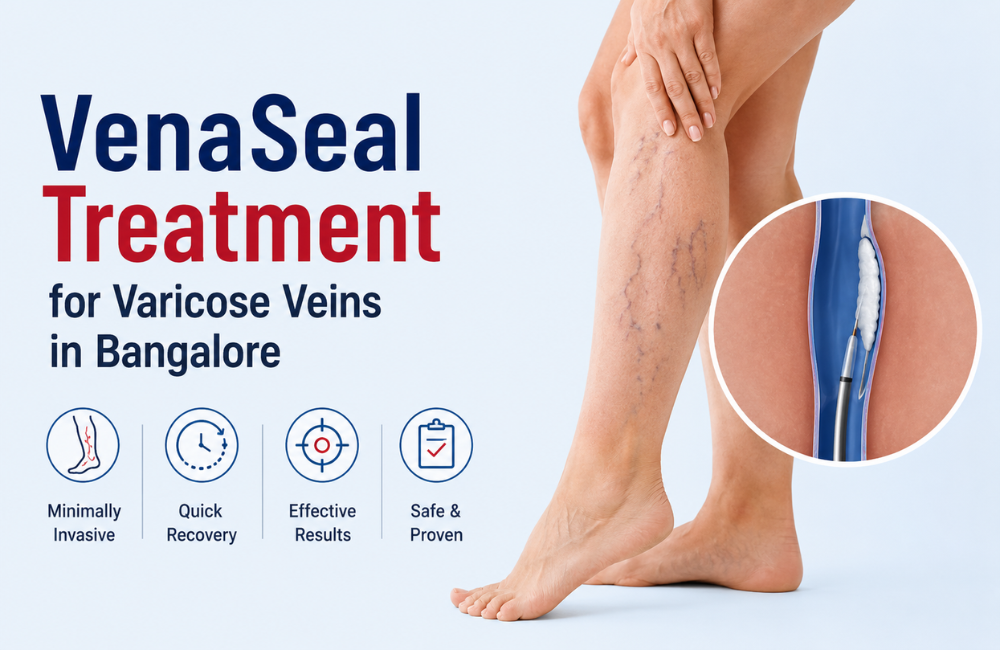
What Is VenaSeal Treatment?
Varicose veins are more than just visibly enlarged veins beneath the skin. For many patients, they are a sign of chronic venous insufficiency, a progressive condition in which blood does not flow properly through the leg veins. Over time, this poor circulation can lead to leg pain, heaviness, swelling, skin discoloration, itching, cramps, and even venous ulcers in advanced stages.
Traditional vein stripping surgery once required larger incisions, longer recovery, and significant post-operative discomfort. However, modern vascular treatments have transformed varicose vein management through minimally invasive procedures that focus on faster recovery and improved patient comfort.
One of the most advanced options available today is VenaSeal treatment for varicose veins, a non-thermal, non-surgical vein closure procedure that uses a specially designed medical adhesive to seal diseased veins permanently.
At Hari Laser Clinics, Bangalore, we provide advanced VenaSeal treatment for varicose veins in Bangalore using image-guided minimally invasive techniques focused on improving circulation, relieving symptoms, and reducing recovery time without major surgery.
This guide explains everything patients need to know about the VenaSeal procedure, including how it works, benefits, recovery, risks, eligibility, and how it compares with laser treatment for varicose veins.
Understanding Varicose Veins and Venous Insufficiency
To understand how VenaSeal treatment works, it is important to first understand how healthy veins function.
Veins in the legs are responsible for carrying blood back toward the heart. Because blood must travel upward against gravity, leg veins contain tiny one-way valves that prevent blood from flowing backward.
When these valves weaken or become damaged:
- Blood begins flowing backward (venous reflux)
- Blood pools inside the veins
- Pressure inside the veins increases
- Vein walls stretch and enlarge
- Twisted, bulging veins become visible beneath the skin
This condition is known as chronic venous insufficiency and is one of the primary causes of varicose veins.
Over time, increased venous pressure affects circulation and may lead to progressive symptoms if left untreated.
Common Symptoms of Varicose Veins
The symptoms of varicose veins vary depending on the severity of venous insufficiency. Some patients experience only mild cosmetic concerns, while others develop chronic discomfort and circulation-related complications.
Common Symptoms Include:
Visible Enlarged Veins:
Blue, purple, or twisted veins commonly appear on the thighs, calves, or behind the knees.
Leg Heaviness and Fatigue:
Many patients describe a heavy or tired sensation in the legs, especially after prolonged standing.
Swelling Around Ankles:
Poor venous circulation can cause fluid accumulation near the ankles and lower legs.
Aching or Burning Pain:
Patients may experience throbbing discomfort, burning sensation, or dull aching pain.
Night Cramps and Restlessness:
Venous insufficiency may contribute to leg cramps and discomfort during sleep.
Itching and Skin Irritation:
Inflammation around affected veins can lead to itching and skin sensitivity.
Skin Discoloration:
Advanced cases may cause brownish pigmentation around the ankles due to long-term venous pressure.
Venous Ulcers:
In severe chronic venous disease, painful non-healing ulcers may develop near the ankles.
Because symptoms often worsen gradually, many patients delay treatment until daily activities become affected.
Why Varicose Veins Develop
Several lifestyle, genetic, and circulatory factors contribute to the development of varicose veins.
Common Causes and Risk Factors
- Prolonged Standing or Sitting: Standing for long hours increases pressure inside leg veins. Occupations such as teachers, healthcare workers, retail employees, drivers, and office professionals may have higher risk.
- Aging: Vein walls and valves naturally weaken with age, increasing venous reflux.
- Obesity: Excess body weight places additional pressure on lower limb veins and affects circulation.
- Pregnancy: Hormonal changes and increased abdominal pressure during pregnancy can enlarge veins and weaken valves.
- Family History: Genetics play a significant role in vein wall strength and valve function.
- Sedentary Lifestyle: Lack of movement reduces calf muscle activity, which normally helps pump blood upward.
- Hormonal Factors: Hormonal changes can affect vein elasticity and circulation.
Varicose veins are progressive, meaning symptoms often worsen over time without proper management.
What Is VenaSeal Treatment?
VenaSeal treatment is an advanced minimally invasive vein closure procedure used to treat varicose veins and chronic venous insufficiency without surgical vein stripping or heat-based ablation.
The procedure uses a specially formulated medical adhesive delivered through a small catheter into the diseased vein.
Once the adhesive is applied:
- The vein walls seal together
- Abnormal backward blood flow stops
- Blood reroutes through healthier nearby veins
- Circulation improves naturally
Over time, the body gradually absorbs the sealed vein.
Unlike laser or radiofrequency ablation procedures, VenaSeal vein treatment does not use thermal energy, reducing heat-related tissue irritation and nerve injury risk.
How the VenaSeal Procedure Works
The VenaSeal procedure for varicose veins is performed using ultrasound guidance for precise vein mapping and treatment.
Step 1 – Detailed Doppler Ultrasound Evaluation
Before treatment, a Doppler ultrasound scan is performed to evaluate:
- Vein anatomy
- Valve dysfunction
- Blood flow abnormalities
- Venous reflux severity
- Diseased vein pathways
This helps determine whether the patient is suitable for VenaSeal treatment.
Step 2 – Catheter Insertion
A small catheter is inserted into the affected vein through a tiny puncture site.
Large surgical cuts are not required.
Step 3 – Medical Adhesive Delivery
The specialized medical adhesive is delivered in controlled amounts inside the vein.
Gentle external pressure seals the vein walls together.
Step 4 – Vein Closure
The diseased vein closes immediately, preventing abnormal blood pooling and venous reflux.
Healthy veins continue carrying blood normally.
Step 5 – Recovery and Walking
After the procedure:
- The catheter is removed
- Walking is encouraged immediately
- Most patients return home the same day
The procedure generally takes around 30–60 minutes.
How VenaSeal Differs From Laser Treatment
Many patients compare VenaSeal treatment with laser treatment for varicose veins because both are minimally invasive.
However, the technologies differ significantly.
| Feature | VenaSeal Treatment | Laser Treatment |
|---|---|---|
| Technology | Medical adhesive | Heat-based laser energy |
| Vein Closure Method | Glue-based sealing | Thermal ablation |
| Thermal Injury Risk | No | Present |
| Anesthesia Requirement | Minimal | Usually more |
| Post-Procedure Bruising | Often less | Mild bruising possible |
| Recovery | Fast | Fast |
| Compression Stockings | Sometimes minimal | Commonly advised |
The most appropriate treatment depends on the severity of venous insufficiency and individual vascular anatomy.
Benefits of VenaSeal Treatment for Varicose Veins
The popularity of VenaSeal treatment in Bangalore continues increasing because of its minimally invasive nature and patient-friendly recovery profile.
Major Benefits Include:
- Minimally Invasive Procedure: No major surgical cuts or vein stripping.
- Reduced Procedure Discomfort: Because heat energy is not used, many patients experience less discomfort.
- Faster Recovery Time: Most patients resume normal activities quickly after treatment.
- Lower Risk of Heat-Related Nerve Injury: The absence of thermal energy reduces the risk of surrounding tissue damage.
- Improved Cosmetic Appearance: Bulging veins gradually reduce in appearance over time.
- Day-Care Treatment: Hospital admission is usually unnecessary.
- Improved Quality of Life: Many patients report reduced leg heaviness, swelling, and fatigue after treatment.
Who May Be Suitable for VenaSeal Treatment?
Patients with symptomatic varicose veins or chronic venous insufficiency may benefit from VenaSeal treatment.
Suitable Candidates May Include:
- Patients with visible enlarged veins
- Individuals with venous reflux
- Leg pain or heaviness
- Swelling due to venous insufficiency
- Patients seeking non-surgical treatment
- Patients unsuitable for heat-based ablation
Proper Doppler evaluation is essential before deciding treatment suitability.
Is VenaSeal Treatment Painful?
Most patients tolerate the procedure comfortably.
Since VenaSeal treatment avoids heat-based energy:
- Fewer local anesthesia injections are usually needed
- Minimal procedural discomfort is reported
- Recovery tends to be smoother
Some temporary tightness or tenderness may occur for a few days.
Recovery After VenaSeal Treatment
Recovery after VenaSeal treatment for varicose veins is generally quick compared to conventional surgery.
Immediately After Treatment
- Walking is encouraged
- Patients usually return home the same day
First Few Days
- Mild soreness or tightness may occur
- Routine daily activities are often possible
Following Weeks
- Gradual reduction in swelling and heaviness
- Improved blood circulation
- Better leg comfort
Recovery varies depending on the severity of venous disease and individual vascular health.
Risks and Possible Side Effects
Although considered safe, all vascular procedures carry some risks.
Temporary Side Effects May Include:
- Mild bruising
- Tenderness along the treated vein
- Redness
- Swelling
- Tightness sensation
Serious complications are uncommon when treatment is performed after proper vascular assessment.
What Happens if Varicose Veins Are Left Untreated?
Untreated varicose veins may gradually progress and affect overall vascular health.
Potential complications include:
- Chronic leg swelling
- Skin pigmentation changes
- Venous eczema
- Bleeding veins
- Venous ulcers
- Superficial thrombophlebitis
- Increased discomfort during walking or standing
Early treatment improves circulation and helps prevent long-term complications.
Why Choose Hari Laser Clinics for VenaSeal Treatment in Bangalore?
At Hari Laser Clinics, treatment planning focuses on accurate vascular diagnosis, minimally invasive care, and long-term symptom relief.
Our Approach Includes:
- Advanced Doppler ultrasound evaluation
- Individualized treatment planning
- Modern minimally invasive vascular procedures
- Focus on patient comfort and faster recovery
- Structured follow-up care and monitoring
Every patient undergoes detailed clinical assessment before recommending the most suitable vein treatment approach.
Conclusion
VenaSeal treatment for varicose veins in Bangalore offers an advanced, minimally invasive alternative to traditional vein surgery. By using medical adhesive technology to seal diseased veins, the procedure helps improve blood circulation while minimizing downtime, discomfort, and recovery challenges.
However, successful treatment depends on proper diagnosis, Doppler evaluation, and individualized vascular assessment.
If you experience persistent leg heaviness, swelling, pain, or visible enlarged veins, early consultation can help prevent progression of chronic venous insufficiency and improve long-term vascular health.