
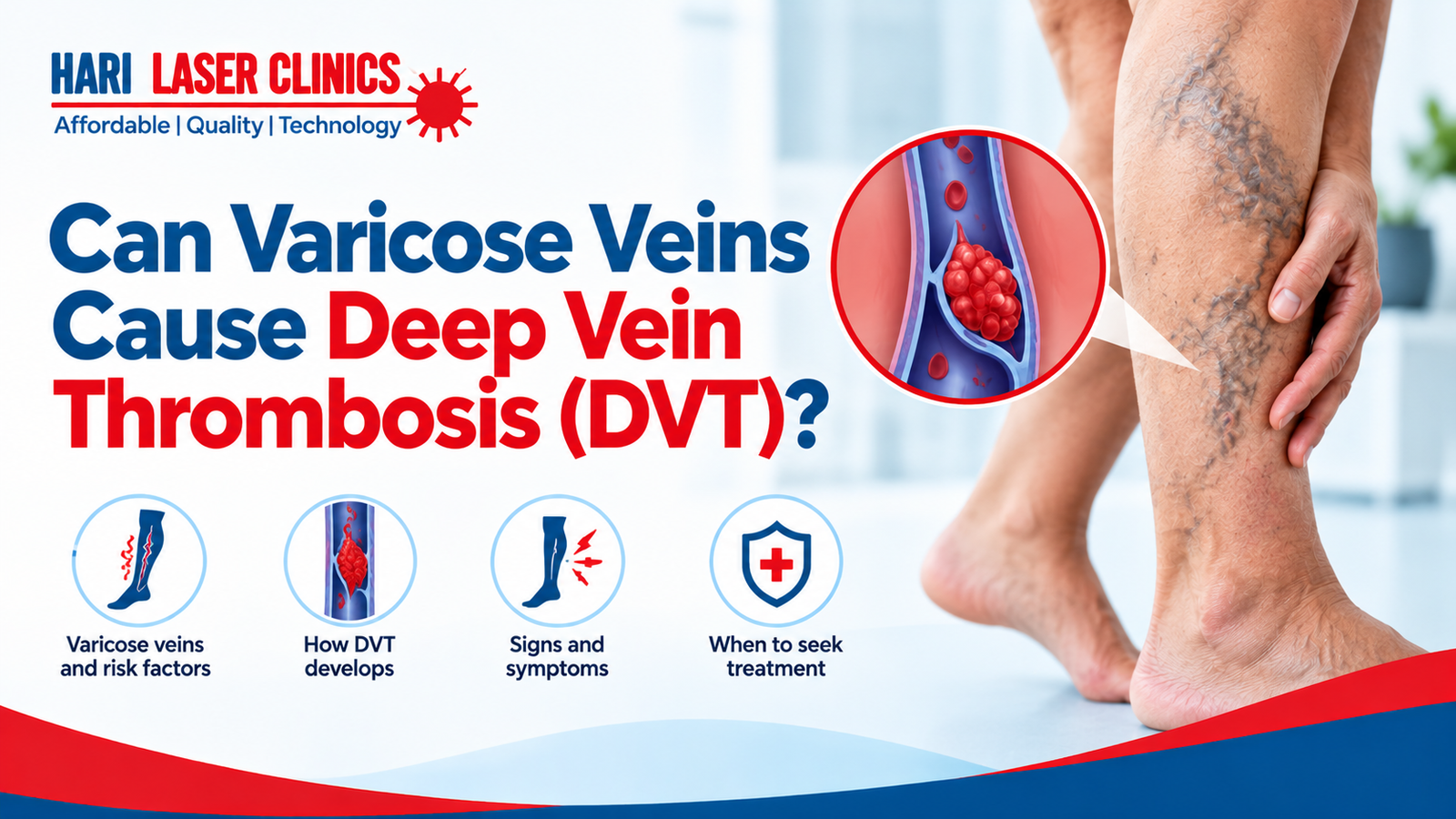
Can Varicose Veins Cause Deep Vein Thrombosis (DVT)?
Varicose veins and DVT are not the same thing, but they are linked. Learn how they differ, the warning signs of a blood clot, and when leg swelling or pain needs urgent attention.
Varicose veins are enlarged, twisted veins that usually appear on the legs. They are common and may cause symptoms such as leg heaviness, swelling, aching, itching, or discomfort. While varicose veins themselves are usually not the same as a blood clot, many people wonder whether they can increase the risk of deep vein thrombosis (DVT).
DVT is a condition in which a blood clot develops in a deep vein, most commonly in the leg. Unlike varicose veins, DVT can become a serious medical condition because a clot can sometimes travel to the lungs and cause a pulmonary embolism.
Can varicose veins cause DVT? The relationship is more complicated than a simple yes or no. Having varicose veins does not mean that you will definitely develop DVT, but chronic venous problems and certain associated risk factors may increase the risk of developing blood clots in some people.
Understanding the difference between varicose veins and DVT can help you recognise symptoms that need medical attention.
What Are Varicose Veins?
Varicose veins are enlarged veins that become visible beneath the skin, most commonly in the legs.
Healthy leg veins contain valves that help blood move upward toward the heart. When these valves become weak or do not close properly, blood can flow backward and collect inside the veins. This increases pressure within the veins and can cause them to become enlarged and twisted.
Common symptoms of varicose veins include:
- Enlarged or twisted veins
- Aching or heaviness in the legs
- Leg swelling
- Burning or throbbing sensation
- Itching around the veins
- Muscle cramps, especially at night
- Skin changes around the ankles
- Discomfort after prolonged standing or sitting
Varicose veins are part of the superficial venous system, whereas DVT usually affects the deeper veins of the leg.
What Is Deep Vein Thrombosis (DVT)?
Deep vein thrombosis (DVT) occurs when a blood clot develops inside a deep vein.
DVT most commonly affects the lower leg, thigh, or pelvis. A clot may partially or completely block blood flow through the affected vein.
Some DVTs cause noticeable symptoms, while others may cause very few symptoms. When symptoms occur, they may include:
- Swelling in one leg
- Pain or tenderness in the calf or thigh
- Warmth over the affected area
- Red or discoloured skin
- A feeling of tightness or heaviness in the leg
DVT needs prompt medical assessment because a blood clot can sometimes break away and travel through the bloodstream to the lungs. This can cause a pulmonary embolism (PE), which can be life-threatening.
Are Varicose Veins and DVT the Same?
No. Varicose veins and DVT are different conditions.
| Varicose Veins | Deep Vein Thrombosis |
|---|---|
| Usually affects superficial veins | Affects deep veins |
| Caused mainly by poorly functioning vein valves | Caused by formation of a blood clot |
| Often develops gradually | Can develop suddenly |
| Visible enlarged veins are common | The clot is usually not visible |
| May cause heaviness, aching and swelling | Can cause sudden swelling, pain and warmth |
| Usually not immediately dangerous | Can become a medical emergency |
However, both conditions can cause leg swelling or discomfort. This is why sudden or unusual symptoms should not automatically be attributed to varicose veins.
Can Varicose Veins Increase the Risk of DVT?
Having varicose veins does not mean that DVT will develop. However, research has found an association between varicose veins and an increased risk of venous thromboembolism in some populations.
The important point is that varicose veins are not the same as DVT, and having visible varicose veins does not mean there is already a blood clot.
Several factors can contribute to blood clot formation. These may include reduced movement, prolonged sitting, prolonged bed rest, surgery, injury, pregnancy, certain medical conditions, previous blood clots, and other risk factors.
People with varicose veins may also have underlying venous circulation problems. If other DVT risk factors are present, the overall risk may be higher.
Therefore, it is important to consider the person's complete medical history rather than assuming that varicose veins alone caused a DVT.
Why Can Poor Vein Circulation Matter?
The veins in the legs have an important job: returning blood back toward the heart.
When vein valves do not function properly, blood can pool in the legs. This can lead to increased pressure within the veins and symptoms associated with chronic venous disease. Varicose veins are one visible sign of this problem.
Poor circulation alone does not mean that a DVT is present. However, reduced movement and other factors that affect blood flow can contribute to conditions in which blood clots are more likely to develop.
This is why people who have significant vein problems should pay attention to new or sudden symptoms rather than assuming every episode of leg swelling is simply due to varicose veins.
What Are the Risk Factors for DVT?
DVT can occur for several reasons. Some of the important risk factors include:
Prolonged Sitting or Inactivity
Sitting for long periods can reduce the movement of blood through the legs. This can be particularly relevant during:
- Long-distance flights
- Long car journeys
- Extended desk work
- Prolonged bed rest
Regular movement is important for maintaining healthy blood flow in the legs.
Surgery
The risk of blood clots can increase after certain surgical procedures, particularly when mobility is reduced during recovery. Doctors may recommend specific measures to reduce clot risk depending on the type of surgery and the patient's individual risk factors.
Previous DVT
Someone who has previously experienced DVT may have a higher risk of developing another clot.
Pregnancy and the Postpartum Period
Pregnancy causes several changes in the body that can increase the risk of blood clots. Pressure from the growing uterus can also affect blood flow from the legs. The risk can remain elevated after delivery.
Certain Medical Conditions
Some illnesses can increase the tendency of blood to clot. Your doctor may consider your medical history and other risk factors when assessing your individual risk.
Obesity
Being overweight or obese can be associated with a higher risk of venous thromboembolism.
Smoking
Smoking can affect blood vessels and is associated with several cardiovascular and vascular health risks.
Cancer and Cancer Treatment
Certain cancers and some cancer treatments can increase the risk of blood clots.
How Can You Tell the Difference Between Varicose Veins and DVT?
The symptoms can overlap, but there are some differences that may provide clues.
Symptoms More Commonly Associated With Varicose Veins
Varicose vein symptoms often develop gradually and may become worse after standing for long periods. They may include:
- Visible enlarged veins
- Leg heaviness
- Aching
- Mild or moderate swelling
- Itching
- Burning
- Night-time cramps
- Symptoms that improve after elevating the legs
Symptoms That May Suggest DVT
DVT may cause:
- Sudden swelling, particularly in one leg
- New calf or thigh pain
- Warmth over the affected area
- Redness or unusual skin colour
- Tenderness
- A feeling of tightness in the affected leg
Importantly, symptoms alone cannot confirm or rule out DVT.
If you develop sudden one-sided leg swelling or pain, especially when you have other risk factors for blood clots, seek medical evaluation rather than assuming it is caused by varicose veins.
Get your veins checked properly. A Duplex Doppler assessment at Hari Laser Clinics shows what is really going on.
Can a Varicose Vein Develop a Blood Clot?
Blood clots can occur in superficial veins as well as deep veins.
A clot in a superficial vein is called superficial vein thrombosis or superficial thrombophlebitis. It can cause a painful, tender, firm area along the affected vein.
This is different from DVT because DVT occurs in the deep venous system.
However, superficial and deep venous problems can sometimes occur together or require further assessment. A doctor may recommend an ultrasound examination when the symptoms or clinical findings raise concern about a deeper clot.
When Should You Seek Immediate Medical Attention?
Some symptoms require urgent medical evaluation.
- Sudden swelling in one leg
- New or unexplained calf pain
- Leg warmth with swelling
- Sudden redness or skin colour changes
- Significant tenderness in the calf or thigh
There are also symptoms that can indicate a possible pulmonary embolism.
- Sudden shortness of breath
- Chest pain, especially pain that worsens with breathing
- Coughing up blood
- Rapid heartbeat
- Fainting or severe dizziness
These symptoms should not be ignored.
How Is DVT Diagnosed?
A doctor may first assess your symptoms, medical history, and risk factors.
If DVT is suspected, an ultrasound examination of the veins, commonly called a duplex or Doppler ultrasound, is often used to assess blood flow and look for a clot.
Depending on the situation, doctors may also use blood tests such as a D-dimer test and other investigations.
For people with varicose veins, duplex ultrasound can also help assess the functioning of the veins, identify abnormal blood flow, and evaluate venous reflux.
The appropriate investigation depends on the symptoms and clinical assessment.
How Are Varicose Veins Treated?
Treatment for varicose veins depends on the severity of symptoms, vein anatomy, underlying venous reflux, and the patient's overall health. Treatment options may include:
Lifestyle Changes
Regular physical activity and avoiding prolonged periods of sitting or standing can help improve circulation. Doctors may also recommend maintaining a healthy weight, elevating the legs when appropriate, and other measures based on individual symptoms.
Compression Therapy
Compression stockings may be recommended for certain patients to help manage swelling and symptoms. They should be used according to medical advice, particularly if there are concerns about arterial circulation or other vascular conditions.
Sclerotherapy
Sclerotherapy involves injecting a medical solution into selected veins to close them. It is commonly used for certain smaller varicose veins and spider veins.
Radiofrequency Ablation (RFA)
Radiofrequency ablation (RFA) uses controlled heat to close an affected vein. Blood is then redirected through healthier veins.
Endovenous Laser Treatment (EVLT)
EVLT uses laser energy to close an unhealthy vein from inside. A thin laser fibre is inserted into the affected vein under ultrasound guidance. The vein is then treated so that blood can be redirected through healthier veins. EVLT is a minimally invasive option for suitable patients with venous reflux.
Does Treating Varicose Veins Prevent DVT?
Treating varicose veins can address the underlying venous problem and may improve symptoms, but it should not be considered a guaranteed way to prevent DVT.
DVT has many possible risk factors, and treatment decisions depend on the individual's overall health and medical history.
The important step is identifying the underlying vein problem and understanding whether there are any additional risk factors for blood clots.
If you have varicose veins along with sudden swelling, pain, or other concerning symptoms, evaluation should come before assuming that treatment for varicose veins is all that is needed.
Can You Prevent DVT?
Not every DVT can be prevented, but certain habits can help reduce risk in appropriate situations. You can support healthy circulation by:
- Staying physically active
- Avoiding prolonged periods of sitting
- Taking regular walking breaks during long journeys
- Moving your legs regularly when travelling
- Following your doctor's advice after surgery
- Maintaining a healthy weight
- Staying hydrated
- Following prescribed blood-thinning medication when indicated
People at higher risk may need additional preventive measures. These should be decided by a doctor based on individual risk.
Can Walking Help With Varicose Veins?
Walking activates the calf muscles, which help push blood upward through the leg veins.
Regular walking can be a useful part of maintaining healthy circulation and managing some symptoms associated with chronic venous disease.
If you spend several hours sitting at a desk, getting up regularly and walking for a few minutes can help reduce prolonged inactivity.
However, exercise should not be used to self-treat suspected DVT. If you have sudden swelling or significant unexplained leg pain, seek medical assessment.
When Should You See a Varicose Vein Specialist?
You should consider seeing a specialist if you have:
- Increasingly visible varicose veins
- Persistent leg pain or heaviness
- Recurrent leg swelling
- Night-time cramps
- Itching or skin changes around the ankles
- Brown or dark skin discoloration
- A wound that is slow to heal
- Symptoms that interfere with daily activities
Early evaluation can help identify whether the problem is limited to superficial varicose veins or whether there is a more significant venous condition.
If symptoms develop suddenly, particularly one-sided swelling or pain, DVT should be considered and evaluated promptly.
Why Choose Hari Laser Clinics?
At Hari Laser Clinics, patients with varicose veins can undergo a detailed evaluation to understand the underlying vein problem.
Assessment may include clinical examination and Duplex Doppler ultrasound when appropriate. This helps evaluate blood flow, venous reflux, and the condition of the affected veins.
Depending on the findings, varicose vein treatment options may include conservative management, sclerotherapy, radiofrequency ablation, or EVLT for suitable patients.
The focus is on identifying the underlying venous problem and selecting an appropriate treatment based on the patient's symptoms and vein condition.
FAQs About Varicose Veins and DVT
1. Can varicose veins cause DVT?
Varicose veins and DVT are different conditions. Varicose veins do not automatically cause DVT, although studies have found an association between varicose veins and an increased risk of venous thromboembolism in some populations.
2. How do I know if my leg pain is from varicose veins or DVT?
Varicose vein discomfort often develops gradually and may be associated with visible veins, heaviness, or symptoms after prolonged standing. DVT may cause sudden swelling, pain, warmth, or redness, often affecting one leg. Symptoms alone cannot confirm DVT, so medical assessment may be necessary.
3. Can a varicose vein have a blood clot?
A clot can develop in a superficial vein, causing superficial thrombophlebitis. This is different from DVT, which occurs in the deep veins.
4. Is DVT more dangerous than varicose veins?
DVT can be more serious because a clot can sometimes travel to the lungs and cause pulmonary embolism. Varicose veins are generally a chronic venous condition, although advanced venous disease can cause complications such as skin changes and ulcers.
5. Can walking prevent DVT?
Regular movement can help reduce prolonged inactivity, which is one factor associated with DVT risk. However, walking cannot prevent every DVT, particularly when other major risk factors are present.
6. Should I massage my leg if I have sudden swelling?
Sudden unexplained one-sided swelling or pain should be medically assessed rather than self-treated. If DVT is suspected, seek medical advice promptly.
7. Can varicose veins cause leg swelling?
Yes. Varicose veins and chronic venous insufficiency can cause swelling, particularly around the ankles and lower legs. However, sudden or significant one-sided swelling needs medical evaluation because DVT can also cause swelling.
8. Can varicose veins be treated without surgery?
Some patients can manage symptoms with lifestyle measures, compression therapy, and other conservative treatments. When an underlying vein requires intervention, minimally invasive procedures such as EVLT or RFA may be considered.
9. Does EVLT increase the risk of DVT?
Any procedure involving the veins can have potential complications, including blood clots, although serious complications are uncommon. Your doctor will assess your individual risk and provide appropriate aftercare instructions.
10. When should I seek emergency help for leg symptoms?
Sudden leg swelling or pain should be assessed promptly. If you also develop sudden breathlessness, chest pain, coughing up blood, fainting, or severe dizziness, seek emergency medical care.
Conclusion
Varicose veins and deep vein thrombosis are different vein conditions. Varicose veins do not mean that you have DVT, but people with varicose veins may have other risk factors that can contribute to blood clot formation.
Sudden one-sided leg swelling, new calf pain, warmth, or redness should not simply be attributed to varicose veins. A medical evaluation can help determine whether the symptoms are related to chronic venous disease, superficial vein problems, DVT, or another condition.
For persistent varicose vein symptoms, a proper evaluation can identify the underlying venous problem and help determine whether conservative care or a minimally invasive treatment such as EVLT or RFA may be appropriate.
Detailed vein evaluation with Duplex Doppler ultrasound and minimally invasive treatment options, including EVLT and RFA, at Hari Laser Clinics, Bangalore.
Or call +91 99860 01112 · Learn about varicose vein treatment
Related Reading
This article is for general information and does not replace a consultation with a qualified doctor. If you have sudden breathlessness, chest pain or coughing up blood, seek emergency medical care immediately.