
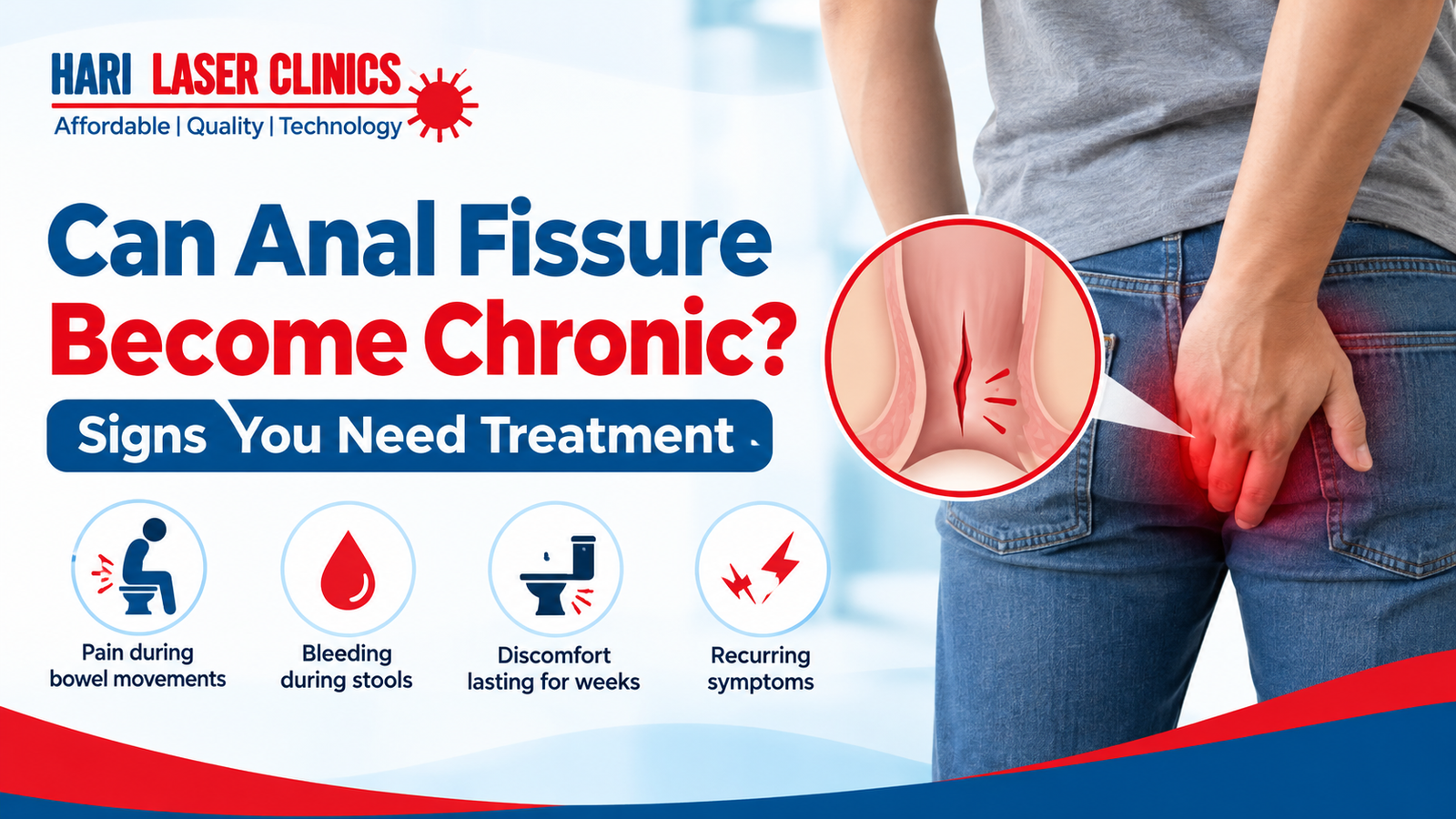
Can Anal Fissure Become Chronic? Signs You Need Treatment
Sharp pain and bleeding that keep coming back after bowel movements can mean a fissure is not healing. Learn the signs of a chronic anal fissure, why it happens, and the treatment options available.
An anal fissure is a small tear in the lining of the anus that can cause sharp pain, burning, and bleeding during or after bowel movements. Many acute fissures improve with proper bowel habits, fibre, adequate fluids, and medical treatment. However, when a fissure does not heal and symptoms continue or keep returning, it can become a chronic anal fissure.
Chronic anal fissures can be more difficult to treat because repeated injury and increased tightening of the internal anal sphincter can interfere with healing. Symptoms may also become persistent, affecting bowel movements, daily activities, and quality of life.
Can anal fissure become chronic? Yes. A fissure that continues for several weeks or repeatedly returns should be evaluated by a specialist rather than managed only with home remedies.
Understanding the warning signs of a chronic fissure can help you seek treatment at the right time and avoid prolonged pain and repeated episodes.
What Is an Anal Fissure?
An anal fissure is a small tear or crack in the tissue lining the anus. It commonly develops when a hard or large stool stretches and injures the anal lining.
Common triggers include:
- Constipation and hard stools
- Straining during bowel movements
- Passing large stools
- Frequent diarrhoea
- Repeated irritation of the anal area
- Certain gastrointestinal conditions
The typical symptoms include sharp pain during bowel movements, burning pain that may continue afterward, and small amounts of bright red blood on toilet paper or on the surface of the stool.
Most acute fissures can heal with appropriate non-surgical treatment. However, some fissures do not heal properly and gradually develop into chronic fissures.
Can Anal Fissure Become Chronic?
Yes, an anal fissure can become chronic.
An acute anal fissure is generally considered a fissure that has been present for less than about six weeks. Fissures that persist longer may show physical features associated with chronicity, such as a sentinel skin tag, a hypertrophied anal papilla, or exposed sphincter muscle at the base of the fissure.
One important reason chronic fissures can be difficult to heal is increased tension or spasm of the internal anal sphincter. This can reduce blood flow to the area and interfere with normal wound healing.
This can create a cycle:
If this cycle continues, the fissure may remain open or repeatedly reopen after bowel movements.
Acute vs Chronic Anal Fissure
Knowing the difference between an acute and chronic anal fissure can help you understand when treatment may need to be escalated.
Acute Anal Fissure
An acute fissure is usually recent and may develop after constipation, passing a hard stool, or another episode of trauma to the anal lining. Symptoms may include:
- Sudden sharp pain during bowel movements
- Burning after passing stool
- Small amounts of bright red bleeding
- Discomfort that improves as the fissure begins to heal
Many acute fissures respond to conservative treatment, particularly measures that keep stools soft and reduce straining.
Chronic Anal Fissure
A chronic fissure continues for a longer period or repeatedly returns after temporary improvement. Possible features include:
- Persistent or recurring anal pain
- Repeated bleeding during bowel movements
- A visible skin tag near the anus
- A small lump or swelling around the fissure
- Persistent sphincter spasm
- Symptoms that improve temporarily and then return
- A fissure that does not heal despite appropriate conservative treatment
Chronic fissures often require a more structured treatment plan after evaluation by a colorectal or general surgeon.
Signs That Your Anal Fissure May Have Become Chronic
Not every episode of anal pain means that a fissure has become chronic. However, certain symptoms should prompt a medical evaluation.
Pain Keeps Returning
If sharp or burning anal pain occurs repeatedly with bowel movements, the fissure may not have healed completely. Some patients also experience pain for minutes or even hours after passing stool. Persistent pain can occur because the internal sphincter remains tightly contracted.
Bleeding Keeps Coming Back
Bright red blood on toilet paper or on the outside of the stool can occur with an anal fissure. If bleeding repeatedly returns whenever you pass stool, it is important to identify the cause instead of assuming that it is always a fissure. Rectal bleeding can have several causes, including hemorrhoids, fissures, inflammatory bowel disease, polyps, and other gastrointestinal conditions.
The Fissure Has Not Healed
If symptoms continue despite improving your bowel habits, increasing fibre, drinking enough fluids, and following prescribed treatment, the fissure may need further evaluation. A chronic fissure can require treatment aimed not only at the wound but also at reducing sphincter tension.
A Skin Tag Develops
A small skin tag, often called a sentinel pile or sentinel tag, can develop near a chronic anal fissure. Its presence does not automatically mean that surgery is required, but it can be one of the physical features associated with chronic fissures.
You Are Afraid to Pass Stool
Some patients begin delaying bowel movements because they expect severe pain. This can make constipation worse. The resulting hard stool may then cause additional trauma when it is eventually passed.
Home Remedies Provide Only Temporary Relief
Warm sitz baths, adequate fibre, fluids, and healthy bowel habits may help relieve symptoms and support healing. However, repeated temporary relief followed by another painful episode suggests that the underlying problem may not have fully resolved.
When fear of pain leads to delaying bowel movements, it creates another cycle:
Breaking this cycle is an important part of treatment. Chronic fissures are generally more difficult to treat than acute fissures.
Don't keep relying on home remedies. Get a proper evaluation at Hari Laser Clinics and find out what is stopping it from healing.
What Causes an Anal Fissure to Become Chronic?
Several factors can contribute to delayed healing or recurrence.
Constipation and Hard Stools
Hard stools can repeatedly stretch the anal canal and reopen a healing fissure. If constipation continues, even a partially healed fissure may be injured again.
Straining During Bowel Movements
Excessive straining increases pressure around the anal canal and can contribute to repeated trauma. Avoiding prolonged sitting and straining on the toilet is therefore an important part of fissure care.
Sphincter Spasm
The internal anal sphincter can become excessively tight following a fissure. This increased muscle tone can reduce blood flow to the affected area and interfere with healing.
Repeated Diarrhoea
An anal fissure is not caused only by constipation. Frequent loose stools and repeated irritation can also contribute to fissure development and delayed healing.
Underlying Medical Conditions
Some fissures can be associated with conditions such as Crohn's disease and other inflammatory or infectious disorders. Atypical fissures, particularly those occurring away from the usual midline location or those that do not respond to standard treatment, may require additional evaluation.
How Is a Chronic Anal Fissure Diagnosed?
Diagnosis usually begins with a detailed discussion of your symptoms and bowel habits. A doctor may ask:
- How long have you had the pain?
- Does the pain occur during or after bowel movements?
- How often do you notice bleeding?
- Do you experience constipation or diarrhoea?
- Have you tried medicines or home treatment?
- Have the symptoms improved and returned?
- Have you had previous fissures?
A physical examination of the anal area can help identify the fissure and signs of chronicity.
In some patients, further examination or investigations may be recommended, particularly when symptoms are unusual, persistent, recurrent, or do not fit a typical fissure.
The aim is not only to confirm an anal fissure but also to rule out other causes of anal pain or bleeding.
How Is Chronic Anal Fissure Treated?
Treatment depends on how long the fissure has been present, the severity of symptoms, previous treatments, and the patient's overall health.
1. Fibre and Dietary Changes
Increasing dietary fibre can help produce softer stools that are easier to pass. Fibre-rich foods may include:
- Fruits
- Vegetables
- Whole grains
- Legumes
- Other naturally fibre-rich foods
Fibre supplements may also be recommended when dietary intake is not sufficient. The goal is to avoid both hard stools and excessive straining.
2. Adequate Fluid Intake
Drinking enough fluids can support softer bowel movements, particularly when increasing fibre intake. Your individual fluid needs can vary depending on your health, activity level, climate, and other medical conditions.
3. Stool-Softening Treatment
A doctor may recommend stool softeners or other medicines when constipation is contributing to the fissure. These should be used according to medical advice, particularly when symptoms are persistent.
4. Warm Sitz Baths
A warm sitz bath can help relax the anal muscles and provide temporary relief from discomfort. Warm baths for around 10–20 minutes may be recommended several times a day, especially after bowel movements.
5. Prescription Topical Medicines
For chronic anal fissures, doctors may prescribe topical medicines that help relax the internal anal sphincter. Topical nitrates and calcium channel blockers such as diltiazem or nifedipine are among the medical treatments used. The 2023 ASCRS guideline notes that topical calcium channel blockers have similar efficacy to topical nitrates with a more favourable side-effect profile and can be used as first-line treatment. These medicines should be prescribed and used under medical supervision.
6. Botulinum Toxin Treatment
Botulinum toxin, commonly known as Botox, may be considered for some chronic anal fissures. It temporarily reduces excessive sphincter muscle activity and may help create better conditions for the fissure to heal. According to the ASCRS guideline, it has results similar to topical treatments when used as first-line therapy and may provide a modest improvement in healing when used after unsuccessful topical treatment.
7. Surgical Treatment
When a chronic fissure does not respond adequately to medical treatment, surgery may be considered. One established option is lateral internal sphincterotomy (LIS), in which a controlled portion of the internal anal sphincter is divided to reduce excessive muscle pressure and allow the fissure to heal. The decision must be individualized because continence-related risks need to be considered; the ASCRS guideline discusses tailored sphincterotomy as an approach that can maintain healing while reducing the risk of fecal incontinence.
Not every chronic fissure requires surgery. The appropriate treatment depends on the patient's symptoms, fissure characteristics, previous treatment, and individual risk factors.
When Does an Anal Fissure Need Treatment?
You should consider seeing a specialist if:
- Anal pain continues or repeatedly returns
- Bleeding occurs during bowel movements
- Symptoms continue for several weeks
- The fissure repeatedly reopens
- You develop a skin tag or lump near the anus
- Constipation keeps triggering symptoms
- Home treatment provides only temporary relief
- Pain is severe enough to affect daily activities
- You are avoiding bowel movements because of pain
Early assessment can help determine whether the fissure is acute or chronic and whether conservative treatment is likely to be sufficient.
Can a Chronic Anal Fissure Heal Without Surgery?
Sometimes, yes.
Not every chronic anal fissure automatically requires surgery. Medical treatment, bowel habit changes, topical medicines, and other non-surgical approaches can help some patients heal.
However, chronic fissures may be more resistant to treatment than acute fissures. If symptoms continue despite appropriate medical management, a specialist may recommend another treatment option.
The goal is to choose the least invasive treatment that is appropriate for the individual patient while addressing the factors preventing healing.
What Happens If a Chronic Anal Fissure Is Ignored?
Ignoring persistent symptoms can allow the pain-and-spasm cycle to continue.
A person may begin avoiding bowel movements, which can worsen constipation and make stools harder. Repeated trauma can then reopen the fissure.
Persistent rectal bleeding should also not automatically be attributed to an anal fissure. Other causes of rectal bleeding need to be considered, particularly when symptoms are unusual or persistent.
Seeking an evaluation can help establish the correct diagnosis and prevent unnecessary delays in treatment.
How Can You Prevent an Anal Fissure From Becoming Chronic?
Once an anal fissure develops, the main goal is to support healing and prevent repeated trauma. Helpful measures include:
- Eat enough fibre every day
- Drink adequate fluids
- Avoid straining during bowel movements
- Do not ignore the urge to pass stool
- Avoid prolonged sitting on the toilet
- Manage constipation early
- Follow prescribed medicines correctly
- Keep the anal area clean without excessive irritation
- Seek medical advice if symptoms continue or return
These measures can be particularly important for people who have already experienced an anal fissure.
When Should You See a Doctor for Anal Fissure?
Do not continue self-treatment indefinitely if your symptoms are not improving. You should seek medical evaluation if you have:
- Persistent anal pain
- Recurrent bleeding
- A fissure that does not appear to heal
- Repeated episodes of fissure
- A lump or skin tag around the anus
- Significant pain after bowel movements
- Unexplained changes in bowel habits
- Persistent diarrhoea or constipation
- Symptoms that are becoming worse
- Heavy bleeding
- Dizziness or fainting
- Black or tarry stools
- Other signs of significant gastrointestinal bleeding
These require prompt medical attention rather than assuming the bleeding is from a fissure.
Why Choose Hari Laser Clinics for Anal Fissure Treatment?
At Hari Laser Clinics, patients with persistent anal pain, bleeding, or suspected anal fissures can undergo a detailed evaluation to determine the cause of their symptoms.
Treatment is planned according to the type and severity of the fissure, how long symptoms have been present, previous treatments, and the patient's individual condition.
Depending on the diagnosis, anal fissure treatment may include conservative measures, medicines, minimally invasive procedures, or surgery when medically appropriate.
The focus is on identifying the underlying problem and choosing an appropriate treatment rather than treating anal pain or bleeding without establishing the cause.
Frequently Asked Questions
1. Can anal fissure become chronic?
Yes. An anal fissure can become chronic when it persists for several weeks or repeatedly returns. Chronic fissures may develop features such as a sentinel skin tag or hypertrophied anal papilla and can be more difficult to heal.
2. How long does an anal fissure take to become chronic?
A fissure present for longer than about six weeks is generally considered chronic. However, symptoms and examination findings are also important when determining whether a fissure has become chronic.
3. What are the signs of a chronic anal fissure?
Persistent or recurring pain, repeated bleeding, pain after bowel movements, a sentinel skin tag, and a fissure that does not heal with appropriate conservative treatment can suggest chronic fissure disease.
4. Can a chronic anal fissure heal without surgery?
Yes, some chronic fissures respond to medical treatment. Fibre, stool-softening measures, topical medicines, and other non-surgical treatments may be used. However, persistent fissures that do not respond to medical treatment may require a procedure or surgery.
5. Is surgery always needed for a chronic anal fissure?
No. Surgery is not automatically required for every chronic fissure. Treatment depends on the severity, duration, response to previous treatment, and individual risk factors.
6. Why does my fissure keep coming back?
Repeated constipation, hard stools, straining, diarrhoea, and persistent sphincter spasm can contribute to recurrence. Identifying and treating the factors preventing healing is important.
7. Can an anal fissure cause bleeding?
Yes. An anal fissure can cause bright red bleeding, especially during or after bowel movements. However, recurring rectal bleeding should be evaluated because several other conditions can also cause bleeding.
8. Can piles and anal fissures occur together?
Yes. A person can have both hemorrhoids and an anal fissure. Because their symptoms can overlap, a proper examination can help identify the actual cause of pain or bleeding.
9. Does constipation make anal fissures worse?
Yes. Hard stools and straining can repeatedly injure the anal lining and interfere with healing. Keeping stools soft is an important part of fissure management.
10. When should I see a doctor for an anal fissure?
See a doctor if pain or bleeding persists, symptoms repeatedly return, the fissure does not heal, or home measures provide only temporary relief. Persistent or unusual symptoms should be evaluated rather than assumed to be a fissure.
Conclusion
Can anal fissure become chronic? Yes. A fissure that continues for several weeks or repeatedly returns may become chronic and can be more difficult to heal.
Persistent pain, recurrent bleeding, a skin tag, or repeated fissure episodes are signs that you may need medical evaluation. Treatment can range from fibre and bowel habit changes to prescription medicines, botulinum toxin, or surgery in selected cases.
At Hari Laser Clinics, patients can receive a detailed evaluation to identify the cause of persistent anal symptoms and determine the most appropriate treatment based on their condition.
Detailed evaluation and a treatment plan suited to your condition, from medicines to minimally invasive procedures, at Hari Laser Clinics, Bangalore.
Or call +91 99860 01112 · Learn about anal fissure treatment
Related Reading
This article is for general information and does not replace a consultation with a qualified doctor. Medicines mentioned here should only be used when prescribed. Heavy bleeding, fainting or black stools need prompt medical attention.