
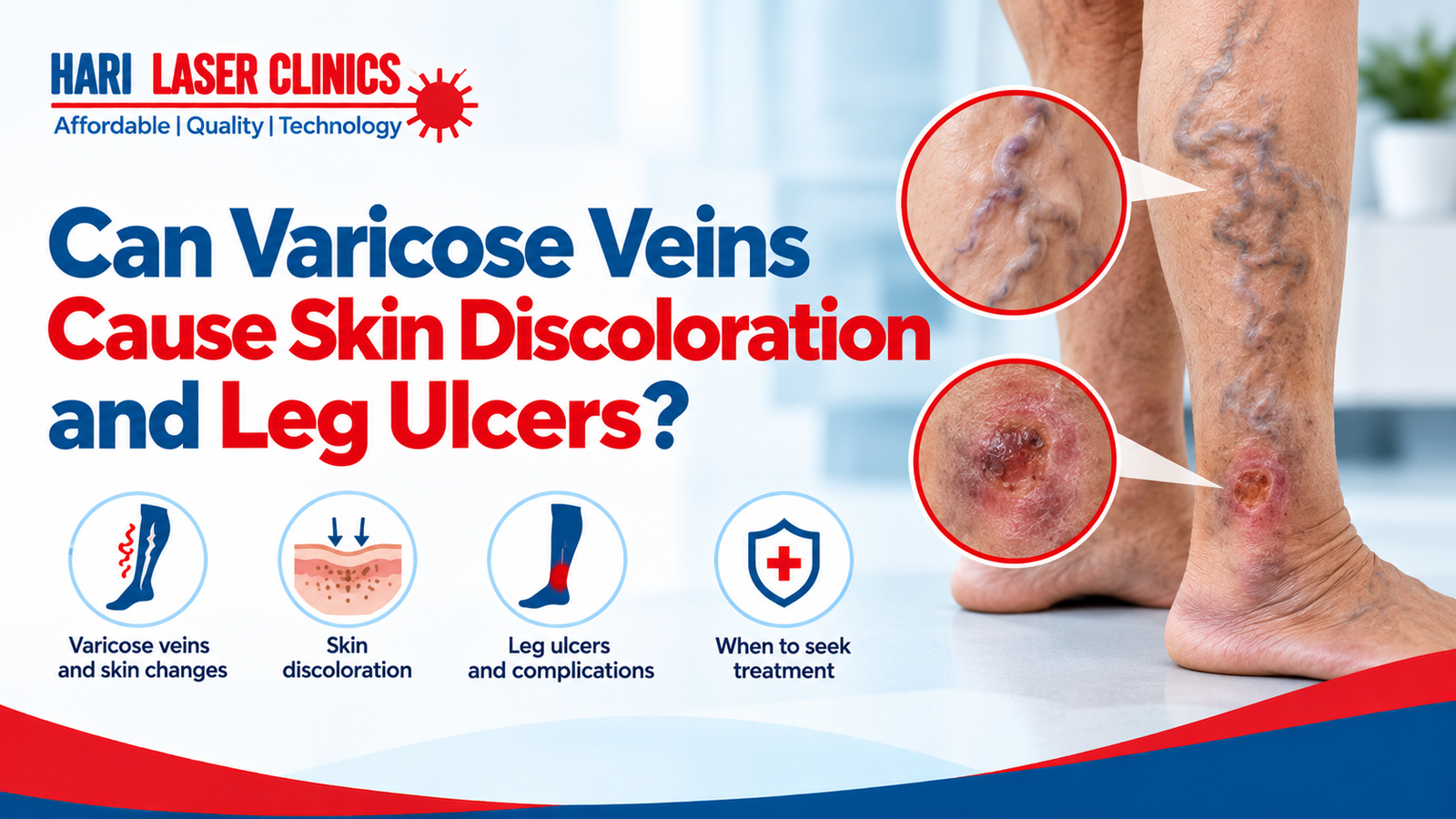
Can Varicose Veins Cause Skin Discoloration and Leg Ulcers?
Dark patches around the ankles, stubborn swelling or a sore that will not heal can all be signs that varicose veins are affecting your skin. Here is what causes these changes, the warning signs to watch for, and how they are treated.
Varicose veins are often noticed because of the enlarged, twisted veins that appear beneath the skin. While they may sometimes seem like a cosmetic concern, varicose veins can also be associated with changes in blood flow that affect the skin and tissues of the lower legs.
When the valves inside the leg veins do not work properly, blood can collect in the veins. This can increase pressure within the veins over time. In some people, prolonged venous pressure can contribute to swelling, skin irritation, skin discoloration, and eventually venous leg ulcers.
Can varicose veins cause skin discoloration and leg ulcers? Yes. Long-standing venous disease can cause changes in the skin and increase the risk of developing venous ulcers.
Recognising these changes early is important. Skin darkening, persistent swelling, itching, hardened skin, or a wound that does not heal can indicate that the underlying vein problem needs medical evaluation.
What Are Varicose Veins?
Varicose veins are enlarged, twisted veins that commonly develop in the legs.
Healthy leg veins contain small valves that help blood move upward toward the heart. When these valves become weak or damaged, blood can flow backward and pool inside the veins. This increases pressure and causes the veins to enlarge.
Common symptoms of varicose veins include:
- Enlarged or twisted veins
- Aching or throbbing in the legs
- A feeling of heaviness or tiredness
- Swelling around the ankles
- Itching or burning over the veins
- Night-time leg cramps
- Discomfort after prolonged standing
- Changes in the skin around the lower legs
Varicose veins can remain stable in some people, while others may develop progressively worsening symptoms or skin changes.
Can Varicose Veins Cause Skin Discoloration?
Yes. Varicose veins can be associated with skin discoloration, particularly when the underlying venous disease has been present for a long time.
When blood pools in the lower legs because of poor valve function, pressure within the veins can remain elevated. Over time, this can affect the small blood vessels and surrounding tissues.
Blood components can leak into the surrounding skin, and the breakdown of these components can contribute to brown or dark pigmentation. Skin discoloration is commonly noticed around the ankles and lower legs.
The discoloration may appear as:
- Brown patches
- Darkened skin around the ankles
- Reddish-brown areas
- Purple or reddish skin changes
- Uneven pigmentation
- Darkening that gradually spreads around the lower leg
Skin discoloration should not automatically be considered a harmless cosmetic change when it occurs alongside varicose veins, swelling, heaviness, or other symptoms. It may indicate that the venous disease is affecting the skin.
Why Does Skin Turn Dark With Varicose Veins?
The main reason is long-term increased pressure in the veins.
Normally, blood from the legs travels back toward the heart through the veins. The valves inside these veins help prevent blood from flowing backward. When the valves become incompetent, blood can move backward and collect in the lower legs.
This can lead to:
One of the consequences can be pigmentation caused by the breakdown of red blood cells and deposition of iron-containing pigment in the skin.
Over time, the skin may become darker, particularly around the ankle area.
What Other Skin Changes Can Varicose Veins Cause?
Skin discoloration is only one possible change associated with chronic venous disease. As the condition progresses, some people may develop:
Dry and Itchy Skin
The skin around the lower legs may become dry, irritated, and itchy. Persistent itching can lead to scratching, which may damage fragile skin.
Redness and Inflammation
Some patients develop areas of red, inflamed, or irritated skin around the lower legs. This may occur as part of venous skin inflammation.
Skin Thickening
Long-standing venous problems can cause changes in the texture and thickness of the skin. The skin may feel harder or tighter in certain areas.
Swelling
Ankle and lower-leg swelling can occur when fluid collects in the tissues because of increased venous pressure. Swelling that persists or becomes worse over time should be evaluated.
Skin Becoming Fragile
When the tissues have been affected by chronic venous disease, the skin may become more vulnerable to injury. Even a small cut or minor trauma can sometimes develop into a difficult-to-heal wound.
Can Varicose Veins Cause Leg Ulcers?
Yes. Long-standing venous disease can contribute to the development of venous leg ulcers.
A venous leg ulcer is an open wound that develops because the normal return of blood from the leg is impaired.
When venous pressure remains high for a prolonged period, the skin and underlying tissues can become damaged. The skin may become more vulnerable, and a small injury can eventually develop into an ulcer. Venous ulcers most commonly occur around the lower leg and ankle.
Not everyone with varicose veins will develop an ulcer. However, the risk becomes more concerning when varicose veins are accompanied by:
- Persistent swelling
- Skin discoloration
- Skin thickening
- Itching
- Recurrent skin inflammation
- Previous leg wounds
- Long-standing venous disease
What Does a Venous Leg Ulcer Look Like?
A venous leg ulcer is usually an open wound that does not heal normally. It may appear as:
- A shallow open sore
- A red or irritated wound
- A wound surrounded by darkened skin
- A moist or oozing wound
- A sore around the ankle or lower leg
- A wound that repeatedly breaks down
The surrounding skin may also be swollen, discolored, dry, itchy, or hardened.
A wound that does not heal within a reasonable period should be examined by a healthcare professional rather than treated only at home.
Warning Signs That Varicose Veins Are Affecting Your Skin
If you have varicose veins, pay attention to changes in the skin.
Brown or Dark Skin Around the Ankles
Darkening around the ankle is an important skin change associated with chronic venous problems. It can indicate that the condition is affecting the surrounding tissues.
Persistent Swelling
Swelling that repeatedly appears around the ankles or lower legs may indicate difficulty returning blood from the legs to the heart.
Itching and Dryness
Persistent itching, dryness, scaling, or irritation can occur with venous skin changes.
Hardened Skin
If the skin around your lower leg starts becoming thick, tight, or hard, it should be assessed.
A Small Wound That Does Not Heal
A minor cut or injury that remains open or repeatedly reopens can be an early warning sign of poor venous circulation.
Fluid Leakage From the Skin
Weeping or fluid discharge from swollen skin can occur in more advanced venous disease and requires medical assessment.
Repeated Skin Infections or Inflammation
Repeated inflammation around the lower leg may indicate that the skin barrier has been compromised.
Don't wait for a wound to develop. Get your veins checked with a Duplex Doppler assessment at Hari Laser Clinics.
How Do Varicose Veins Lead to Leg Ulcers?
The development of a venous ulcer is usually gradual rather than sudden. The process can involve several stages:
- Weak vein valves
- Blood begins to flow backward and pool in the legs
- Pressure inside the veins increases
- Fluid and blood components move into surrounding tissues
- Swelling and skin changes develop
- Skin becomes weaker and more vulnerable
- A small injury may develop into a non-healing wound
- Venous leg ulcer
This progression does not occur in every person with varicose veins.
However, progressive skin changes are a reason to seek evaluation rather than waiting until an ulcer develops.
Are Varicose Veins With Skin Discoloration Dangerous?
Skin discoloration does not necessarily mean that a serious complication will definitely occur.
However, new or progressive skin changes should not be ignored.
Brown pigmentation, persistent swelling, itching, hardened skin, or recurrent wounds can indicate chronic venous disease.
The earlier the underlying venous problem is identified, the sooner appropriate treatment and preventive measures can be considered.
How Are Varicose Veins and Skin Changes Diagnosed?
A doctor will usually begin with a medical history and physical examination. They may assess:
- The appearance of the veins
- Location of swelling
- Skin colour
- Skin texture
- Presence of wounds or ulcers
- Pain and tenderness
- Previous blood clots
- Previous ulcers
- Duration of symptoms
- Lifestyle and occupation
Duplex Doppler Ultrasound
A Duplex Doppler Ultrasound is commonly used to assess the veins and blood flow. It can help identify:
- Damaged vein valves
- Venous reflux
- Blood flow patterns
- The location of abnormal veins
- Blood clots
- Vein anatomy
The ultrasound findings help doctors determine the underlying cause and select an appropriate treatment plan.
If an ulcer is present, assessment of arterial blood flow may also be important because not every leg ulcer is caused by venous disease (for example, diabetic foot ulcers have a different cause).
Treatment Options for Varicose Veins With Skin Changes
Treatment depends on the severity of the venous disease and the findings on examination and ultrasound.
Lifestyle Measures
For patients with mild symptoms, doctors may recommend:
- Regular walking
- Avoiding prolonged sitting
- Avoiding prolonged standing
- Leg elevation while resting
- Maintaining a healthy body weight
- Staying physically active
- Taking care of dry or irritated skin
These measures can help control symptoms but do not repair damaged vein valves.
Compression Therapy
Compression stockings can help improve venous blood flow and reduce swelling in suitable patients. However, compression should be recommended after appropriate medical assessment, particularly when a patient has an ulcer or possible arterial circulation problems.
Sclerotherapy
Sclerotherapy involves injecting a solution into selected abnormal veins to close them. It may be suitable for certain smaller varicose veins and spider veins.
Radiofrequency Ablation (RFA)
Radiofrequency Ablation (RFA) uses controlled heat to close an abnormal vein from inside. It is a minimally invasive treatment option for suitable patients with venous reflux.
Endovenous Laser Treatment (EVLT)
Endovenous Laser Treatment (EVLT) uses laser energy to close the affected vein from within. The procedure is performed using ultrasound guidance, with a thin laser fibre introduced into the abnormal vein. Once the vein is closed, blood is redirected through healthier veins. EVLT is a minimally invasive treatment option and may be considered when the underlying venous anatomy is appropriate.
Can Treating Varicose Veins Help Prevent Leg Ulcers?
Treating the underlying venous problem can be an important part of managing chronic venous disease and reducing complications.
If an abnormal vein continues to contribute to venous reflux and increased pressure, simply treating the skin wound may not address the underlying cause.
For suitable patients, treatment of the abnormal veins can therefore form part of an overall strategy for managing venous disease.
However, treatment must be based on proper diagnosis and Duplex Doppler findings.
How Are Venous Leg Ulcers Treated?
If a venous ulcer has already developed, treatment usually involves more than simply applying a cream or covering the wound. Depending on the individual case, treatment may include:
- Wound cleaning
- Appropriate wound dressings
- Compression therapy when suitable
- Managing leg swelling
- Protecting the surrounding skin
- Treating infection when present
- Treating the underlying venous disease
The underlying cause should be addressed because otherwise the ulcer may heal slowly or recur.
Patients with a non-healing leg wound should receive medical evaluation rather than relying solely on home treatment.
How Can You Prevent Varicose Veins From Getting Worse?
You cannot control every risk factor for varicose veins, but several habits can support healthy circulation.
Stay Active
Walking regularly helps activate the calf muscles, which support the return of blood from the legs.
Avoid Long Periods of Sitting
If you work at a desk, get up regularly and walk around.
Avoid Standing in One Position
If your occupation requires prolonged standing, change your position and walk whenever possible.
Elevate Your Legs
Raising your legs while resting can help reduce swelling.
Maintain a Healthy Weight
Maintaining a healthy weight can reduce pressure on the lower-limb veins.
Protect Your Skin
Keep dry skin moisturised and avoid scratching areas that are itchy or irritated.
Seek Treatment for Persistent Symptoms
Do not wait until a wound develops if you already have progressive swelling or skin changes.
When Should You See a Varicose Vein Specialist?
You should consider a medical evaluation if you have varicose veins along with:
- Persistent leg pain
- Leg heaviness
- Repeated ankle swelling
- Skin discoloration
- Itching or burning
- Dry or scaly skin
- Hardened skin
- Skin inflammation
- A wound that is not healing
- Recurrent wounds
- Bleeding from a varicose vein
A particularly important warning sign is a non-healing sore around the ankle or lower leg. Early assessment can help determine whether the wound is related to venous disease and whether the underlying veins require treatment.
Why Choose Hari Laser Clinics for Varicose Vein Treatment?
At Hari Laser Clinics, patients with varicose veins can undergo detailed evaluation to understand the underlying vein problem and determine the appropriate varicose vein treatment.
The evaluation may include:
- Clinical examination
- Assessment of symptoms and skin changes
- Duplex Doppler Ultrasound
- Evaluation of venous reflux
- Assessment of swelling and affected veins
- Treatment planning based on the patient's condition
When appropriate, minimally invasive procedures such as EVLT and RFA may be considered.
The aim is not only to address visible varicose veins but also to identify the underlying venous problem and help prevent progression to more serious complications.
Frequently Asked Questions
1. Can varicose veins cause skin discoloration?
Yes. Long-standing venous disease can cause brown, reddish-brown, or darker skin changes, particularly around the ankles and lower legs.
2. Why does skin turn brown around varicose veins?
Long-term increased pressure inside the veins can cause blood components to move into surrounding tissues. Their breakdown can contribute to brown pigmentation of the skin.
3. Can varicose veins cause leg ulcers?
Yes. Chronic venous disease associated with varicose veins can contribute to venous leg ulcers, particularly when there is persistent swelling and skin damage.
4. What are the early signs of a venous leg ulcer?
Skin discoloration, swelling, itching, skin thickening, and fragile skin can occur before an ulcer develops. A small wound that does not heal normally is another important warning sign.
5. Can a varicose vein ulcer heal on its own?
Venous ulcers often require medical treatment and appropriate wound care. Treating the underlying venous problem may also be necessary to support healing and reduce recurrence.
6. Is skin discoloration from varicose veins reversible?
It depends on how advanced and long-standing the skin changes are. Treating the underlying venous disease can help prevent further progression, but existing pigmentation may not completely disappear.
7. Can laser treatment treat varicose veins with skin discoloration?
EVLT can be used for suitable patients with abnormal venous reflux. Whether it is appropriate depends on the Duplex Doppler findings and the individual vein anatomy.
8. Should I wear compression stockings for varicose veins?
Compression stockings may help some patients manage swelling and venous symptoms. However, the appropriate compression should be selected after medical evaluation, particularly if skin changes or ulcers are present.
9. When should I worry about a leg wound?
A wound that does not heal normally, particularly around the ankle or lower leg, should be evaluated. Seek medical attention sooner if there is increasing pain, redness, swelling, discharge, or other signs of infection.
10. Can treating varicose veins prevent ulcers?
Treating significant underlying venous disease may help reduce complications in appropriate patients. The correct treatment depends on the cause of venous reflux and the findings on clinical examination and Duplex Doppler Ultrasound.
Conclusion
Varicose veins can affect more than the appearance of your legs. Long-standing venous problems can contribute to swelling, skin discoloration, itching, skin thickening, and, in some patients, venous leg ulcers.
If you notice darkening around the ankles, persistent swelling, hardened skin, or a wound that is not healing, do not ignore these changes. A timely evaluation can help identify the underlying vein problem and determine whether treatment is required.
At Hari Laser Clinics, patients can undergo detailed vein evaluation and receive appropriate treatment options, including minimally invasive procedures such as EVLT and RFA when suitable.
Detailed vein evaluation and minimally invasive treatment options, including EVLT and RFA, at Hari Laser Clinics, Bangalore.
Or call +91 99860 01112 · Learn about varicose vein treatment
Related Reading
This article is for general information and does not replace a consultation with a qualified doctor. Treatment suitability depends on clinical examination and Duplex Doppler Ultrasound findings.