
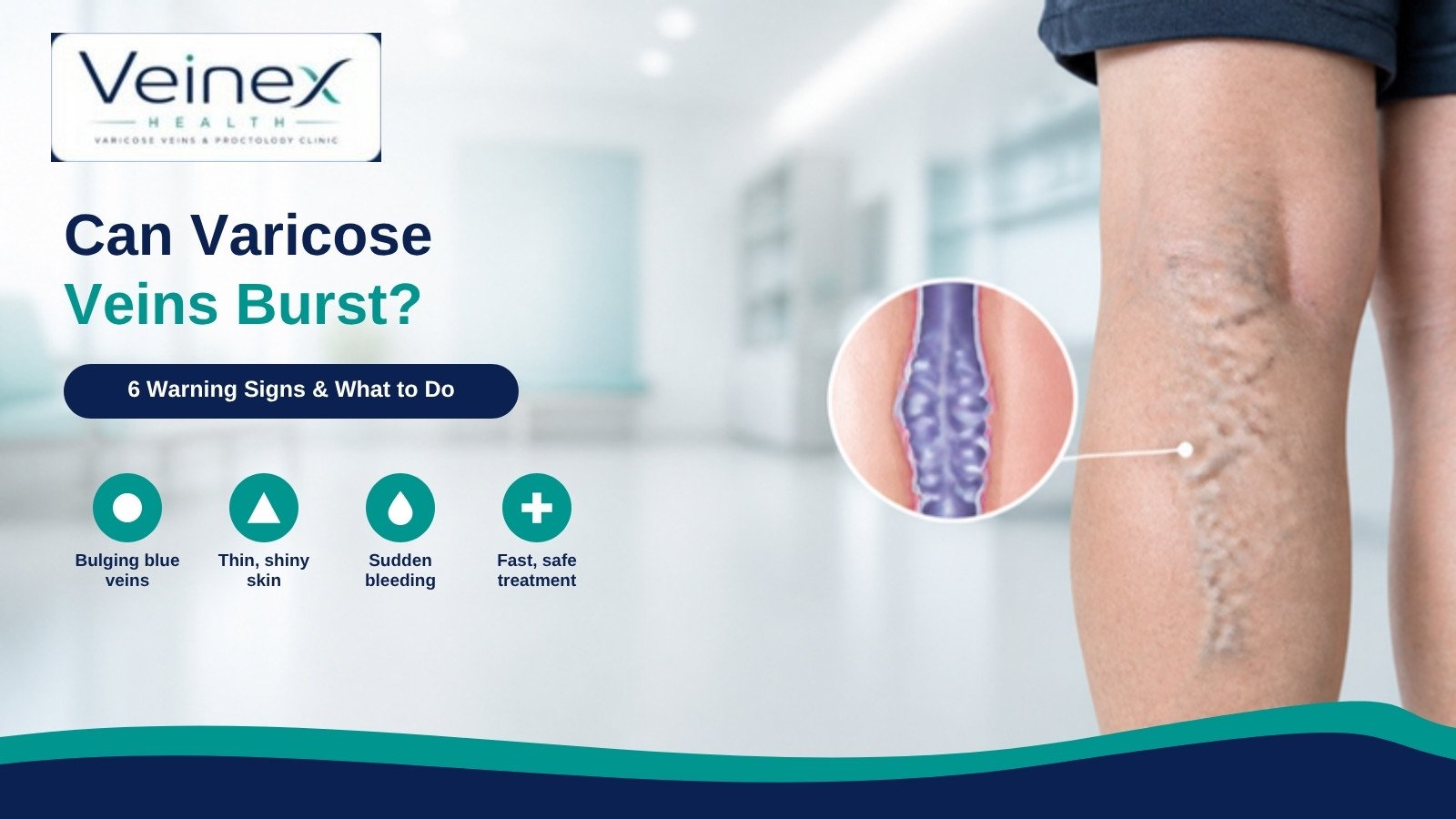
Varicose veins are swollen, twisted veins that usually appear on the legs. Most people notice them because of their appearance or because they cause aching, heaviness or swelling. Many people never think about bleeding.
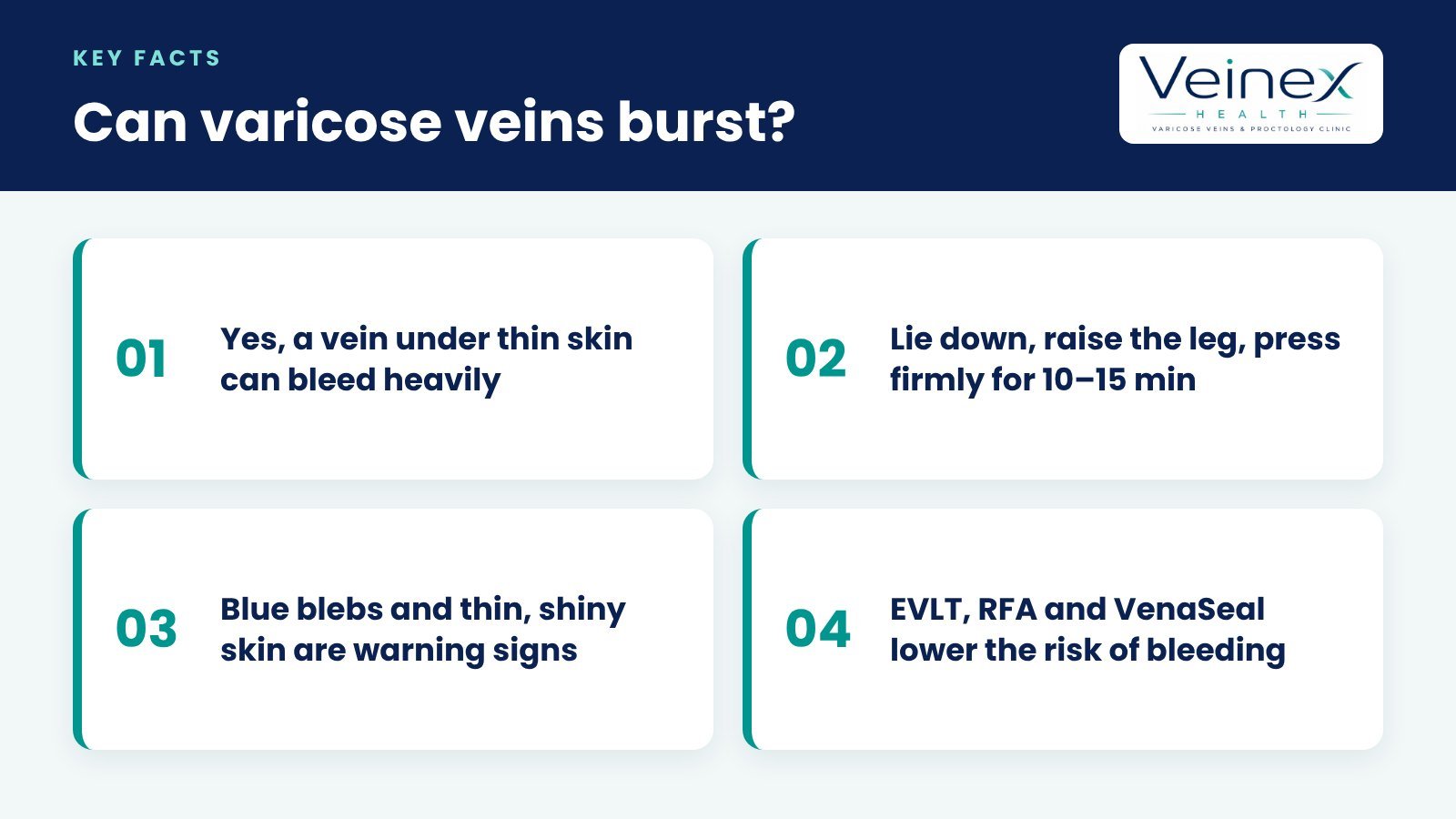
So, can varicose veins burst? Yes, they can. A varicose vein close to the skin can break and bleed, sometimes after a minor knock, scratch or shave, and sometimes with no obvious injury at all. The bleeding can be surprisingly heavy because the blood inside these veins is under high pressure.
A burst varicose vein is not common, and most people with varicose veins will never have one. But knowing the warning signs and the right first aid can make a real difference if it does happen.
Why Can Varicose Veins Burst?
Healthy leg veins have one-way valves that keep blood moving up toward the heart. In varicose veins, these valves are weak, so blood flows backward and collects in the lower legs.
Over time, the pooled blood raises the pressure inside the veins. The vein walls stretch and become thinner, and the skin over them can also become thin and fragile.
When a stretched vein lies just under thin skin, even a small injury can break both the skin and the vein wall:
Because the pressure inside the vein is high, especially when you are standing, blood can flow out quickly once the vein breaks.
Who Is More Likely to Have a Varicose Vein Burst?
Anyone with varicose veins can have a bleed, but the risk is higher for people who have:
- Long-standing varicose veins that have not been treated
- Large, bulging veins close to the skin
- Thin, shiny or dark skin over the veins, especially around the ankles
- Small blue or purple “blebs” (raised bubbles of vein) on the skin
- Skin changes such as discoloration, eczema or hardened skin
- A past leg ulcer or a previous bleed from a vein
- Blood-thinning medicines
- Older age, when the skin naturally becomes thinner
People who live alone should take extra care. A bleeding vein can lose a lot of blood if no one is there to help apply pressure.
Warning Signs That a Varicose Vein Could Bleed
Some changes on the skin suggest that a vein is close to the surface and under strain. Watch for:
- Blue or purple blebs: small raised bubbles of vein just under the skin
- Very thin, shiny skin over a bulging vein
- Dark or brown skin around the ankles and lower legs
- Itching or eczema over the veins, which can lead to scratching and skin damage
- Small spots of bleeding or crusts over a vein
- A vein that has bled before, even if it stopped quickly
If you notice any of these signs, have your veins checked by a specialist. Treating the vein before it bleeds is much safer than dealing with a bleed at home.
What to Do If a Varicose Vein Bursts
Bleeding from a varicose vein can look frightening, but in most cases it can be controlled quickly with the right steps.
- Lie down straight away. Lying flat lowers the pressure in the leg veins.
- Raise the leg above the level of your heart. Rest it on pillows, a chair or against a wall. Raising the leg is one of the fastest ways to slow the bleeding.
- Press firmly on the bleeding spot. Use a clean cloth, gauze or towel and press directly on the wound.
- Keep pressing for at least 10 to 15 minutes. Don’t lift the cloth to check. Lifting it too early can restart the bleeding.
- Apply a firm bandage once the bleeding stops. Keep the leg raised and rest for a while.
- See a doctor the same day, even if the bleeding has stopped. A vein that has bled once is likely to bleed again.
Avoid these mistakes:
- Don’t stand up or walk around while the vein is bleeding
- Don’t put the leg down to look at the wound
- Don’t apply a tight band or tourniquet around the leg unless a medical professional tells you to
When to Call for Emergency Help
- The bleeding does not slow down after 10 to 15 minutes of firm pressure with the leg raised
- A large amount of blood has been lost
- The person feels dizzy, faint, confused or very weak
- The person has collapsed
- The person takes blood-thinning medicines and the bleeding will not stop
While you wait for help, keep the leg raised and keep pressing firmly on the bleeding spot.
Treat the vein before it bleeds. Get a Duplex Doppler assessment at Veinex Health and a clear treatment plan.
Can a Varicose Vein Burst Under the Skin?
A varicose vein can also leak under the skin without breaking through it. In that case, you may see a sudden bruise or a tender, blue-purple patch over the vein, without any open wound.
Bruising like that usually settles on its own, but it shows that the vein is fragile. A doctor should check it, especially if the bruising keeps coming back.
Bleeding Vein vs Blood Clot vs Bruise
| Problem | What you notice | What to do |
|---|---|---|
| Burst varicose vein | Sudden bleeding from the skin over a vein, sometimes heavy | Lie down, raise the leg, press firmly, then see a doctor the same day |
| Leak under the skin | A new bruise or blue-purple patch over a vein, no open wound | See a doctor to check the vein |
| Clot in a surface vein | A hard, tender, red cord along the vein | See a doctor soon |
| Clot in a deep vein (DVT) | Sudden swelling, pain and warmth, usually in one leg | Get medical help urgently |
How Is the Risk of Bleeding Assessed?
A vein specialist will usually start by examining your legs and the skin over the veins. Thin skin, blebs and skin changes help show which veins are at risk.
A Duplex Doppler ultrasound is then used to check how blood flows through the veins. The scan shows which valves are leaking and where the high pressure is coming from, so treatment can be aimed at the source.
Treatments That Lower the Risk of Bleeding
The most reliable way to prevent a varicose vein from bleeding is to treat the faulty vein causing the high pressure. Depending on the scan findings, options include:
- Endovenous Laser Treatment (EVLT): laser energy closes the faulty vein from inside under ultrasound guidance
- Radiofrequency Ablation (RFA): controlled heat closes the faulty vein from inside
- VenaSeal: a medical adhesive seals the vein shut
- Sclerotherapy: an injection closes smaller veins and blebs close to the skin
Once the faulty vein is closed, blood is redirected through healthier veins. The pressure on the skin drops, and the risk of bleeding goes down.
These are minimally invasive, day-care procedures for suitable patients. Your doctor will advise which option suits your veins.
How to Protect Your Legs Until Treatment
Until your veins are treated, these steps can help lower the risk:
- Keep the skin on your legs moisturised to prevent dryness and cracks
- Avoid scratching itchy skin over the veins
- Take care when shaving your legs
- Protect your legs from knocks and bumps
- Wear compression stockings if your doctor recommends them
- Raise your legs when resting
- Avoid very hot baths or long hot showers, which can widen the veins
- Keep a clean cloth or gauze handy if a vein has bled before
When Should You See a Vein Specialist?
Book a consultation if you have:
- A varicose vein that has bled, even once
- Blue or purple blebs on the skin
- Thin, shiny or darkened skin over your veins
- Repeated bruising over a vein
- Itching, eczema or skin changes around the ankles
- Large, bulging veins that are getting worse
- Leg pain, heaviness or swelling that affects daily life
Why Choose Veinex Health for Varicose Vein Treatment?
At Veinex Health, patients with varicose veins receive a detailed evaluation to find the source of the problem and the veins most at risk.
Our approach includes:
- Clinical examination of the legs and skin
- Duplex Doppler ultrasound to map faulty veins
- Treatment planning based on the scan findings
- Minimally invasive options such as EVLT, RFA, VenaSeal and sclerotherapy for suitable patients
- Day-care treatment with a quick return to daily activities
- Clear aftercare and follow-up guidance
The goal is to treat the underlying vein problem before it leads to bleeding or other complications.
Frequently Asked Questions
1. Can varicose veins burst?
Yes. A varicose vein close to the skin can break and bleed, sometimes after a small injury and sometimes without any obvious cause. Bleeding is not common, but it can be heavy.
2. What should I do if my varicose vein is bleeding?
Lie down, raise the leg above your heart and press firmly on the spot with a clean cloth for at least 10 to 15 minutes. If the bleeding does not stop, call for emergency help.
3. Is a burst varicose vein dangerous?
It can be. Because the blood is under high pressure, a lot of blood can be lost quickly. With the right first aid, most bleeds can be controlled, but you should always see a doctor afterwards.
4. Can a varicose vein burst on its own?
Yes. A vein under very thin skin can sometimes bleed without any noticeable injury, for example in the shower or during sleep.
5. What are the warning signs that a varicose vein may bleed?
Blue or purple blebs, thin and shiny skin over a vein, dark skin around the ankles, itching or eczema, and small spots of bleeding are all warning signs.
6. Will a varicose vein bleed again after it stops?
It may. A vein that has bled once has a higher chance of bleeding again until the underlying vein problem is treated.
7. Can a varicose vein burst under the skin?
Yes. A vein can leak under the skin and cause a sudden bruise or tender patch without an open wound. A doctor should check it.
8. Do compression stockings help prevent bleeding?
Compression stockings can reduce pressure in the veins and may help, but they do not fix the faulty valves. Use them as advised by your doctor.
9. Can treatment stop varicose veins from bleeding?
Yes. Treatments such as EVLT, RFA, VenaSeal and sclerotherapy close the faulty veins, lower the pressure on the skin and reduce the risk of bleeding.
10. Should I see a doctor if the bleeding has already stopped?
Yes. See a doctor the same day. The vein needs to be checked, and treatment can help prevent another bleed.
Conclusion
Can varicose veins burst? Yes. Although it is not common, a varicose vein under thin skin can break and bleed heavily.
If it happens, lie down, raise the leg and press firmly on the bleeding spot. Call for emergency help if the bleeding does not stop. Even after it stops, see a doctor the same day.
Warning signs such as blebs, thin shiny skin and skin darkening mean your veins need attention. At Veinex Health, patients receive detailed vein evaluation and minimally invasive treatment, including EVLT and RFA, to treat the problem before it leads to bleeding.
Duplex Doppler evaluation and minimally invasive treatment, including EVLT, RFA, VenaSeal and sclerotherapy, at Veinex Health, Bangalore.
Or call +91 99860 01112 · Learn about varicose vein treatment
Related Reading
This article is for general information and does not replace a consultation with a qualified doctor. If bleeding does not stop with pressure and leg elevation, call for emergency help immediately.