
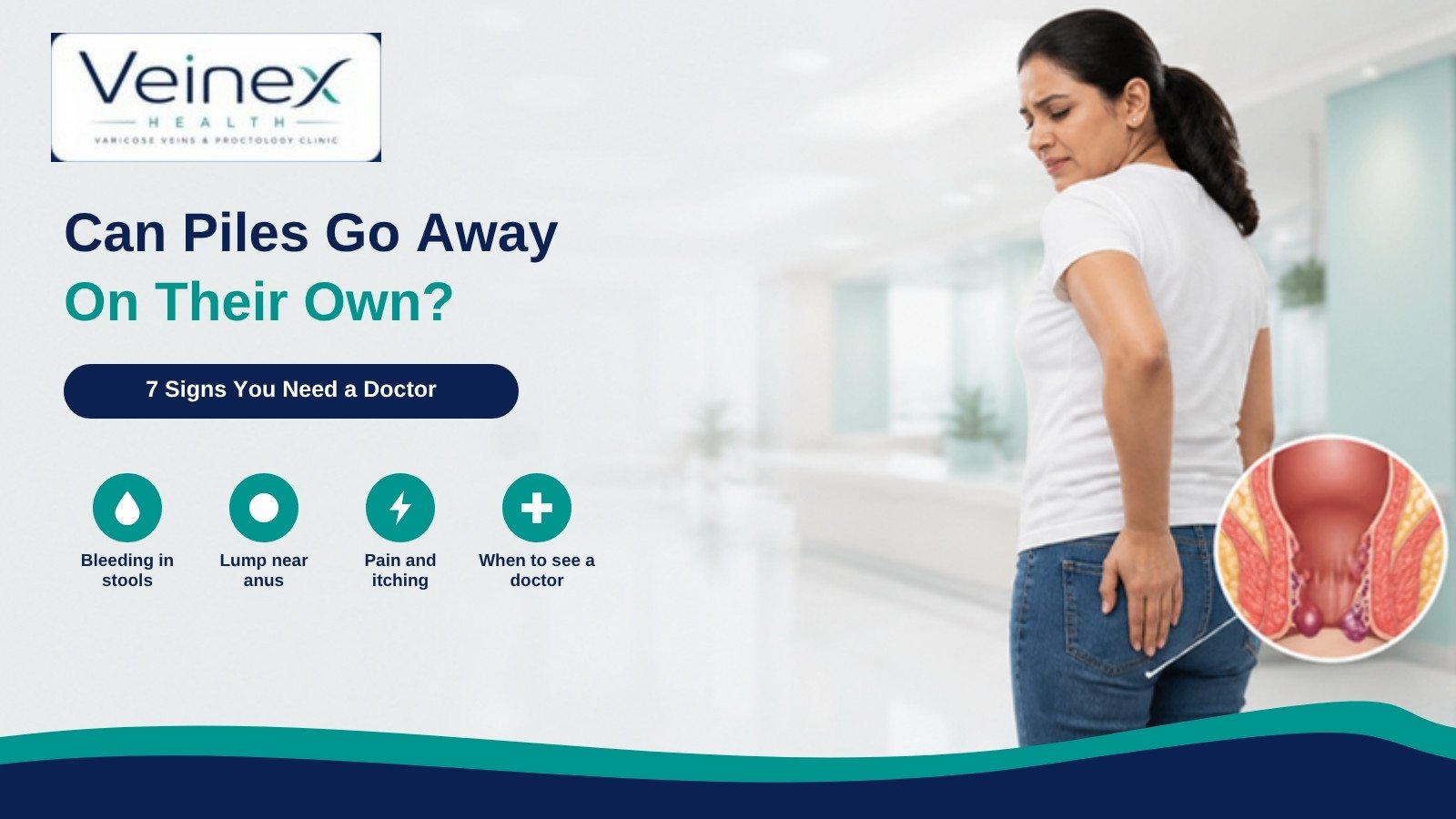
Piles, also called haemorrhoids, are swollen veins in and around the anus. They are very common and can cause bleeding, itching, pain, swelling or a lump near the anus.
Many people feel embarrassed to see a doctor and hope the problem will simply disappear. So, can piles go away on their own? Small, early-stage piles often settle by themselves within a few days to a couple of weeks, especially with simple diet and toilet-habit changes. Larger piles that come out of the anus, or piles that keep returning, usually do not go away completely without treatment.
Knowing which type you have, and the warning signs to watch for, helps you decide whether home care is enough or whether it is time to see a specialist.
What Are Piles?
Everyone has cushions of blood vessels inside the anal canal. They help control the passing of stool. When these cushions become swollen and stretched, usually from straining, constipation or long periods of sitting, they are called piles.
There are two main types:
- Internal piles form inside the rectum. They are usually painless but can bleed. Doctors grade them from 1 to 4 depending on how far they come out.
- External piles form under the skin around the anus. They can itch or hurt, and a blood clot can sometimes form inside them.
Can Piles Go Away On Their Own? It Depends on the Type
Whether piles settle by themselves depends mainly on their type and size.
| Type of piles | Can it go away on its own? | Usual time to settle |
|---|---|---|
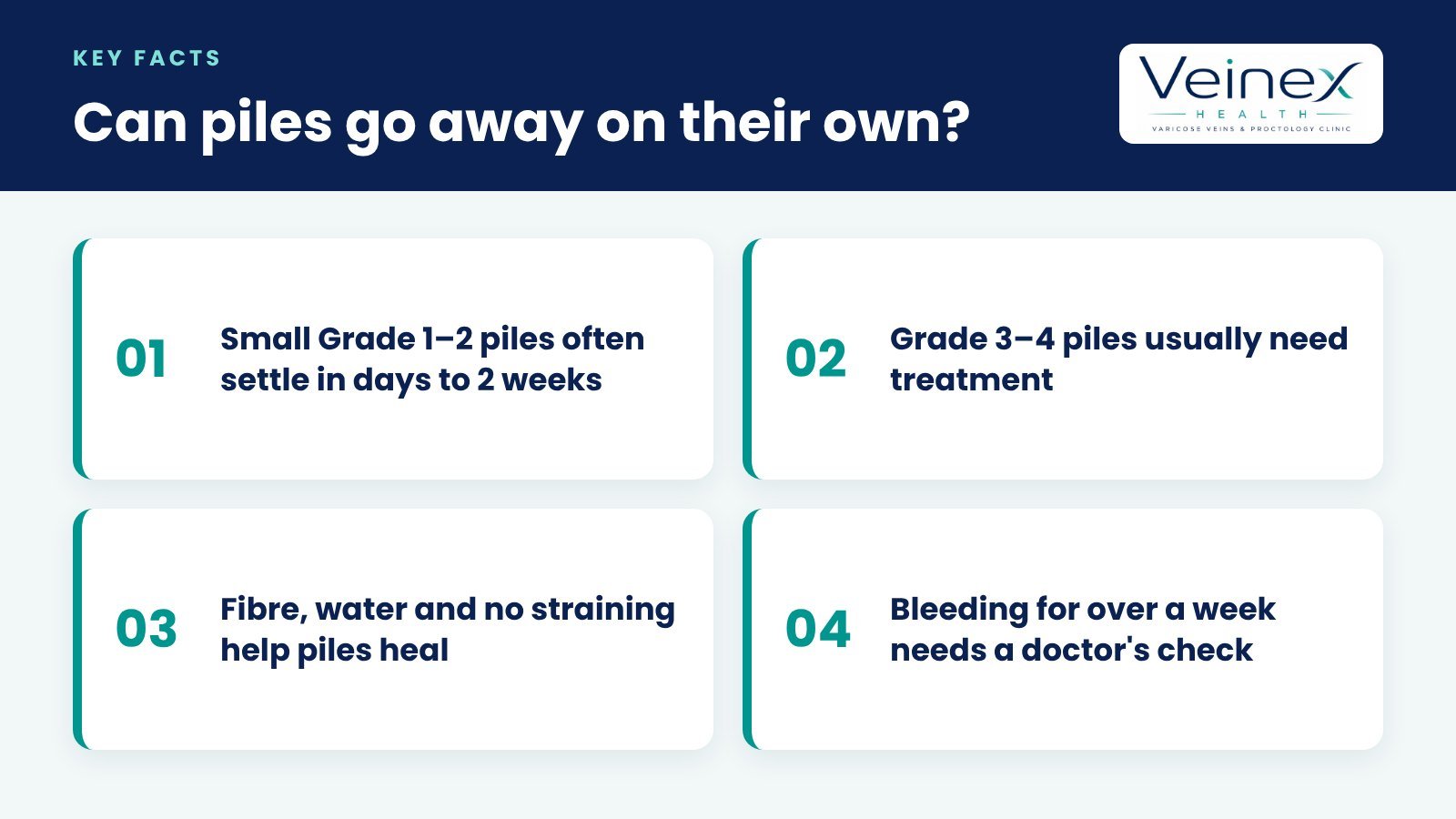
| Grade 1 internal piles (stay inside) | Often yes, with diet and toilet-habit changes | A few days to about two weeks |
| Grade 2 internal piles (come out, go back by themselves) | Sometimes; symptoms often settle but may return | One to a few weeks |
| Grade 3 internal piles (need to be pushed back) | Unlikely to go away fully | Usually need treatment |
| Grade 4 internal piles (stay outside) | No | Need specialist treatment |
| Small external piles | Often settle with home care | A few days to a couple of weeks |
| Thrombosed external pile (painful clot) | Pain usually eases, but a skin tag may remain | Pain eases in about 1 to 2 weeks; lump shrinks over a few weeks |
| Piles during pregnancy | Often improve after delivery | Weeks after the baby is born |
Even when symptoms settle, the swollen veins can flare up again if the cause, such as constipation or straining, continues.
Why Don’t Some Piles Go Away?
Small piles can shrink once the pressure on them is removed. Larger piles are different.
When piles have been stretched for a long time, the tissue that holds them in place becomes weak and loose. The piles then slip out of the anus during bowel movements. Diet changes and creams can ease the symptoms, but they cannot tighten that stretched tissue again.
Piles also keep coming back when the cause continues:
Breaking that cycle is the key to helping piles settle and stopping them from returning.
Home Care That Helps Piles Heal
For small piles, these steps often relieve symptoms and help them settle within days to weeks:
- Eat more fibre: fruits, vegetables, whole grains, oats, dal and beans soften stools
- Drink enough water through the day to prevent hard stools
- Don’t strain on the toilet, and go as soon as you feel the urge
- Limit toilet time to a few minutes, and keep your phone out of the bathroom
- Take warm sitz baths for 10 to 15 minutes, two or three times a day, especially after bowel movements
- Keep the area clean and dry, using plain water or unscented wipes
- Stay active: a daily walk helps keep bowels regular
- Use medicines only as advised by a doctor, such as stool softeners or soothing creams
What to Avoid While Piles Are Healing
- Sitting for long hours without breaks
- Heavy lifting that makes you strain
- Very spicy, fried or low-fibre food if it upsets your bowels
- Scented soaps or rough toilet paper on the area
- Using steroid creams for more than a few days without medical advice
- Ignoring constipation and hoping it will pass
If home care does not help within about a week, or symptoms keep returning, see a doctor.
Find out what your piles really need. Get a private, detailed piles evaluation at Veinex Health.
Signs Your Piles Need Treatment
See a piles specialist if you have:
- Bleeding that continues for more than a week or keeps coming back
- Piles that come out during bowel movements
- Piles that need to be pushed back in with a finger
- A lump that stays outside the anus
- Pain, itching or discomfort that affects daily life
- Symptoms that return every time you get constipated
- No improvement after a week of home care
Red Flags: Don’t Assume It Is Just Piles
Bleeding from the back passage is not always caused by piles. Other conditions, including anal fissures, polyps, inflammatory bowel disease and bowel cancer, can cause similar symptoms.
- Dark red or black blood, or blood mixed into the stool
- A change in bowel habits lasting more than a few weeks
- Unexplained weight loss or tiredness
- New rectal bleeding after the age of 40
- A family history of bowel cancer
- Severe pain, fever, or a lump that becomes hard and very painful
- Heavy bleeding, dizziness or fainting
How Are Piles Diagnosed?
A doctor will ask about your symptoms and bowel habits and then examine the area. A proctoscopy, where a short tube is used to look inside the anal canal, helps confirm the type and grade of piles.
If the bleeding is unusual or there are red-flag symptoms, the doctor may recommend a colonoscopy to rule out other causes.
Treatment Options When Piles Don’t Go Away
Treatment depends on the type and grade of your piles:
- Medicines and lifestyle changes: stool softeners, fibre supplements and soothing creams for small piles
- Rubber band ligation: a small band cuts off blood supply to an internal pile so it shrinks and falls off
- Laser piles treatment: laser energy shrinks the piles with minimal pain and bleeding, often as day-care treatment for suitable patients
- Stapled haemorrhoidopexy: lifts and fixes prolapsing piles back into place
- Haemorrhoidectomy: surgical removal for large or complicated piles
Your doctor will advise which option suits your piles after examining you.
How to Stop Piles From Coming Back
Once your piles settle, these habits help keep them from returning:
- Eat a fibre-rich diet every day
- Drink enough water
- Go to the toilet when you feel the urge, without delay
- Avoid straining and long toilet sessions
- Take breaks from long periods of sitting
- Exercise regularly
- Keep a healthy weight
- Treat constipation early
Why Choose Veinex Health for Piles Treatment?
At Veinex Health, every patient receives a detailed evaluation to find out the type and grade of piles before any treatment is suggested.
Our approach includes:
- Private, respectful consultation and examination
- Accurate grading of piles
- Treatment matched to your condition, from medicines to minimally invasive procedures
- Laser piles treatment for suitable patients
- Day-care procedures with a quick return to daily activities
- Advice on diet and habits to prevent recurrence
The goal is to give you lasting relief with the least invasive treatment that works for your piles.
Frequently Asked Questions
1. Can piles go away on their own?
Small, early-stage piles often settle on their own within a few days to a couple of weeks with diet and toilet-habit changes. Larger piles that come out of the anus usually need treatment.
2. How long do piles take to go away?
Small piles often settle within a few days to about two weeks. A painful clotted external pile usually eases within one to two weeks. Grade 3 and 4 piles generally do not go away without treatment.
3. Can piles go away without surgery?
Yes, many can. Early piles often respond to home care and medicines, and some larger piles can be treated with non-surgical or minimally invasive procedures such as banding or laser treatment.
4. Do piles come back after they go away?
They can, especially if constipation, straining or long hours of sitting continue. Healthy bowel habits help prevent them from returning.
5. Is bleeding from piles dangerous?
Occasional light bleeding is common with piles. But persistent, heavy or dark bleeding should always be checked by a doctor, because it can have other causes.
6. Can piles during pregnancy go away on their own?
Piles that appear during pregnancy often improve in the weeks after delivery. Speak to your doctor before using any medicine or cream while pregnant.
7. Do creams cure piles?
Creams can ease itching, pain and swelling, but they do not remove the swollen veins. Use them only for a short time unless your doctor advises otherwise.
8. Does a sitz bath help piles heal faster?
Warm sitz baths relax the area, ease pain and help keep it clean. They support healing but do not shrink larger piles on their own.
9. When should I see a doctor for piles?
See a doctor if bleeding lasts more than a week, piles come out of the anus, pain affects daily life, or home care does not help.
10. Is laser treatment good for piles that don’t go away?
Laser treatment can be a good option for suitable patients. It shrinks the piles with minimal pain and bleeding and usually allows a quick recovery.
Conclusion
Can piles go away on their own? Small, early-stage piles often do, especially with more fibre, enough water and better toilet habits. Larger piles that come out of the anus, or piles that keep returning, usually need treatment.
Don’t ignore bleeding that continues, piles that need to be pushed back, or symptoms that do not improve with home care. Rectal bleeding can have other causes, so a proper examination matters.
At Veinex Health, patients receive a private, detailed evaluation and treatment suited to their piles, including laser piles treatment for suitable cases.
Private evaluation, accurate grading and treatment suited to your piles, including laser piles treatment, at Veinex Health, Bangalore.
Related Reading
This article is for general information and does not replace a consultation with a qualified doctor. Rectal bleeding can have causes other than piles, so persistent or unusual bleeding should always be checked.