
Introduction
Varicose veins are enlarged, twisted veins that commonly develop in the legs due to poor blood circulation and damaged vein valves. Although many people initially consider them a cosmetic concern, untreated varicose veins may gradually progress into a chronic vascular condition causing pain, swelling, heaviness, skin discoloration, night cramps, and venous ulcers in advanced stages.
Modern vascular treatment has evolved significantly over the years. Traditional vein stripping surgery, which once required larger incisions and longer recovery, has now been replaced in many cases by minimally invasive procedures designed to improve patient comfort and recovery outcomes.
One of the most widely used modern treatments is EVLT surgery for varicose veins, also known as Endovenous Laser Treatment (EVLT). This advanced laser procedure uses thermal energy to seal diseased veins from inside the vessel, improving blood circulation without removing the vein surgically.
At Hari Laser Clinics, Bangalore, we provide advanced EVLT surgery for varicose veins in Bangalore using ultrasound-guided minimally invasive vascular techniques focused on reducing pain, improving circulation, and supporting faster recovery.
This comprehensive guide explains how EVLT treatment works, its benefits, eligibility, recovery process, risks, and how it compares with conventional varicose vein surgery.
Understanding Varicose Veins and Venous Reflux
To understand how EVLT surgery for varicose veins works, it is important to first understand how healthy veins function and why venous disease develops.
Veins in the legs are responsible for carrying blood back toward the heart. Since blood must travel upward against gravity, leg veins contain tiny one-way valves that open and close to maintain proper blood flow. These valves prevent blood from flowing backward and help maintain healthy circulation.
When these valves become weak or damaged, the blood starts flowing backward instead of moving efficiently toward the heart. This condition is called venous reflux or chronic venous insufficiency.
As blood begins pooling inside the veins:
- Pressure inside the veins increases
- Vein walls gradually stretch and enlarge
- Blood circulation slows down
- Twisted and bulging veins become visible beneath the skin
Over time, this abnormal pressure affects not only the appearance of the veins but also the overall vascular health of the legs.
Initially, patients may notice only mild cosmetic changes. However, as venous insufficiency progresses, symptoms can gradually become more severe and begin affecting everyday activities.
How Venous Reflux Affects the Legs
Healthy veins depend on proper valve function and calf muscle movement to push blood upward. Walking and leg movement normally help support circulation.
When venous reflux develops:
- Blood remains trapped in the lower limbs
- Fluid accumulation increases swelling
- Oxygen delivery to surrounding tissues reduces
- Chronic inflammation develops around veins
- Skin and soft tissues begin changing over time
This explains why many patients with untreated varicose veins experience persistent heaviness, fatigue, burning sensation, and swelling after prolonged standing or sitting.
In advanced cases, chronic venous insufficiency may lead to:
- Skin discoloration
- Venous eczema
- Thickening of skin near ankles
- Bleeding from enlarged veins
- Venous ulcers that heal slowly
Because varicose veins are progressive, early treatment helps prevent long-term complications and improves circulation before the disease worsens.
Common Symptoms of Varicose Veins
The symptoms of varicose veins vary depending on the severity of venous insufficiency and the extent of vein damage. Some patients experience only mild discomfort, while others develop chronic symptoms that affect daily life and mobility.
Many patients initially ignore early warning signs because symptoms often develop gradually over several years.
Visible Enlarged Veins
One of the earliest and most noticeable signs is the appearance of enlarged blue, purple, or twisted veins beneath the skin. These veins commonly appear on:
- Calves
- Thighs
- Behind the knees
- Around the ankles
As venous pressure increases, the veins become more prominent and swollen.
Leg Heaviness and Fatigue
Patients with chronic venous insufficiency frequently describe a heavy, tired sensation in the legs, especially after:
- Long standing hours
- Walking for extended periods
- Sitting continuously
- End-of-day activities
This heaviness occurs because blood pools in the lower limbs instead of circulating efficiently.
Aching or Throbbing Pain
Poor circulation may cause:
- Dull aching pain
- Burning sensation
- Throbbing discomfort
- Leg soreness
Symptoms often worsen during hot weather or prolonged inactivity.
Swelling Around Ankles and Lower Legs
Fluid buildup due to poor venous circulation may lead to swelling around the ankles and calves. Swelling often becomes worse toward the evening.
Persistent swelling may indicate progression of venous disease.
Night Cramps and Restlessness
Many patients with varicose veins experience:
- Night cramps
- Restless legs
- Tingling sensation
- Tightness in calf muscles
These symptoms are often related to impaired circulation and venous congestion.
Itching and Skin Irritation
Chronic inflammation around affected veins can irritate the surrounding skin, causing:
- Itching
- Dryness
- Skin sensitivity
- Redness
Repeated scratching may worsen skin damage over time.
Skin Discoloration and Venous Eczema
In more advanced stages of chronic venous disease, increased pressure inside veins may damage surrounding tissues and skin.
This can lead to:
- Brownish skin pigmentation near ankles
- Thickened skin texture
- Venous eczema
- Chronic inflammation
These changes indicate long-standing venous insufficiency and should not be ignored.
Venous Ulcers
If severe venous disease remains untreated for prolonged periods, painful non-healing ulcers may develop near the ankles.
Venous ulcers occur because poor blood circulation reduces oxygen supply to the skin and delays healing.
These ulcers may become recurrent and significantly affect quality of life.
What Is EVLT Surgery?
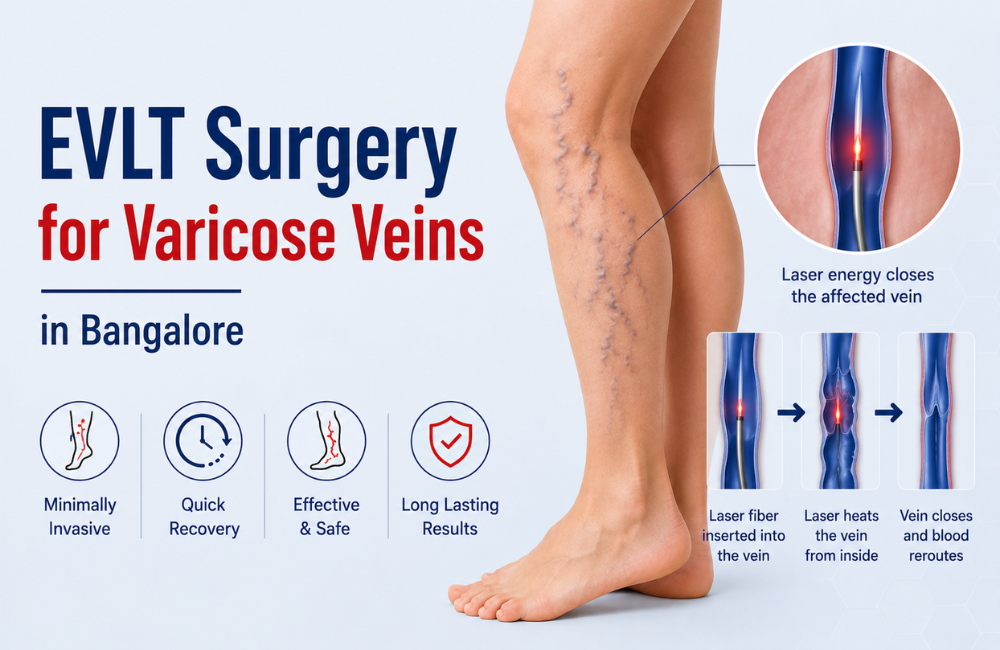
EVLT (Endovenous Laser Treatment) is an advanced minimally invasive procedure used to treat varicose veins and chronic venous insufficiency without removing the vein surgically.
Unlike traditional vein stripping surgery, EVLT uses laser energy delivered inside the vein through a thin fiber. The laser heat seals the diseased vein from within, stopping abnormal backward blood flow.
Once the vein closes:
- Blood reroutes naturally through healthier veins
- Venous pressure reduces
- Circulation improves
- Symptoms gradually decrease
Over time, the body naturally absorbs the sealed vein.
Because the procedure is minimally invasive, EVLT usually involves:
- Smaller puncture sites
- Less tissue trauma
- Faster recovery
- Reduced post-procedure discomfort
This makes EVLT treatment for varicose veins one of the most commonly recommended modern treatments for venous reflux disease.
How EVLT Surgery Works
The EVLT procedure for varicose veins is performed under ultrasound guidance for accurate vein mapping and precise laser delivery.
Step 1 – Detailed Doppler Ultrasound Evaluation
Before treatment, a Doppler ultrasound scan is performed to assess:
- Damaged veins
- Valve dysfunction
- Venous reflux severity
- Blood flow abnormalities
- Vein diameter and anatomy
This evaluation helps determine whether EVLT is suitable and identifies the exact veins requiring treatment.
Step 2 – Local Anesthesia and Fiber Placement
A small puncture is made in the skin, and a thin laser fiber is inserted into the diseased vein using ultrasound guidance.
Local anesthesia is then administered around the vein to:
- Improve patient comfort
- Protect nearby tissues from heat
- Minimize discomfort during the procedure
No major surgical cuts are required.
Step 3 – Laser Energy Delivery
Once the laser fiber is correctly positioned, controlled laser energy is delivered inside the vein.
The thermal energy causes:
- Vein wall contraction
- Collapse of the vein
- Sealing of the diseased vessel
- Closure of abnormal blood flow pathways
The laser fiber is gradually withdrawn while sealing the vein along its length.
Step 4 – Restoration of Healthy Circulation
After the diseased vein is sealed:
- Blood naturally reroutes into nearby healthy veins
- Venous pressure decreases
- Circulation gradually improves
- Symptoms such as swelling and heaviness begin reducing
The sealed vein is eventually absorbed by the body over time.
Step 5 – Recovery and Walking
After completion of the procedure:
- The laser fiber is removed
- A dressing is applied
- Patients are encouraged to walk shortly afterward
Most EVLT procedures are completed within 45–60 minutes and are performed as day-care treatments.
Benefits of EVLT Surgery for Varicose Veins
The popularity of EVLT surgery in Bangalore has increased significantly because of its minimally invasive approach and improved recovery experience compared to conventional surgery.
- Minimally Invasive Treatment: EVLT avoids large incisions and surgical vein removal, reducing tissue trauma and post-operative discomfort.
- Faster Recovery: Most patients resume routine activities much sooner compared to traditional vein stripping surgery.
- Reduced Pain and Scarring: Because the procedure uses small puncture sites instead of large cuts:
- Scarring is minimal
- Pain is generally lower
- Recovery tends to be smoother
- Improved Blood Circulation: Closing diseased veins improves venous blood flow and reduces symptoms caused by chronic venous insufficiency.
- Better Cosmetic Improvement: Bulging and enlarged veins gradually reduce in appearance over time, improving the overall look of the legs.
- Day-Care Procedure: Most patients return home on the same day without prolonged hospitalization.
- Lower Risk of Surgical Complications: Modern minimally invasive vascular procedures generally involve lower complication rates compared to traditional surgery when performed after proper vascular evaluation.
Who Is a Suitable Candidate for EVLT Surgery?
Patients with symptomatic varicose veins or chronic venous insufficiency may benefit from EVLT.
Suitable Candidates May Include:
- Patients with enlarged visible veins
- Leg heaviness or pain
- Swelling due to venous reflux
- Skin changes caused by venous disease
- Recurrent varicose vein symptoms
- Patients seeking minimally invasive treatment
A detailed vascular assessment is necessary before deciding treatment suitability.
Is EVLT Surgery Painful?
Most patients tolerate EVLT treatment well.
Since the procedure is minimally invasive and performed under local anesthesia:
- Pain during the procedure is usually minimal
- Mild soreness or tightness may occur temporarily
- Recovery is generally faster compared to traditional surgery
Pain perception varies depending on vein size and individual sensitivity.
Recovery After EVLT Surgery
Recovery after EVLT surgery for varicose veins is usually quicker than conventional vein stripping surgery.
Immediately After Procedure
- Walking is encouraged
- Patients often return home the same day
First Few Days
- Mild bruising or tightness may occur
- Daily activities are usually possible
Following Weeks
- Improvement in swelling and heaviness
- Reduced pain
- Better circulation
- Gradual improvement in vein appearance
Most patients return to routine work within a short period depending on recovery and job type.
Possible Risks and Side Effects of EVLT
Although considered safe, every vascular procedure carries some risks.
Temporary Side Effects May Include:
- Mild bruising
- Tightness along treated vein
- Temporary swelling
- Tenderness
- Skin discoloration in some cases
Rare complications may include nerve irritation or blood clot formation.
Proper evaluation and experienced vascular care help minimize these risks.
EVLT vs Traditional Varicose Vein Surgery
| Feature | EVLT Surgery | Traditional Vein Surgery |
|---|---|---|
| Procedure Type | Minimally invasive | Surgical vein stripping |
| Incisions | Small puncture | Larger cuts |
| Hospital Stay | Usually day-care | Longer stay possible |
| Recovery | Faster | Slower |
| Pain | Generally less | More post-operative discomfort |
| Cosmetic Outcome | Better | Surgical scars possible |
Modern minimally invasive procedures such as EVLT have significantly changed varicose vein management.
What Happens if Varicose Veins Are Left Untreated?
Ignoring varicose veins may lead to progression of chronic venous disease.
Potential complications include:
- Persistent swelling
- Skin pigmentation
- Venous eczema
- Bleeding veins
- Venous ulcers
- Superficial thrombophlebitis
- Reduced mobility and leg comfort
Early treatment improves circulation and reduces long-term vascular complications.
Why Choose Hari Laser Clinics for Radiofrequency Ablation in Bangalore?
At Hari Laser Clinics, treatment planning focuses on accurate vascular diagnosis, minimally invasive care, and long-term symptom relief.
Our Approach Includes:
- Advanced Doppler ultrasound evaluation
- Minimally invasive vein treatment techniques
- Individualized treatment planning
- Focus on faster recovery and patient comfort
- Structured follow-up care and monitoring
Every patient undergoes detailed vascular assessment before deciding the most suitable varicose vein treatment option.
Why Choose Hari Laser Clinics for EVLT Surgery in Bangalore?
At Hari Laser Clinics, treatment planning focuses on accurate vascular diagnosis, minimally invasive care, and individualized treatment strategies.
Our Approach Includes:
- Advanced Doppler ultrasound vein evaluation
- Minimally invasive laser vein procedures
- Individualized treatment planning
- Focus on faster recovery and patient comfort
- Structured follow-up care and monitoring
Every patient undergoes proper clinical assessment before recommending EVLT or other varicose vein treatment options.
Frequently Asked Questions
EVLT is a minimally invasive laser procedure that seals damaged veins using thermal laser energy to improve blood circulation.
EVLT is less invasive, involves faster recovery, and usually causes less discomfort compared to conventional vein stripping surgery.
The procedure generally takes around 45–60 minutes depending on the number of veins treated.
Most EVLT procedures are performed as day-care treatments.
Yes. Walking is usually encouraged immediately after the procedure to improve circulation.
The treated vein is permanently sealed, but new varicose veins may develop over time if underlying venous insufficiency progresses.
Final Thoughts
EVLT surgery for varicose veins in Bangalore offers an advanced minimally invasive alternative to conventional vein surgery. By using laser energy to close diseased veins internally, the procedure helps improve circulation while reducing pain, recovery time, and surgical discomfort.
However, proper Doppler evaluation and individualized vascular assessment are essential before deciding treatment suitability.
If you experience persistent leg pain, swelling, heaviness, visible enlarged veins, or skin changes, early consultation with a vascular specialist can help prevent progression of chronic venous insufficiency and improve long-term vascular health.
Reference Links
- Endovenous Laser Varicose Veins Surgery
- The endovenous laser treatment for patients with varicose veins
- Advantages of Endovenous Laser Ablation Therapy (EVLT)
- Endovenous laser treatment (EVLT)