
Introduction
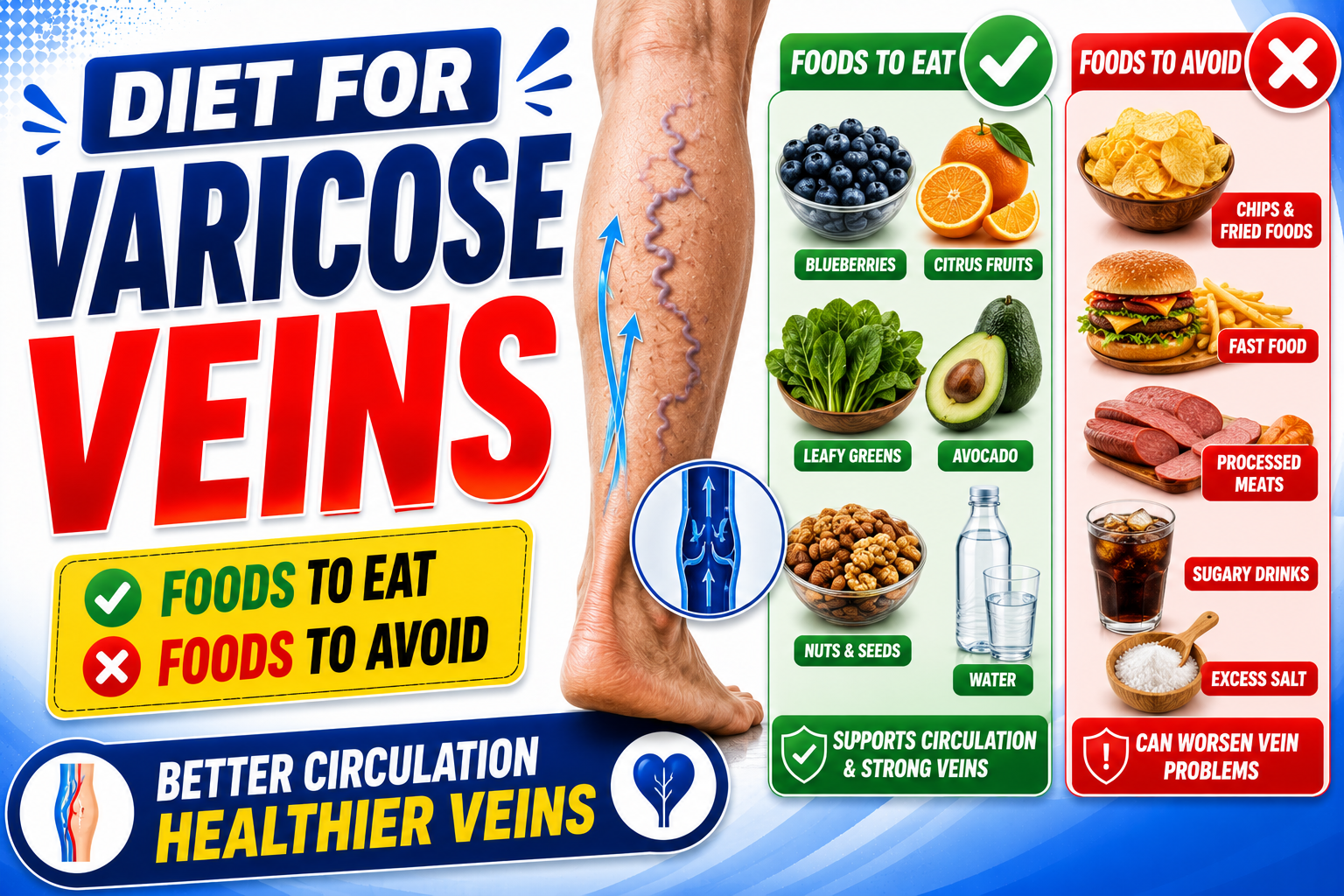
A healthy diet for varicose veins can play an important role in supporting vein health and managing symptoms. Varicose veins are a common vein condition that affects people of different ages. They often appear as enlarged, twisted, or bulging veins, usually in the legs. While genetics and age play a role, lifestyle habits can also affect vein health, and diet is one of the most important factors.
A balanced diet may support healthy circulation, help maintain an ideal weight, reduce swelling, and contribute to overall vascular health. Although food cannot repair damaged vein valves, making healthier dietary choices may help manage symptoms and support long-term vein function.
Many patients focus only on treatment and overlook nutrition. However, what you eat every day can influence body weight, inflammation, digestion, and fluid retention. These factors directly affect the pressure placed on your veins.
In this guide, we explain the best foods to eat, foods to avoid, and practical dietary habits that may support better vein health.
What Are Varicose Veins?
Varicose veins develop when the valves inside the veins stop working properly. These valves normally help blood move upward toward the heart. When they weaken, blood begins to collect inside the vein instead of flowing efficiently.
As a result, the vein stretches and becomes enlarged. Over time, it may appear blue, purple, or twisted beneath the skin.
Many people notice varicose veins because of their appearance. However, others experience symptoms such as:
- Leg heaviness
- Swelling around the ankles
- Aching pain
- Burning sensations
- Muscle cramps
- Itching around the veins
In some cases, symptoms continue to worsen despite lifestyle changes. When this happens, treatments such as Endovenous Laser Therapy (EVLT) may be recommended to address the underlying vein problem.
Can Diet Help Varicose Veins?
A healthy diet for varicose veins cannot make damaged veins disappear. However, it can help manage several factors that contribute to worsening symptoms.
For example, proper nutrition supports healthy blood circulation. It also helps control body weight and reduces the risk of constipation. Furthermore, certain nutrients support blood vessel strength and help reduce inflammation.
Because of these benefits, dietary changes often form part of a broader vein-health strategy.
However, patients should understand that food cannot repair damaged vein valves. If symptoms become severe, medical treatment may still be required.
Why Diet Matters for Vein Health
Your veins work every day to move blood back toward the heart. Therefore, they benefit from a healthy environment within the body.
Poor dietary habits may contribute to:
- Excess weight gain
- Increased inflammation
- Fluid retention
- Poor circulation
- Constipation
Each of these factors can place additional stress on the veins.
On the other hand, a balanced diet supports healthy circulation and may reduce some of the discomfort associated with varicose veins.
Best Foods for Varicose Veins
When planning a diet for varicose veins, focus on foods that support circulation, digestion, and blood vessel health.
1. High-Fiber Foods
Fiber plays an important role in digestive health. It helps prevent constipation and supports regular bowel movements.
Constipation increases pressure inside the abdomen. As a result, veins in the lower body may experience additional strain.
Good sources of fiber include:
- Oats
- Whole wheat products
- Brown rice
- Lentils
- Beans
- Chickpeas
- Apples
- Pears
- Broccoli
In addition, fiber helps support weight management, which is important for people with vein disease.
2. Citrus Fruits
Citrus fruits provide vitamin C and powerful plant compounds known as flavonoids.
Vitamin C supports collagen production. Collagen helps maintain the strength and structure of blood vessels.
Healthy options include:
- Oranges
- Lemons
- Sweet lime
- Grapefruit
These fruits also contribute to hydration and overall nutritional balance.
3. Berries
Berries contain antioxidants that help protect blood vessels from oxidative stress.
Good choices include:
- Strawberries
- Blueberries
- Blackberries
- Raspberries
Furthermore, berries provide fiber, making them a valuable addition to a best diet for varicose veins.
4. Leafy Green Vegetables
Leafy greens are rich in vitamins, minerals, and antioxidants.
Examples include:
- Spinach
- Kale
- Fenugreek leaves
- Amaranth leaves
These vegetables support circulation and contribute to overall vascular health.
5. Legumes
Legumes provide fiber, protein, and important minerals.
Healthy options include:
- Lentils
- Kidney beans
- Chickpeas
- Black beans
Because they are filling and nutritious, legumes also support healthy weight management.
6. Nuts and Seeds
Nuts and seeds contain healthy fats and antioxidants.
Examples include:
- Almonds
- Walnuts
- Flaxseeds
- Chia seeds
- Pumpkin seeds
When eaten in moderation, they can support overall cardiovascular health.
7. Foods Rich in Potassium
Potassium helps regulate fluid balance within the body.
As a result, adequate potassium intake may help reduce water retention and swelling.
Good sources include:
- Bananas
- Sweet potatoes
- Spinach
- Avocados
- Beans
- Coconut water
8. Omega-3 Rich Foods
Omega-3 fatty acids support heart and blood vessel health.
Healthy options include:
- Salmon
- Sardines
- Mackerel
For vegetarians, flaxseeds and walnuts provide plant-based alternatives.
Foods to Avoid with Varicose Veins
Many patients ask about varicose veins foods to avoid because certain dietary habits may worsen symptoms.
1. Processed Foods
Processed foods often contain excessive sodium, unhealthy fats, and preservatives.
which includes:
- Packaged snacks
- Instant noodles
- Processed meats
- Fast food
Frequent consumption may contribute to weight gain and fluid retention.
2. High-Sodium Foods
Excess sodium causes the body to retain water.
As a result, swelling in the legs may become more noticeable.
Foods high in sodium include:
- Chips
- Packaged foods
- Processed sauces
- Salted snacks
Reducing sodium intake may help improve comfort and reduce swelling.
3. Sugary Foods and Drinks
Too much sugar can contribute to obesity and inflammation.
Foods to limit include:
- Soft drinks
- Cakes
- Pastries
- Sweets
- Sugary coffee drinks
Maintaining a healthy weight remains important for vein health.
4. Refined Carbohydrates
Refined carbohydrates contain less fiber and may contribute to constipation.
which includes:
- White bread
- White rice
- Refined flour products
Replacing them with whole grains provides more nutritional value.
5. Deep-Fried Foods
Fried foods are often high in calories and unhealthy fats.
Over time, excessive consumption may contribute to weight gain and inflammation.
Therefore, limiting fried foods is generally recommended.
6. Excess Alcohol
Alcohol may contribute to dehydration and poor dietary habits when consumed excessively.
Moderation is important for maintaining overall vascular health.
How Excess Weight Affects Varicose Veins
Body weight plays a major role in vein health.
When a person gains excess weight, more pressure is placed on the veins in the legs. As a result, blood has a harder time moving back toward the heart.
Over time, this extra strain may worsen existing varicose veins.
A healthy diet for varicose veins helps support weight management. In addition, maintaining a healthy weight may reduce leg discomfort and swelling.
People who combine obesity with physically demanding activities may place even more stress on their veins. This is one reason why some patients explore whether weightlifting can contribute to varicose veins.
Lifestyle Habits That Support Vein Health
Diet works best when combined with healthy lifestyle habits.
Stay Physically Active
Walking helps activate the calf muscles.
These muscles act like a natural pump that helps move blood back toward the heart.
Therefore, regular walking is one of the simplest ways to support circulation.
Avoid Long Periods of Sitting
Sitting for several hours slows circulation in the legs.
If your job requires prolonged sitting, stand up and move every hour.
Even a short walk can help improve blood flow.
Avoid Standing for Long Hours
Long periods of standing can increase pressure inside the veins.
Whenever possible, take movement breaks and shift positions regularly.
Use Compression Stockings When Recommended
Compression stockings help improve circulation and reduce swelling.
In many cases, doctors recommend Compression Stockings for Varicose Veins as part of a broader management plan.
Although they do not remove varicose veins, they may help manage symptoms more effectively.
Stay Hydrated
Water supports circulation and digestive health.
In addition, proper hydration helps reduce constipation.
Aim to drink water regularly throughout the day rather than waiting until you feel thirsty.
When Diet Alone Is Not Enough
Dietary improvements can support vein health. However, some symptoms indicate that professional evaluation may be necessary.
Warning signs include:
- Persistent leg swelling
- Skin discoloration
- Increasing pain
- Itching around veins
- Non-healing ulcers
- Worsening vein enlargement
These symptoms may indicate progressive venous disease.
Recognizing these warning signs of worsening varicose veins can help patients seek treatment before complications develop. The article Don’t Ignore Varicose Veins explains these symptoms in greater detail.
Modern Treatment Options for Varicose Veins
Modern treatments target damaged veins while preserving healthy circulation.
Many patients compare EVLT and RFA for varicose veins because both procedures are minimally invasive and designed to close faulty veins.
Common treatment options include:
EVLT Surgery
EVLT Surgery for Varicose Veins in Bangalore uses laser energy to close diseased veins.
Radiofrequency Ablation
Radiofrequency Ablation for Varicose Veins uses controlled heat energy to treat affected veins.
Venaseal
Venaseal Treatment for Varicose Veins uses a medical adhesive to seal damaged veins.
The best treatment depends on the patient’s symptoms, vein anatomy, and overall health.
Conclusion
A healthy diet for varicose veins supports circulation, digestive health, weight management, and overall vascular function. Foods rich in fiber, vitamin C, potassium, antioxidants, and healthy fats can support better vein health over time.
At the same time, limiting processed foods, excess salt, sugary foods, and refined carbohydrates may help reduce swelling and support healthy circulation.
Although nutrition plays an important role, it cannot repair damaged vein valves. Therefore, patients with persistent symptoms should seek professional evaluation. Early diagnosis and timely treatment can help prevent complications and improve quality of life.
Frequently Asked Questions
The best diet for varicose veins includes fruits, vegetables, whole grains, legumes, nuts, seeds, and lean protein sources.
Citrus fruits, berries, leafy greens, beans, oats, nuts, seeds, and omega-3-rich fish are among the best foods for varicose veins.
Processed foods, excess salt, sugary foods, refined carbohydrates, and deep-fried foods should be limited.
Yes. Maintaining a healthy weight may reduce pressure on the veins and improve symptoms.
No. A healthy diet supports vein health, but it cannot repair damaged veins. Patients considering treatment often review laser varicose vein treatment before and after results to understand what medical treatment can achieve.