
Pain or bleeding from the back passage is very common, and most people assume it is piles. But an anal fissure can cause very similar symptoms, and the two conditions need different treatment.
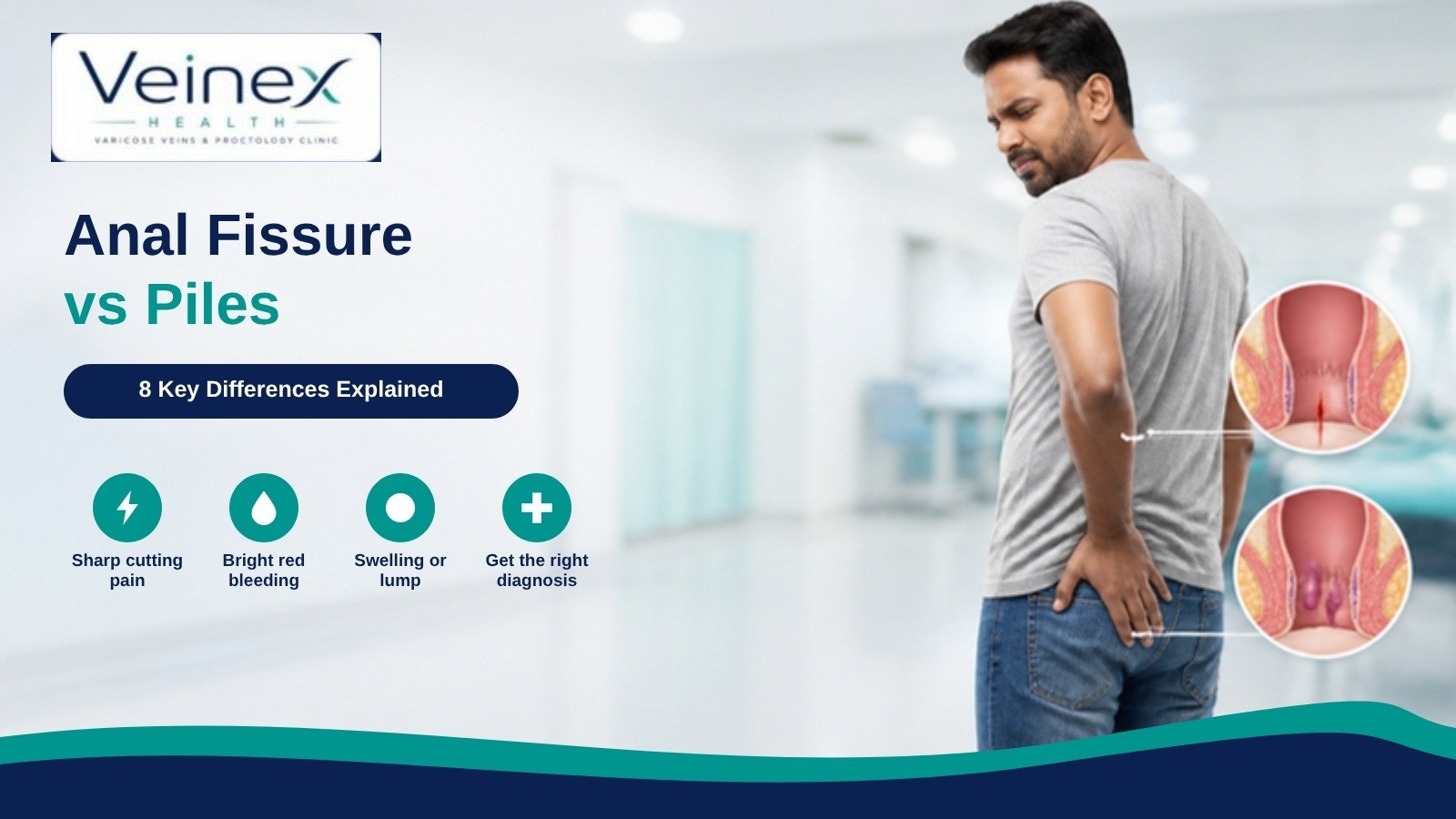
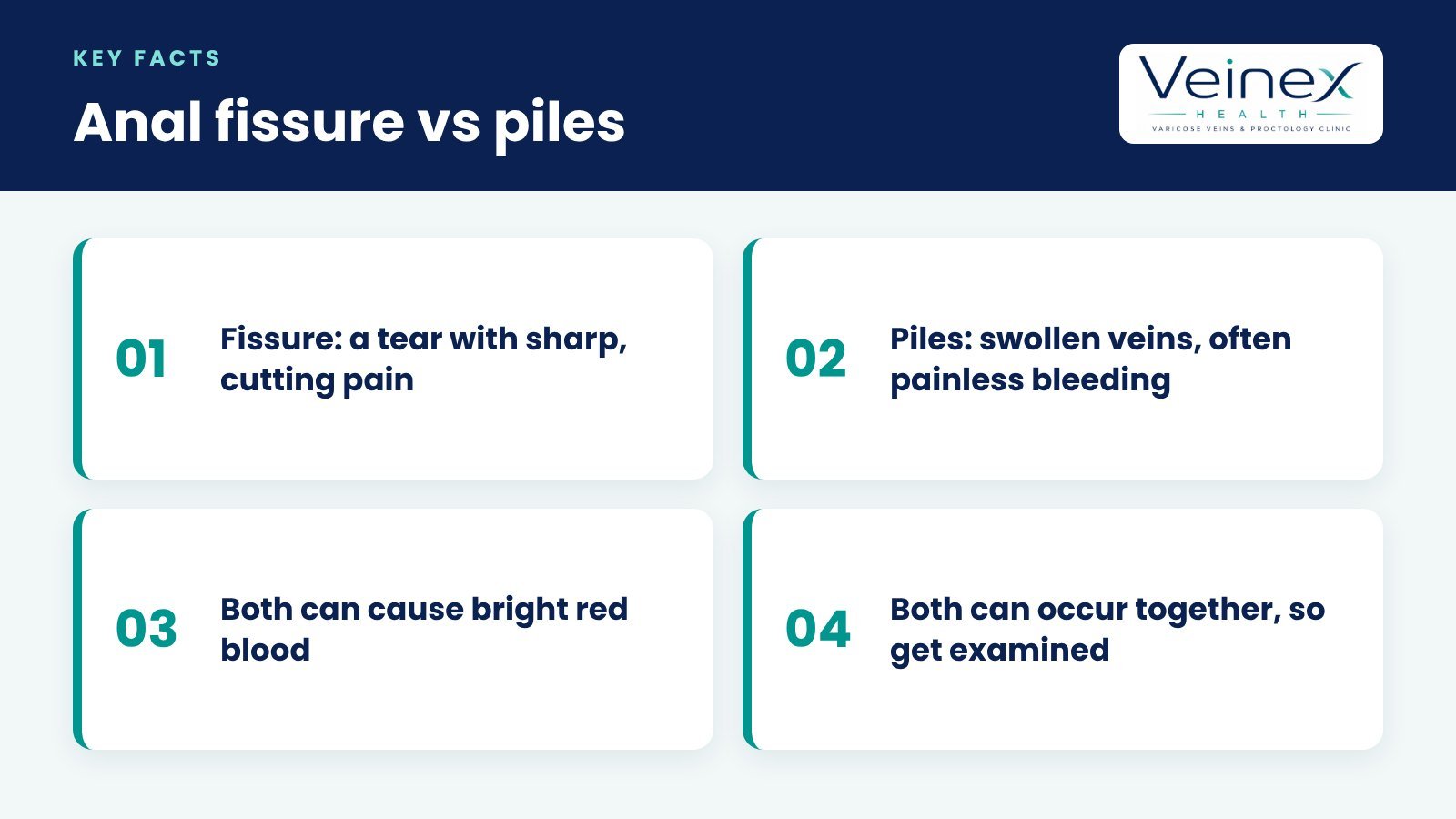
So, what is the difference in anal fissure vs piles? In short, a fissure is a small tear in the lining of the anus, while piles are swollen veins in or around the anus. A fissure usually causes sharp, cutting pain when passing stool. Piles more often cause painless bleeding, itching, or a soft lump.
Knowing these differences helps you describe your symptoms clearly and get the right treatment sooner. Only a doctor’s examination can confirm which one you have.
What Is an Anal Fissure?
An anal fissure is a small cut or tear in the thin, moist lining of the anus. It usually happens when a hard or large stool stretches the anal opening. Frequent diarrhoea can also cause it.
Most fissures form at the back of the anus, in the midline. The tear makes the ring of muscle around the anus (the internal sphincter) go into spasm. That spasm causes pain and reduces blood flow, which can slow healing.
A fissure that heals within about six weeks is called acute. One that lasts longer is called chronic.
What Are Piles?
Piles, or haemorrhoids, are swollen cushions of blood vessels in and around the anal canal. They develop when there is too much pressure on these veins, for example from straining, constipation, long hours of sitting, pregnancy or heavy lifting.
- Internal piles form inside the rectum. They are usually painless but can bleed or come out of the anus.
- External piles form under the skin around the anus. They can itch or ache, and become very painful if a blood clot forms inside them.
Anal Fissure vs Piles: Side-by-Side Comparison
| Feature | Anal Fissure | Piles |
|---|---|---|
| What it is | A small tear in the lining of the anus | Swollen veins in or around the anus |
| Pain | Sharp, cutting or burning pain during and after passing stool | Often painless (internal); ache or itch (external); severe pain only if a clot forms |
| How long pain lasts | Minutes to a few hours after each bowel movement | Usually a dull discomfort, not linked to each stool |
| Bleeding | Small amount of bright red blood on toilet paper or stool | Bright red blood, sometimes dripping into the toilet |
| Lump | Usually none; a small skin tag may form in chronic fissures | A soft lump inside or outside the anus is common |
| Itching | Sometimes | Common, especially with external piles or mucus discharge |
| Fear of passing stool | Very common because of the pain | Less common |
| Main cause | Hard stool, constipation or diarrhoea tearing the lining | Straining, constipation, long sitting, pregnancy |
Difference in Pain
Pain is usually the clearest clue.
With a fissure, the pain is sharp and often described as “passing glass” or a cutting feeling during bowel movements. A burning or throbbing pain can continue for minutes or even hours afterwards, because the sphincter muscle goes into spasm.
With internal piles, there is often little or no pain. External piles may ache or feel sore. A sudden, very painful hard lump near the anus usually means a blood clot has formed in an external pile.
Difference in Bleeding
Both conditions cause bright red blood, so bleeding alone cannot tell them apart.
- Fissure: usually a small streak of blood on the toilet paper or the surface of the stool, along with sharp pain
- Piles: blood may be on the paper, coat the stool, or drip into the toilet, often without pain
Dark red or black blood, or blood mixed into the stool, is not typical of either condition and should be checked by a doctor.
Difference in Lumps and Itching
Piles often cause a soft swelling that you can feel, either outside the anus or coming out during bowel movements. Itching and mucus discharge are also common.
A fissure usually does not cause a lump. In long-standing fissures, a small skin tag (sometimes called a sentinel pile) can form at the edge of the tear. People often mistake that skin tag for piles, even though the real problem is the fissure behind it.
A quick, private examination tells them apart. Get the right diagnosis and treatment at Veinex Health.
Can You Have Both a Fissure and Piles?
Yes. Both conditions share the same main trigger, which is constipation and straining, so they often occur together.
When both are present, the sharp pain usually comes from the fissure, while the lump and some of the bleeding may come from the piles. Treating only one of them may leave you with ongoing symptoms, which is why a proper examination matters.
How Does a Doctor Tell Them Apart?
A specialist will ask about your symptoms, especially the type of pain and when it happens, and about your bowel habits.
The doctor then gently examines the area. A fissure can often be seen just by parting the skin around the anus. Internal piles are usually checked with a proctoscopy, where a short tube is used to look inside the anal canal.
If the area is too painful to examine, the doctor may first treat the pain and then examine you again later. If there are red-flag symptoms, a colonoscopy may be advised to rule out other causes.
How Is an Anal Fissure Treated?
Treatment aims to soften stools, relax the sphincter muscle and let the tear heal:
- High-fibre diet, enough water and stool softeners
- Warm sitz baths to relax the muscle and ease pain
- Prescription ointments that relax the sphincter and improve blood flow
- Botulinum toxin (Botox) injection for some chronic fissures
- Lateral internal sphincterotomy (LIS) or other procedures for chronic fissures that do not heal with medicines
Most acute fissures heal with simple measures within a few weeks.
How Are Piles Treated?
Treatment depends on the type and grade of piles:
- High-fibre diet, enough water and better toilet habits
- Medicines and creams to ease symptoms
- Rubber band ligation for some internal piles
- Laser piles treatment for suitable patients, with minimal pain and quick recovery
- Stapled haemorrhoidopexy or haemorrhoidectomy for large or complicated piles
Using a piles cream for a fissure, or the other way round, often gives little relief. Getting the diagnosis right first saves time and discomfort.
Red Flags: When to See a Doctor Promptly
- Bleeding that continues for more than a week
- Dark red or black blood, or blood mixed with stool
- A change in bowel habits lasting more than a few weeks
- Unexplained weight loss or tiredness
- New rectal bleeding after the age of 40
- Severe pain, fever or swelling near the anus
- Heavy bleeding, dizziness or fainting
How to Prevent Both Fissures and Piles
Because both conditions share the same triggers, the same habits help prevent them:
- Eat plenty of fibre: fruits, vegetables, whole grains, oats and dal
- Drink enough water through the day
- Go to the toilet when you feel the urge, without delay
- Don’t strain or sit on the toilet for long
- Treat constipation and diarrhoea early
- Stay active and take breaks from long periods of sitting
- Keep the anal area clean and dry
Why Choose Veinex Health?
At Veinex Health, patients with anal pain or bleeding receive a careful, private examination to find the exact cause before any treatment begins.
Our approach includes:
- Gentle examination to tell a fissure, piles or both apart
- Treatment matched to the diagnosis, from medicines to minimally invasive procedures
- Laser piles treatment for suitable patients
- Specialist care for acute and chronic fissures
- Day-care procedures with a quick return to daily activities
- Diet and habit advice to prevent the problem from returning
The goal is to treat the real cause of your symptoms, not just guess at it.
Frequently Asked Questions
1. What is the main difference between an anal fissure and piles?
An anal fissure is a small tear in the lining of the anus. Piles are swollen veins in or around the anus. A fissure usually causes sharp pain with bowel movements, while piles more often cause painless bleeding, itching or a lump.
2. Which is more painful, a fissure or piles?
A fissure is usually more painful. The pain is sharp during bowel movements and can last for hours afterwards. Piles are often painless, unless a blood clot forms in an external pile.
3. Can I tell anal fissure vs piles from the bleeding?
Not reliably. Both cause bright red blood. The type of pain and whether there is a lump give better clues, but a doctor’s examination is needed to be sure.
4. Can a fissure turn into piles?
No, they are different conditions. But both are caused by constipation and straining, so they often occur together.
5. Is the lump near my anus a pile or a skin tag?
It could be either. A chronic fissure can form a small skin tag at its edge. A doctor can tell the difference during an examination.
6. Can piles cream treat a fissure?
Piles creams may soothe the area, but fissures usually need treatment that relaxes the sphincter muscle and softens stools. Use medicines as advised by a doctor.
7. Does a fissure heal faster than piles?
Most acute fissures heal within a few weeks with simple treatment. Small piles can also settle quickly, but larger piles often need a procedure.
8. Do both conditions need surgery?
No. Many fissures and piles improve with diet, habits and medicines. Procedures are only needed when these do not work or the condition is advanced.
9. Can spicy food cause a fissure or piles?
Spicy food does not directly cause either condition, but it can increase burning and discomfort, especially with a fissure.
10. When should I see a doctor for anal pain or bleeding?
See a doctor if pain or bleeding lasts more than a week, keeps coming back, or comes with red-flag symptoms such as dark blood, weight loss or a change in bowel habits.
Conclusion
When comparing anal fissure vs piles, the type of pain is usually the biggest clue. A fissure is a tear that causes sharp pain with bowel movements, while piles are swollen veins that more often cause painless bleeding, itching or a lump.
Both conditions can occur together, and both can cause bright red bleeding. A proper examination is the only way to know which one you have and how to treat it.
At Veinex Health, patients receive a private, careful evaluation and treatment suited to their condition, including laser piles treatment and specialist fissure care.
Careful diagnosis and treatment for fissures, piles or both, including laser piles treatment, at Veinex Health, Bangalore.
Or call +91 99860 01112 · Learn about anal fissure treatment
Related Reading
This article is for general information and does not replace a consultation with a qualified doctor. Rectal bleeding can have other causes, so persistent or unusual symptoms should always be checked.