
Introduction
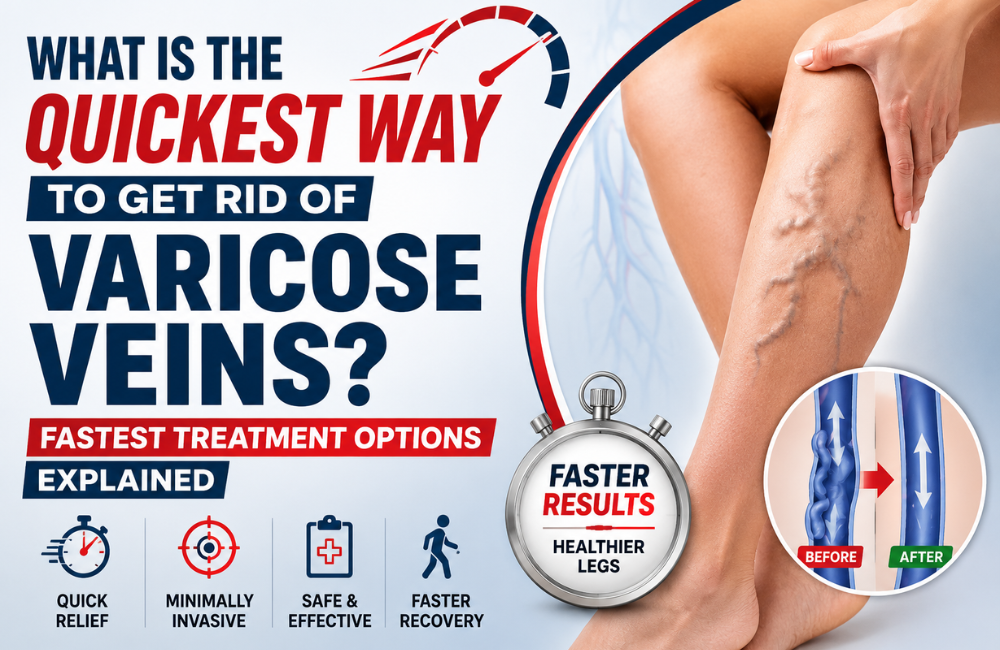
Varicose veins can cause pain, swelling, heaviness, and visible blue veins in the legs. Many people search for the quickest way to get rid of varicose veins because the discomfort affects walking, standing, and daily life. In most cases, modern laser and minimally invasive procedures are the quickest way to get rid of varicose veins with less pain and faster recovery.
At first, symptoms may feel mild. However, they can slowly get worse over time. Some people notice aching legs after standing for long hours. Others develop swelling, itching, burning, or bulging veins. So, early treatment is often important.
Many patients first try walking, leg elevation, or compression stockings. These methods may reduce symptoms for a short time. However, they usually do not remove damaged veins for good.
Many people also ignore the early warning signs. As a result, the veins may become larger and more painful later. Understanding the warning signs of varicose veins may help patients seek treatment sooner.
Can Varicose Veins Go Away Permanently?
Varicose veins happen when the valves inside the veins become weak. Because of this, blood collects inside the veins instead of flowing toward the heart. Over time, pressure builds up and the veins enlarge.
Mild symptoms may improve with healthy habits. For example, walking, exercise, weight control, and leg elevation may reduce swelling and heaviness. In addition, compression stockings may improve circulation during daily activities.
However, these methods mainly help symptoms. They do not remove damaged veins for good. So, many patients eventually need medical treatment for long-term relief.
Symptom Relief vs Permanent Treatment
| Symptom Relief | Permanent Vein Treatment |
|---|---|
| Compression stockings | EVLT |
| Walking | RFA |
| Leg elevation | VenaSeal |
| Exercise | Sclerotherapy |
| Weight management | Surgical removal |
What Is the Quickest Way to Get Rid of Varicose Veins?
For many patients, minimally invasive procedures are the quickest way to get rid of varicose veins. These treatments involve tiny cuts, less pain, and shorter recovery time. In addition, most patients return to normal activities quickly.
EVLT (Endovenous Laser Treatment)
EVLT uses laser heat to close damaged veins from inside. Doctors guide a thin laser fiber into the vein using ultrasound support.
The treatment takes less than one hour. In most cases, patients walk on the same day. Furthermore, many people return to work within a few days.
Modern procedures like EVLT treatment for varicose veins often give faster recovery than traditional surgery.
Radiofrequency Ablation (RFA)
RFA uses radiofrequency heat to seal damaged veins. The procedure is minimally invasive and causes mild discomfort only.
Recovery is quick. In many cases, patients return to normal routines within a short time. Therefore, RFA is one of the most common modern treatment options.
Patients comparing procedures often read about EVLT vs RFA treatment options before choosing.
VenaSeal Treatment
VenaSeal uses a medical adhesive to close problematic veins. Unlike heat-based procedures, it does not use laser or radiofrequency energy. Because of this, some patients feel less discomfort after treatment.
Doctors recommend VenaSeal for selected patients based on vein condition and severity.
Sclerotherapy
Sclerotherapy involves injecting a medicine into smaller veins. The treated veins slowly collapse and fade over time.
This procedure works well for smaller varicose veins and spider veins. Recovery is fast. In fact, many patients return to routine activities on the same day.
Surgical Vein Removal
Traditional surgery may still be needed for severe varicose veins. However, recovery is longer compared to laser-based procedures. Patients may also experience more bruising and soreness after surgery.
Which Quickest Way to Get Rid of Varicose Veins Suits Your Severity?
The quickest way to get rid of varicose veins depends on how severe the condition is. Smaller veins may respond to simpler treatments. Larger veins may need advanced procedures.
Mild Spider Veins
- Sclerotherapy
- Compression stockings
- Lifestyle changes
These methods may reduce visible veins and improve circulation.
Moderate Varicose Veins
- EVLT
- RFA
- VenaSeal
These minimally invasive procedures give faster recovery and good symptom relief.
Severe Bulging Veins
- Surgical treatment
- Combination procedures
Large or painful veins may need advanced treatment for better long-term results.
Doctors usually do an ultrasound scan before recommending treatment. This helps find the safest and most effective option.
Quick Comparison of Varicose Vein Treatments
| Treatment | Recovery Time | Pain Level | Best For | Permanency |
|---|---|---|---|---|
| EVLT | 1–3 days | Mild | Medium–Large veins | High |
| RFA | 1–3 days | Mild | Medium veins | High |
| VenaSeal | Same day | Very mild | Selected veins | High |
| Sclerotherapy | Same day | Minimal | Small veins | Moderate |
| Surgery | 1–3 weeks | Moderate | Severe veins | High |
Non-Surgical Ways to Reduce Varicose Vein Symptoms
Non-surgical methods may help improve blood flow and reduce discomfort. However, they do not remove enlarged veins for good.
Walking and Exercise
Walking helps the calf muscles push blood upward through the veins. As a result, many people notice less swelling and heaviness. Regular movement also improves circulation over time.
Weight Management
Extra body weight increases pressure inside the leg veins. Therefore, keeping a healthy weight may help reduce strain on weakened veins.
Leg Elevation
Raising the legs above heart level for short periods may reduce swelling. In addition, it may reduce tiredness in the legs after long hours of standing.
Compression Stockings
Compression stockings apply gentle pressure to the legs. Because of this, blood flows more easily toward the heart. Many patients notice reduced swelling and heaviness while wearing them.
Some patients also try natural home remedies for varicose veins to improve symptom relief.
What Is NOT the Quickest Way to Get Rid of Varicose Veins?
Many internet remedies claim to remove varicose veins instantly. However, most of these claims are not accurate.
Creams and Oils
Creams may soothe symptoms for a short time. However, they do not remove damaged veins for good.
Exercise Alone
Exercise improves circulation and vein health. Still, it cannot fully erase enlarged veins.
Home Remedies
Home remedies may help mild discomfort. However, they cannot close severely damaged veins.
Instant Cure Claims
No treatment removes varicose veins overnight. Even minimally invasive procedures need proper healing and follow-up care.
Which Varicose Vein Treatment Has the Fastest Recovery?
Minimally invasive procedures usually allow faster recovery than traditional surgery.
Recovery After EVLT
- Walking usually starts the same day
- Minimal downtime
- Mild soreness possible
Recovery After RFA
- Quick recovery
- Less discomfort
- Early return to daily activities
Recovery After Surgery
- Longer healing time
- More bruising and soreness
- Larger recovery period
Many patients want to know whether varicose vein surgery is painful before deciding on treatment.
Patients also review laser treatment before and after results to understand what improvements to expect.
Can Varicose Veins Return After Treatment?
Yes. New varicose veins may develop later. This is more likely in people with genetic risk factors or long standing hours.
Factors That Increase Recurrence Risk
- Family history
- Obesity
- Pregnancy
- Long standing hours
- Poor circulation
How to Reduce Recurrence
- Stay active
- Maintain a healthy weight
- Use compression stockings if advised
- Attend follow-up visits
Some patients worry about the risk of varicose veins returning after treatment over time.
When Should You See a Doctor for Varicose Veins?
Medical evaluation becomes important if symptoms become severe or complications develop.
Warning Signs Include
- Severe swelling
- Skin darkening
- Bleeding veins
- Leg ulcers
- Burning pain
- Hard painful veins
Early treatment may help prevent more serious vein problems later. Persistent symptoms may require proper medical treatment for varicose veins based on condition severity.
Frequently Asked Questions
Minimally invasive procedures such as EVLT, RFA, and VenaSeal are among the quickest ways to get rid of varicose veins.
Lifestyle changes may reduce symptoms. However, damaged veins usually do not disappear without treatment.
EVLT and RFA usually allow faster recovery compared to traditional surgery.
Laser treatment can close damaged veins effectively. However, new veins may develop later in some patients.
Compression stockings help manage symptoms. However, they do not permanently remove veins.
Yes. Walking improves circulation and may reduce swelling and heaviness.
Yes. New veins may develop later depending on genetics, lifestyle, and vein health.
Conclusion
The quickest way to get rid of varicose veins depends on the size of the veins and the treatment method used. Modern minimally invasive procedures such as EVLT, RFA, and VenaSeal often provide faster recovery, less discomfort, and good long-term results.
Walking, compression stockings, and healthy habits may reduce symptoms and improve circulation. However, they usually do not remove damaged veins for good. Patients with persistent swelling, pain, skin changes, or bulging veins should seek proper medical evaluation for the most suitable treatment option.
Reference Links
- Strategies and challenges in treatment of varicose veins and venous insufficiency
- Most Varicose Veins Can Be Treated Without Surgery