
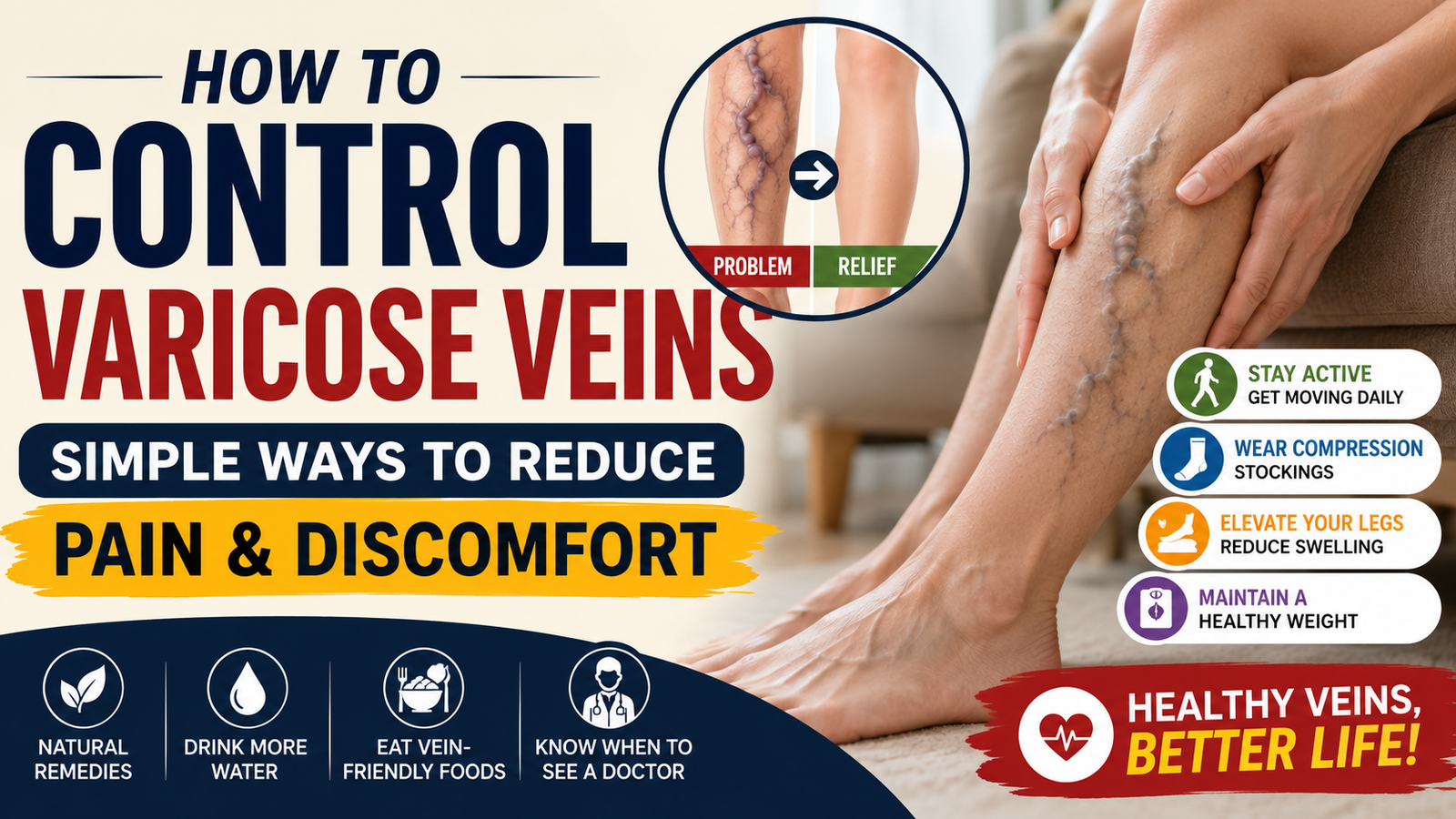
How to Control Varicose Veins: Simple Ways to Reduce Pain and Discomfort
Lifestyle changes, compression support, and modern treatments — a complete guide to managing varicose vein symptoms and knowing when to seek professional care for how to control varicose veins
🗓️ Updated June 2026 ⏱️ 8 min read 🩺 Reviewed by Hari Laser Clinics Vascular Team
Varicose veins are a common vein condition that affects people of all ages. They develop when the valves inside the veins become weak or damaged, allowing blood to pool instead of flowing efficiently back to the heart. As pressure builds inside the veins, they become enlarged, twisted, and visible beneath the skin.
Many people think varicose veins are only a cosmetic problem. However, they can also cause leg pain, heaviness, swelling, itching, and fatigue. If left untreated, symptoms may gradually become worse over time.
If you are searching for how to control varicose veins, the good news is that several lifestyle changes can help reduce discomfort and improve circulation. At the same time, it is important to understand that controlling symptoms is different from treating the underlying vein problem.
What Are Varicose Veins and Why Do They Cause Pain?
Healthy veins contain one-way valves that help blood move upward toward the heart. When these valves stop working properly, blood starts flowing backward and collects inside the veins. As a result, pressure inside the veins increases. Over time, the veins become enlarged and visible beneath the skin. This increased pressure is responsible for many common symptoms.
Common Symptoms
Aching leg pain, leg heaviness, swelling around the ankles, burning sensations, throbbing discomfort, night cramps, and itchy skin around the veins.
When Symptoms Worsen
Symptoms often become significantly worse after long periods of sitting or standing — a key pattern that signals underlying vein valve dysfunction.
Understanding the different types of vein disease can help patients understand how vein disease progresses. Learn more at Types of Varicose Veins.
How to Control Varicose Veins Naturally
Many people ask whether varicose veins can be controlled without surgery. The answer is yes, to a certain extent. Lifestyle changes can improve circulation, reduce swelling, and relieve discomfort. However, they cannot repair damaged vein valves. Therefore, the goal is to manage symptoms and slow progression.
Stay Active Every Day
Walking is especially beneficial because the calf muscles act like a natural pump — every step helps move blood upward toward the heart. Aim for at least 30 minutes of walking on most days. Even short walks throughout the day can improve circulation.
Avoid Sitting for Long Periods
Prolonged sitting slows blood flow in the legs. Stand up and move every 30 to 60 minutes. Even a short walk around the room can help improve circulation significantly.
Avoid Standing for Long Hours
If your job requires prolonged standing, small changes can make a significant difference:
- Shift your weight regularly
- Walk during breaks
- Stretch your legs frequently
- Sit whenever possible
Maintain a Healthy Weight
Excess weight places additional pressure on the veins. Maintaining a healthy weight can improve circulation and reduce strain on the venous system.
How to Control Varicose Veins Through Better Vein Support
Wear Compression Stockings
Compression stockings apply gentle pressure to the legs, helping blood flow more efficiently toward the heart — resulting in less swelling, reduced heaviness, and improved comfort.
ℹ️ Important Note on Compression Stockings
Compression stockings help manage symptoms — they do not eliminate damaged veins. Learn more at Compression Stockings for Varicose Veins.
Elevate Your Legs
When your legs are elevated above heart level, gravity helps blood flow back toward the heart, reducing swelling and pressure inside the veins. Try elevating your legs for 15 to 20 minutes several times a day.
Stay Hydrated
Proper hydration supports healthy blood circulation and may help reduce fluid retention. Make hydration a daily habit.
Healthy Habits That Help Control Varicose Veins
Exercise Regularly
Low-impact exercises improve circulation without placing excessive stress on the veins:
- Walking
- Swimming
- Cycling
- Stretching exercises
Patients who perform strength training may benefit from reading Does Weightlifting Cause Varicose Veins?
Follow a Healthy Diet
Focus on fruits, vegetables, whole grains, legumes, nuts, and seeds — foods rich in fiber, vitamins, and antioxidants that support vascular health.
Quit Smoking
Smoking damages blood vessels and affects circulation throughout the body. Quitting smoking is one of the most important steps for long-term vascular health.
How to Control Varicose Veins and Reduce Leg Pain
Short-Term Relief
Elevate your legs • Wear compression stockings • Take regular walks • Avoid prolonged sitting • Avoid prolonged standing. These measures improve circulation and reduce pressure inside the veins.
Long-Term Pain Relief
Maintain a healthy weight, stay physically active, support circulation consistently, and seek treatment when needed. Many patients also explore Natural Home Remedies for Varicose Veins.
When Varicose Vein Symptoms Should Not Be Ignored
While mild symptoms are common, certain warning signs should never be ignored. Seek medical evaluation if you experience:
⚠️ Seek Medical Attention If You Notice
- Persistent pain that does not improve with home care
- Significant swelling in the legs or ankles
- Skin discoloration or thickened skin near the ankles
- Bleeding veins
- Open sores or ulcers near the veins
Learn more at Don’t Ignore Varicose Veins.
Why Symptoms Often Return Despite Home Remedies
Many patients become frustrated when symptoms return despite following healthy habits. Although lifestyle changes improve circulation and reduce discomfort, they do not repair damaged vein valves. Therefore, the underlying problem remains, and symptoms may continue to return or gradually become worse.
When Home Remedies Are Not Enough
Consider professional evaluation if you experience:
- Persistent pain that keeps returning
- Recurring swelling despite compression and elevation
- Increasing vein enlargement visible under skin
- Skin changes near the ankles or lower leg
- Bleeding from varicose veins
- Reduced quality of life due to vein-related symptoms
Explore advanced treatment options at Varicose Veins Treatment in Bangalore.
Modern Treatments for Varicose Veins at Hari Laser Clinics
Modern vein treatments are minimally invasive and designed to close damaged veins while preserving healthy circulation.
Endovenous Laser Therapy (EVLT)
Uses laser energy to seal damaged veins from the inside. Minimally invasive with faster recovery than traditional surgery.
Radiofrequency Ablation (RFA)
Uses radiofrequency energy to close diseased veins. Effective, minimally invasive, and widely used for symptomatic varicose veins.
Learn More →
VenaSeal
Uses a medical adhesive to close affected veins. Unlike heat-based procedures, no thermal energy is involved.
Learn More →
🔬 Which Treatment Is Right for You?
The best treatment depends on symptom severity, vein anatomy, ultrasound findings, and overall health. Compare procedures at EVLT vs RFA: Best Varicose Veins Treatment.
Symptoms Not Improving? Consult Our Vascular Specialists
At Hari Laser Clinics, our team can evaluate your condition, recommend the right treatment, and help you get lasting relief from varicose vein pain and discomfort.
Frequently Asked Questions
Can varicose veins go away naturally?
No. Lifestyle changes may improve symptoms, but damaged veins do not disappear on their own. Professional treatment is required to close or remove affected veins.
How do I stop varicose veins from getting worse?
Regular exercise, weight management, compression stockings, and avoiding prolonged sitting or standing can help slow the progression of varicose veins.
Is walking good for varicose veins?
Yes. Walking activates the calf muscle pump, which helps move blood upward toward the heart and reduces pooling inside the veins.
What is the fastest way to relieve varicose vein pain?
Leg elevation, walking, and wearing compression stockings often provide temporary relief. For lasting pain relief, professional treatment addresses the underlying vein problem.
Can exercise reduce varicose veins?
Exercise improves blood flow and reduces symptoms but cannot remove or close damaged veins. Treatment is needed to address the veins themselves.
When should I see a doctor for varicose veins?
Seek medical attention if you experience persistent pain, swelling, skin changes, bleeding, or ulcers, or if symptoms are affecting your daily quality of life.
This article is for informational purposes only and does not substitute professional medical advice. Please consult a qualified specialist at Hari Laser Clinics for diagnosis and treatment tailored to your condition.